





Changing careers at 35 doesn’t mean starting over from scratch.
Your past experience can be an advantage for a wide range of careers, including high-paying tech jobs.
The key is learning how to translate your experience into a new role. Then you add the technical skills that employers want to see.
This guide breaks down the best career change ideas at 35, the transferable skills you can use to enter tech, and the practical steps to make the switch without starting from zero.
Is 35 too late to change careers?
No, 35 is not too late to change careers. Many professionals successfully change careers in their 30s and 40s by using transferable skills, retraining for in-demand roles, and building proof of their new abilities through practical projects.
In fact, 35 can be a smart time to pivot.
You know more about yourself than you did at 22. You probably have a clearer sense of what kind of work drains you, what schedule you need, and what salary would make your life feel more stable. You may also have a better understanding of how businesses actually work.
That matters in tech.
Tech teams don’t just need people who can use software tools. They need people who can understand problems, work with stakeholders, and make decisions under pressure.
Those are skills many mid-career professionals already have.
Tech can also offer strong long-term earning potential.
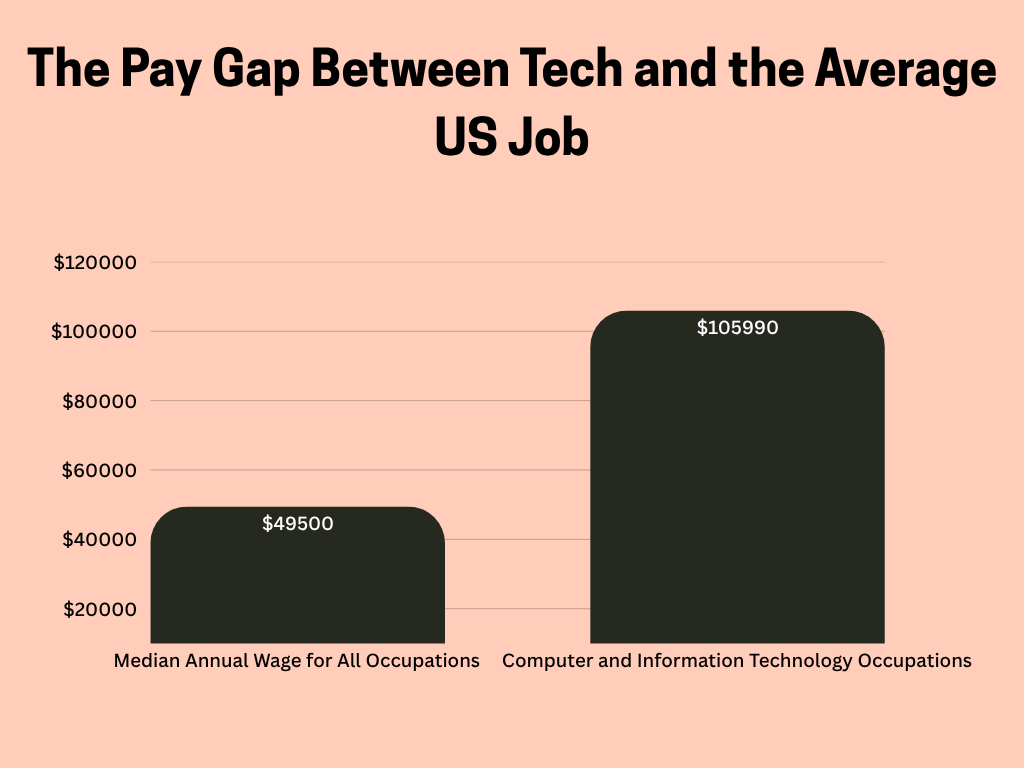
A career change at 35 shouldn’t just be about leaving a job you dislike. It should also move you toward better long-term opportunities.
A tech career can help you build skills in a higher-earning field, giving your next move growth potential and financial upside.
The biggest myths about career change at 35
You might think you need another degree, that you’ll have to start from the bottom, or that switching careers will take years.
But these myths don’t reflect how many career changers actually break into tech.
Myth 1: You must start from the bottom
You do not have to start from the bottom when you change careers at 35. Many tech roles value transferable skills that you already have.
Matt Lansing’s TripleTen story shows how this works. Instead of leaving his previous experience behind, he combined his customer-facing background with new QA and software knowledge to become a Customer Success Manager at GRAITEC.
He didn’t start over. He repositioned.
Our outcomes data backs this up. In 2025, 80% of TripleTen’s employed graduates did not have a STEM background, and graduates reported an average salary increase of $16,300 compared to their previous roles.

Learn how Matt used his customer-facing experience and new QA skills to move into customer success.
Read His Student Success StoryMyth 2: You need another college degree
You do not always need another college degree to change careers at 35. Practical skills and proof that you can use the tools in the job description are more important for many tech jobs.
Jessica Cunningham’s TripleTen story shows this clearly. She considered getting another degree, but decided it would take too long. Instead, she chose a boot camp.
Through TripleTen, she built business intelligence analytics skills, completed practical projects, got tutoring and career support, and gained experience. This helped her move into a Director of IT and Research Operations role.
And Jessica is not alone. In 2025, 61% of TripleTen graduates did not have a bachelor’s degree.
| Highest level of educational attainment | 2025 grad percentage | Bachelor's vs. non-bachelor's holders |
| Other | 1% | Non-bachelor's-degree holders
61% |
| High school | 22% | |
| Some college | 28% | |
| Two-year or vocational degree | 10% | |
| Barchelor's | 29% | Bachelor's-degree holders
39% |
| Master's | 9% | |
| PhD | 1% |

Learn how Jessica chose TripleTen instead of another degree and moved into IT and research operations.
Read Her Student Success StoryMyth 3: Switching careers takes years
Switching careers at 35 does not always take years. With focused training and career support, many professionals can move into a new role within months of completing their program.
Khalid Ipaye’s TripleTen story shows what a focused path can do. He moved from a long career in corrections into QA. After building new skills, completing an externship, and starting applications, it took him three months to land his new job.
That timeline is not unusual.
Nearly two-thirds of TripleTen graduates land new roles within 12 months of completing their program.

Learn how Khalid moved from corrections into QA and landed a new role in three months.
Read His Student Success StoryTransferable skills that help career changers enter tech
You might read a tech job description and see SQL, Python, or Figma and think:
“I don’t have any of this.”
But that’s only part of the picture. You likely already have lots of relevant experience.
You just need to translate it.
Teachers
Teachers need to be strong communicators. They have to explain complex ideas, adapt information for different learning styles, manage groups, track progress, and work with students, parents, and colleagues.
Those skills can transfer well into roles like:
- UX researcher
- Customer success manager
- Instructional designer
- QA tester
- Learning experience designer.
Many teachers already understand something tech teams care about: people do not all think, learn, or use tools in the same way.
Accountants
Accountants are already close to data work. Their average working day involves handling structured information, ensuring accuracy, complying with regulations, reporting and analyzing financial patterns. They know how to spot inconsistencies and why small mistakes matter.
Those skills can transfer well into roles like:
- Data analyst
- Business intelligence analyst
- Fintech QA analyst
- Operations analyst
- Revenue operations analyst.
If you’ve spent years working with numbers and reports, you may already have the thinking style needed for analytics. The next step is learning tools like SQL, Python, dashboards, and data visualization.
Healthcare workers
Healthcare workers document important information, follow procedures, handle sensitive data, communicate under pressure, and solve problems quickly.
Those skills can transfer well into roles like:
- Healthtech customer success manager
- Clinical systems analyst
- QA tester
- Data analyst
- Product support specialist.
Industry knowledge matters too.
Many tech companies build products for hospitals, clinics, and care teams. You can bring context that purely technical candidates may not have.
Salespeople
Salespeople understand people, targets, and buying decisions. They know how to handle objections, use CRM systems, explain value, manage relationships, and turn customer feedback into action.
Those skills can transfer well into roles like:
- Sales engineer
- Customer success manager
- Product specialist
- Revenue operations analyst
- CRM analyst.
Sales experience is highly sought after in roles that sit between the customer and the product. You already know how buyers think. Now you can learn how the software works.
Social workers
Social workers are problem solvers. They manage cases, document details, coordinate with stakeholders, work across systems, and help people find the right support.
Those skills can transfer well into roles like:
- UX researcher
- Customer success manager
- Project coordinator
- Civic tech analyst
- Healthtech support specialist.
Behind every product are real people with real problems. If you know how to listen and understand what people need from a system, you already have skills that product and customer-facing teams value.
How to change careers at 35: Step-by-step guide
With the right plan, you can make the move into tech much more achievable and easier to manage.
Here’s how to do it.
Step 1: Identify your strengths and career goals
Before you choose a new career, define what the new role needs to do for your life.
Open a document or spreadsheet and create three columns.
- What I’m good at
- What I enjoy
- What I need from my next career.
In the first column, list 10 tasks that you excelled at in your last two or three roles. That could include dealing with frustrated customers, spotting mistakes, explaining complex ideas, managing deadlines, or working with numbers.
In the second column, list the tasks that give you energy and that you actually enjoy doing. You might like the process of helping people use tools or finding patterns in data.
In the third column, write down your non-negotiables. This includes your target salary, remote or hybrid work needs, growth goals, and the number of hours per week you can realistically spend retraining.
You also need to calculate your minimum acceptable salary.
Add your monthly essentials, debt payments, savings target, insurance costs, childcare or family costs, and a small emergency buffer. Multiply that number by 12.
This gives you a baseline. You’ll use it in Step 3 when comparing possible tech roles.
Step 2. Turn your experience into transferable skills
Now use your self-audit to identify which skills you already have.
Take the list of tasks from the first column and list your main responsibilities for each one. Then translate each responsibility into the skill it requires.
For example, handling customer complaints could show communication and product knowledge. Preparing weekly reports can demonstrate data analysis, spreadsheet skills, and business reporting skills.
This gives you a list of skills you can already claim.
You’ll compare this list with tech job descriptions in the next step, so keep it specific. “Communication” is fine, but “explaining complex information to non-technical people” is better.
Step 3. Choose a target tech role
Now compare your skills, interests, and salary needs with real tech roles.
Choose two or three roles to research.
Find five to ten entry-level job postings for each role. For each, look at the day-to-day tasks, the entry-level salary range, and remote options.
Then compare each role with your Step 1 and Step 2 notes.
Ask yourself:
- Does this role meet my salary baseline?
- Does the work align with the tasks I enjoy?
- Do I already have transferable skills for this role?
- Can I realistically learn the missing skills?
By the end of this step, choose one primary target role and one backup option.
This matters because your learning plan, portfolio, resume, and networking will all be stronger when they point in the same direction.
Step 4. Build the missing skills
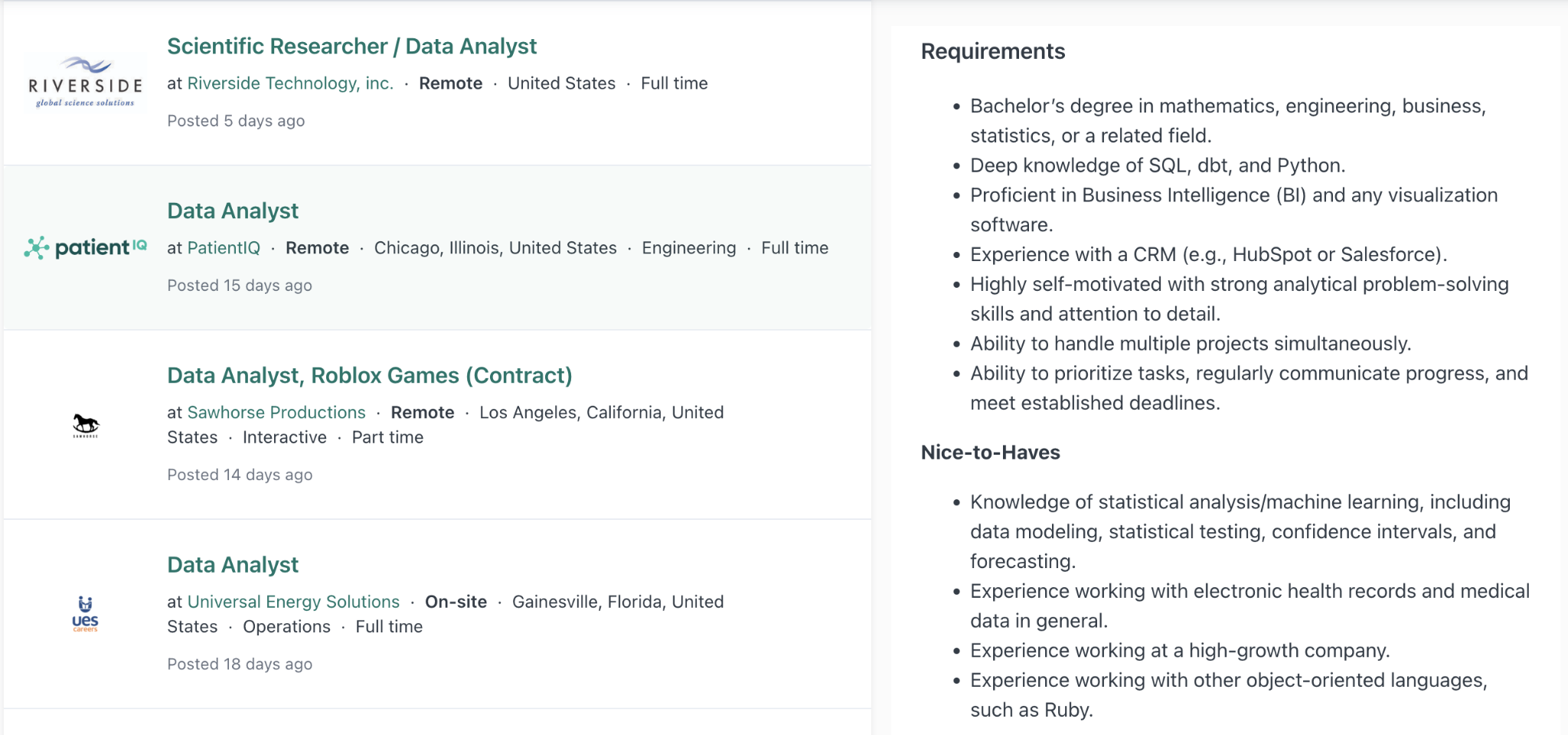
Use the job postings from Step 3 to make a skills checklist. Highlight the tools and skills that appear repeatedly.
Those repeated requirements are what you should learn first.
If you’re targeting data analytics, that might include Excel, SQL, Python, and data visualization. If you’re targeting UX/UI, it might include Figma, user research, wireframes, and usability testing.
Self-study can work, but it is easy to waste time when you do not know what to learn, in what order to learn it, or how to demonstrate your skills to employers.
That’s where a career-focused program like TripleTen can help.
TripleTen gives career changers a structured path built around job-ready skills for their target role. You’ll build practical projects to prove you can do the work.
The programs are part-time and online with flexible schedules, so you can keep working while you learn.
Career coaching at TripleTen also helps you turn your new skills into a stronger job search. That includes resume support, portfolio guidance, interview preparation, soft skills training, and post-graduation support.
Step 5. Build proof through projects and your portfolio
As you learn, turn your new skills into proof. Your portfolio should show that you can do the work required for your target role.
For data analytics, you could build a dashboard using a sample retail sales dataset. Show revenue trends, best-selling products, customer behavior, and business recommendations.

For UX/UI design, you could create a case study improving an app or website flow. Show the user problem, wireframes, prototype, and final design decisions.
For each project, explain four things.
- The problem you were solving
- The tools you used
- The steps you took
- The outcome or insight.
Don’t just show the finished work. Show how you think. This is what employers are trying to understand.
Step 6. Update your resume and job search story
Your resume should show where you’ve been and where you’re going.
Start with a summary that names your target role and highlights your strongest transferable skills.
If you’re moving into QA, focus on attention to detail, documentation, problem-solving, and your new testing skills. If you’re moving into data analytics, focus on reporting, Excel, SQL, dashboards, and decision-making.
Then rewrite your past roles in terms of measurable achievements.
Instead of “responsible for customer communication,” write “managed daily communication with 30+ customers while resolving issues under tight deadlines.”
Keep it simple. Explain what you used to do, what you are moving into, and what skills you are building now.
You can also use TripleTen’s free Resume Optimizer to check whether your resume is clearly aligned with your target tech role before you start applying.
Step 7. Start networking and applying strategically
Don’t wait until you feel completely ready before you start talking to people and applying.
You can start by reaching out to TripleTen graduates, recruiters, and people working in your target role. Each week, send five short messages asking for advice, not a job.
A simple message works:
“Hi [Name], I’m transitioning into QA after working in [field]. I’m currently building my skills and would love to hear one piece of advice you’d give someone trying to enter the field.”
Use what you learn to improve your applications.
When you apply, tailor your resume to each role. If the job description mentions SQL, Figma, or stakeholder communication, make sure your resume and portfolio clearly demonstrate those skills.
That’s how the process comes together.
You choose a target. You build the skills. You create proof. You translate your experience. Then you apply with a much stronger story.
Best career change ideas at 35
The best career change at 35 is one that fits your skills, goals, and lifestyle. These roles are a strong place to start.
Data analyst
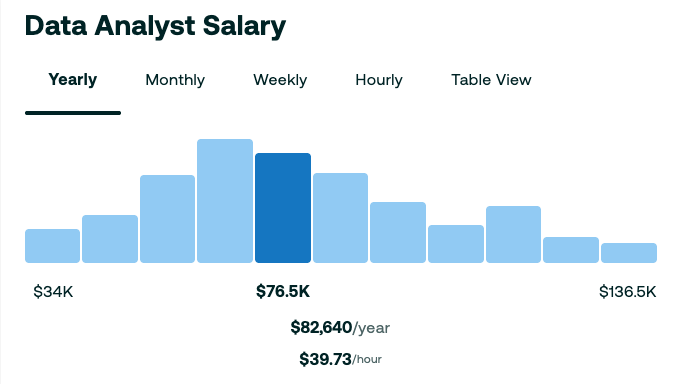
Data analysts help companies make better decisions. They take raw information and turn it into insights people can actually use. That could mean analyzing sales trends, building dashboards, cleaning messy data, or spotting patterns that help a business improve.
Core skills: SQL, Excel, Python, data visualization, Tableau, and Power BI.
Average salary: $82,640
Average time to land this role: 4-14 months
Could data analytics be your next move?
TripleTen’s Data Analytics Bootcamp can help you learn SQL, Python, dashboards, and the other tools used in entry-level analytics roles.
UX/UI designer
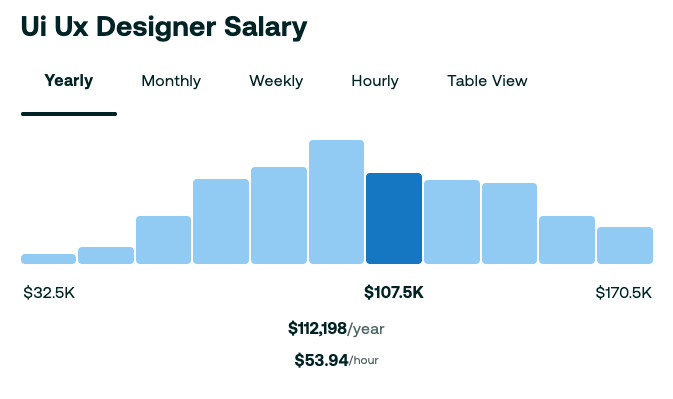
UX/UI designers improve how digital products look, feel, and work. They research users, map customer journeys, create wireframes, design interfaces, build prototypes, and test whether people can use a product easily.
Core skills: User research, Figma, usability testing, wireframing, and visual design.
Average salary: $112,198
Average time to land this role: 5-15 months
Want to turn user problems into better digital experiences?
TripleTen’s UX/UI Design Bootcamp helps you build practical design, research, and prototyping skills.
Quality Assurance engineer
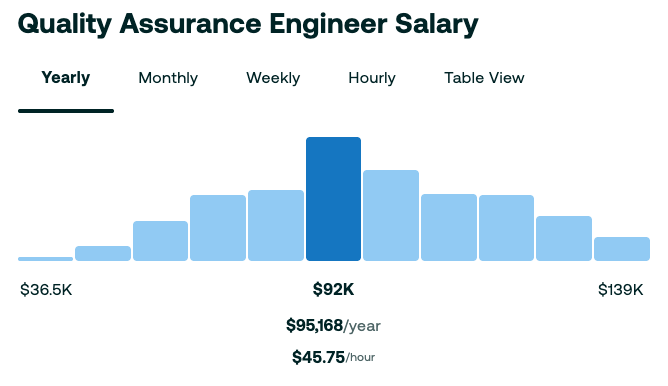
QA engineers test software before users rely on it. They identify bugs, write test cases, check product functionality, document issues, and help teams improve product quality before a product goes live.
Core skills: Manual testing, bug reporting, API testing, debugging, automation basics, and attention to detail.
Average salary: $95,168
Average time to land this role: 5-15 months
Good at spotting what others miss?
TripleTen’s QA Engineering Bootcamp can help you turn that attention to detail into practical software testing skills.
Cybersecurity specialist
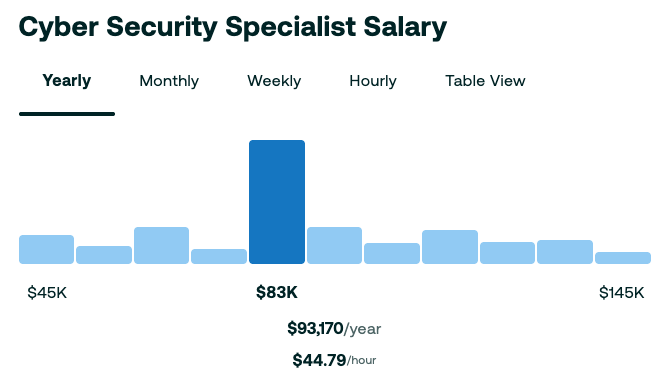
Cybersecurity specialists help protect systems, networks, and data from digital threats. They monitor suspicious activity, identify vulnerabilities, support incident response, and help organizations reduce security risks.
Core skills: Network security, threat detection, vulnerability assessment, risk management, security tools, and compliance awareness.
Average salary: $93,170
Average time to land this role: 7-17 months
Interested in protecting systems and data?
TripleTen’s Cybersecurity Bootcamp can help you build the fundamentals for a career in digital security.
AI automation specialist
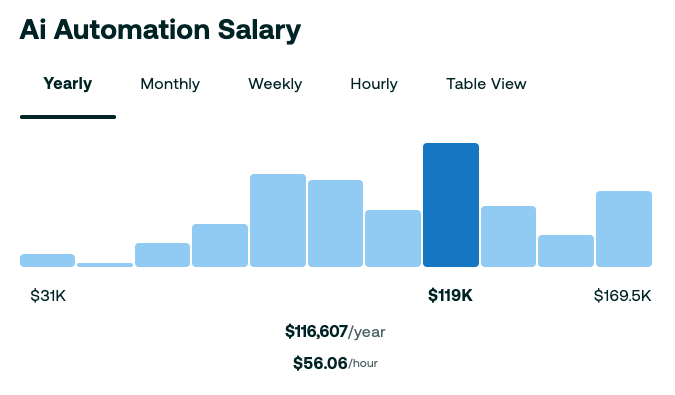
AI automation specialists help businesses save time by automating repetitive work. They build workflows, connect tools, create AI-powered assistants, and improve internal processes.
Core skills: Workflow design, automation platforms, integrations, APIs, prompt writing, and process mapping.
Average salary: $116,607
Average time to land this role: 4-14 months
Like finding faster ways to get work done?
TripleTen’s AI Automation Bootcamp can help you learn how to build workflows, connect tools, and automate repetitive tasks.
AI product manager
AI product managers help build AI-powered products. They work across business, design, data, and engineering teams to understand user needs, prioritize features, shape roadmaps, and make sure AI tools solve real problems.
Core skills: Product strategy, user research, data literacy, AI fundamentals, stakeholder management, roadmap planning, and ethical AI awareness.
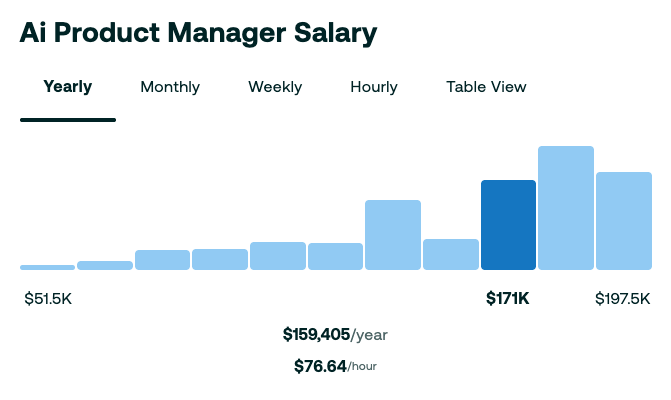
Average salary: $159,405
Average time to land this role: 5-15 months
Ready to explore AI product management?
See how TripleTen’s bootcamp can help you prepare for this career path.
Your next career can build on what you already know
Changing careers at 35 does not mean erasing your past experience.
It means translating it.
The key is proving you have the skills for the role you want. Choose a clear path, build job-ready skills, create proof through projects, and learn how to explain your background as an advantage.
Frequently asked questions
Can I switch to tech at 35 with no experience?
Yes, you can switch to tech at 35 with no experience. Many tech roles value transferable skills like problem solving, communication, project management, and maturity, especially when you can support them with practical training and portfolio projects.
You do not need a computer science degree to get started. Choose a realistic entry path, learn the tools employers ask for, and build projects that prove you can do the work.
Is changing careers at 35 risky?
Changing careers at 35 can be a smart long-term move if you plan carefully. You may need to learn new skills or adjust your timeline, but you likely still have 25–30 years of working life ahead.
You can reduce the risk by choosing a realistic path, checking salary ranges, and retraining in a focused way.
What are the highest-paying career changes you can make at 35?
Some of the highest-paying career changes at 35 are in tech. Strong options include software engineer, data scientist, cybersecurity specialist, AI product manager, data analyst, and QA engineer.
The best option depends on your background. Analytical skills can fit data roles. Technical problem-solving can fit software or QA. Business, operations, or leadership experience can fit AI product management.
What are the easiest career changes that still pay well?
The easiest career changes that still pay well are usually roles that build on skills you already have. In tech, accessible options include UX/UI designer, QA engineer, data analyst, IT support specialist, customer success manager, and AI automation specialist.
The goal is not to find a role with no learning curve. It is to choose one where your existing skills give you a head start.



.avif)
.avif)
.avif)

