





Most US workers aged 55+ are satisfied with their jobs. But 27.6% are not.
If that is you, staying put may feel safe. But it could also mean more years in work that drains you or no longer fits your life.
The answer is not to start from zero. It is to use your experience as leverage and choose a path that fits your goals.
This guide will help you decide if a career change at 55 makes sense. You’ll learn how to choose a realistic path, retrain around your responsibilities, and move forward without taking a reckless leap.
Is 55 too late to change careers?
No, 55 is not too late to change careers. But your move needs to be practical.
The workforce is already changing. According to the U.S. Bureau of Labor Statistics, labor force participation for people aged 55 to 64 has trended upward over the past three decades and is projected to continue rising through 2033.
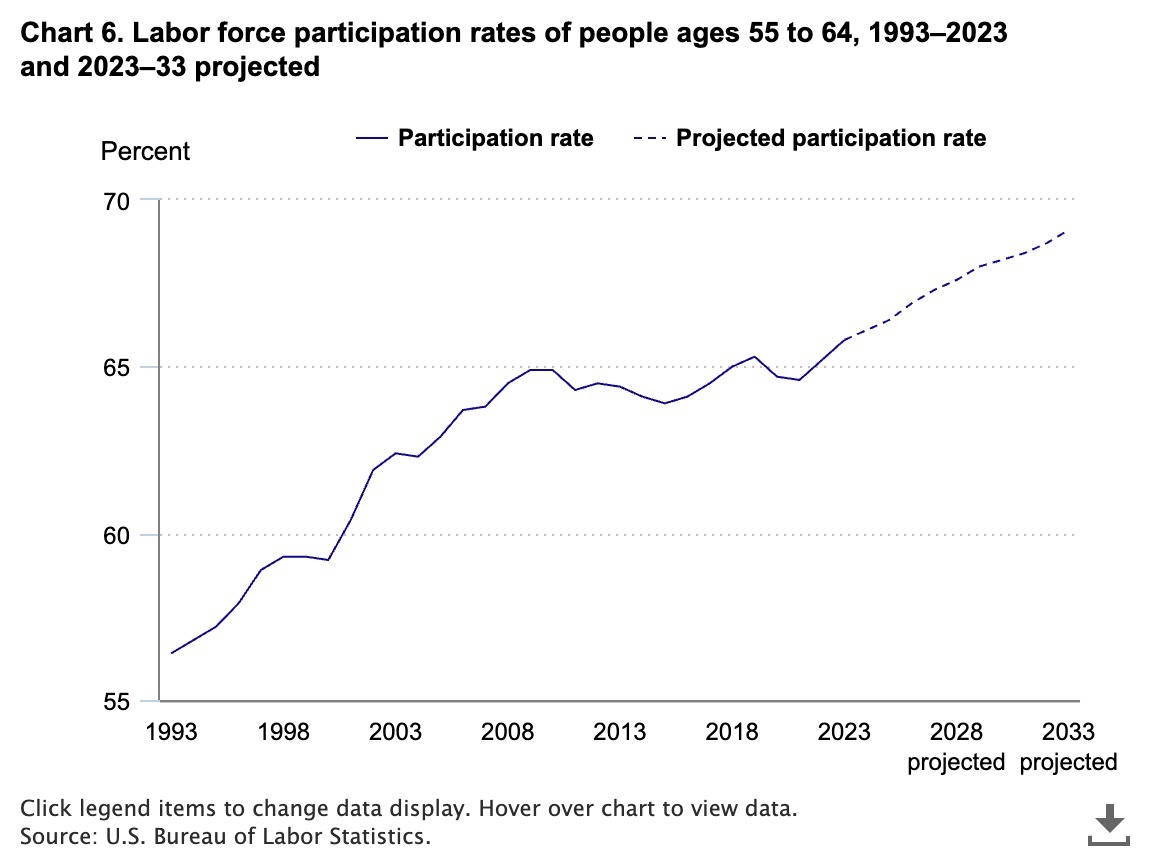
That matters because longer working lives make later-career changes more realistic. You are not making a short-term move. You may be choosing the work you want for the next decade or more.
TripleTen’s outcomes data also shows that career change into tech is possible without a traditional background. More than 80% of TripleTen graduates started with no previous technical experience, and nearly two-thirds landed new jobs within 10 months of completing their program.
The key is to be strategic.
At 55, you may not want to take unnecessary risks or spend years exploring every possible option. You need a path that matches your income needs, learning capacity, and existing experience.
That is why tech can be a realistic option for many later-career professionals.
You may need to learn new tools.
But you can build those skills around the experience you already have, rather than starting again from scratch.
Start with what you need from your next career
Before you choose a new path, get clear on the problem you are trying to fix.
Ask yourself:
- Income: What is the lowest salary I can realistically accept?
- Flexibility: Do I need remote, hybrid, or part-time options?
- Energy: Do I need work that is less physical, less stressful, or more sustainable?
- Skills: Which parts of my experience do I still want to use?
- Time: How many hours a week can I actually spend retraining?
- Growth: Do I want a role I can grow in for the next 5 to 10 years?
Use your answers as a filter.
If a career path does not meet your income needs, it is not the right path. If the training takes more time than you can give, it is not realistic yet. If the work does not fit the life you want next, keep looking.
The biggest myths about career change at 55
A career change at 55 comes with real questions. But some of the biggest fears are based on myths, not facts.
Myth 1: You have to start from the bottom
You may be new to tech, but you are not new to work.
Your past experience can still give you a strong starting point. The key is learning how to connect it to the right role.
Bill Samboy’s TripleTen story shows how this works. After years as a lineman, he wanted a career with more freedom and less time away from family.
When he researched QA, he realized his troubleshooting experience already gave him a useful foundation. He later used his TripleTen training and externship experience to move into an Automation Robotics Technician role.

I love [my new job] because I'm my own man. I have my own assignments. I oversee my robots. I make my own time. I have the freedom that I didn't have before.
Read full storyMyth 2: You need another degree
You do not always need another degree to change careers at 55.
Many tech roles value practical skills, portfolio projects, and proof that you can use the tools required for the job.
Take QA testing. Employers want to see if you can test a product, find bugs, write clear notes, and explain what you checked.
Data analytics is similar. Can you clean up data? Use spreadsheets or SQL? Build a simple dashboard? Explain what the numbers show?
That kind of proof can matter more than going back to college.
Isabelle Cuisset’s TripleTen story shows a different route. After a 20-year career in luxury fashion, she wanted a skill she could continue to develop.
She had started exploring website building through a fashion project, then chose TripleTen because she wanted flexible training she could fit around her responsibilities. Isabelle later used those skills to build her own web design and development studio while continuing part-time in fashion.

I needed to own something, a kind of craft that I could develop, where I could continue to learn day after day.
Read full storyMyth 3: Switching careers takes years
Switching careers does not always have to take years.
A focused path can help you avoid scattered tutorials and build the specific skills your target role requires.
TripleTen’s outcomes data shows what that can look like. Nearly two-thirds of graduates landed new roles within 10 months of completing their program, with an average salary increase of $16,300.
That does not mean career change is instant. But it does mean you can make real progress faster when you choose a clear target, build practical skills, and get support with your job search.
Myth 4: Your past experience will not transfer
Your previous career can be one of your biggest advantages.
Carlos Coral-Gomez’s TripleTen story shows this clearly. He had spent his career working with data as a physicist, seismologist, professor, and consultant.
When he became interested in using machine learning for genomic research, he used TripleTen to build new data science and Python skills around his existing analytical background.

I’m motivated because the course is fascinating. I think it's getting more engaging than it was at the beginning because I'm getting more familiar with the programming.
How to change careers at 55: step-by-step guide
Changing careers at 55 feels much more achievable when you break it down into a clear process.
Here’s how to start.
Step 1: Audit your strengths, interests, and career priorities
Before you choose a new career, get clear on what your next role needs to do for your life.
Open up a document and create three columns:
| What I’m good at | What I enjoy | What I do not want anymore |
Be specific.
Instead of writing “communication,” write “explaining complex information to customers.”
Instead of “organization,” write “managing deadlines across several projects.”
Then list your non-negotiables:
- Minimum salary
- Remote, hybrid, or in-person work
- Hours and schedule
- Physical demands
- Growth potential
- The time you can spend retraining each week.
You should also calculate your minimum acceptable income.
Add your essential monthly costs, debt payments, insurance, savings goals, family responsibilities, and a small emergency buffer. Then multiply that number by 12.
This gives you a clear baseline.
You can then compare possible careers against what your life actually requires, instead of choosing a path based on guesswork.
Step 2: Identify your transferable skills
You do not need to choose a tech role from scratch.
Start by finding the skills you already have.
Look back at your current or previous roles and list the responsibilities that frequently arose. Then compare them with entry-level tech job descriptions. You are looking for overlap.
Use this as a starting point:
| Previous background | Transferable skills | Possible tech starting points |
| Teachers | Explaining complex ideas, planning, feedback, and empathy | UX/UI designer, project coordinator, technical support specialist |
| Finance professionals | Working with data, accuracy, risk awareness, and process management | Data analyst, business analyst, BI analyst, QA tester |
| Healthcare workers | Documentation, teamwork, process-following, problem-solving under pressure | QA tester, technical support specialist, healthtech implementation specialist |
| Sales professionals | Customer understanding, persuasion, stakeholder management, and commercial awareness | Customer success specialist, sales engineer, product specialist, AI product manage |
| Social workers | Empathy, communication, case management, organization, problem-solving | UX researcher, customer success specialist, project coordinator |
Then build your own skills map.
This makes your next step clearer. Instead of asking, “What tech job should I do?”, ask:
“Where does my existing experience already give me an advantage?”
| Current skill | Could support |
| Explaining complex information clearly | UX/UI design, technical support, project coordination |
| Working with reports, numbers, or records | Data analysis, business analysis, BI analysis |
| Following detailed processes | QA testing, technical support, implementation support |
| Understanding customer needs | Customer success, product support, sales engineering |
| Managing people or projects | Product management, project coordination, and implementation roles |
| Improving inefficient processes | AI automation, operations, business analysis |
Your first tech role does not have to be your final role. Many career changers start in support, QA, analytics, customer success, or product-adjacent roles before moving into more specialized positions.
Step 3: Choose a specific target role
Do not aim for “a job in tech.”
That’s how you end up with too many options, too many courses, and no clear next step.
Pick one main role and one backup option. This helps you cut through the decision paralysis.
That way, you know what to learn, what to build, and how to explain your career change.
Use four filters:
- Strengths: Does this role use skills you already have?
- Salary: Can the starting salary meet your income needs?
- Timeline: Can you build the skills without putting your life on hold?
- Daily work: Would you actually enjoy the tasks?
Do you like digging into numbers and spotting patterns? Data analytics could be worth exploring.
If you are detail-focused and good at following steps, QA could be a better fit.
A focused target helps you avoid wasting time on skills you do not need yet.
Step 4: Upskill with a career-focused program
Once you know your target role, focus on the skills that role actually requires.
Not every tech skill.
Not every tool.
Just the ones that move you closer to that role.
That is where self-study can get messy. One tutorial leads to another. Then another. Suddenly, you have spent weeks learning things that do not show up in the jobs you want.
A career-focused program gives you a clearer route.
TripleTen’s programs are part-time and online, so you can study around work, family, and everything else you already manage.
You build projects as you learn. You create portfolio examples. You practise the tools connected to your target role.
You also get career support for your resume, interviews, and job search.
At 55, you need to show how your new skills connect to the experience you already have.
Career support can help you explain that clearly to employers.
Step 5: Build proof of your skills
Employers need proof that you can do the work. Especially when you are changing careers at 55.
That is where your portfolio comes in.
It shows what you can do before you even get to the interview. It also gives you real examples to talk about in your resume and interviews.
A good portfolio shows what you can do, how you think, and how your new skills apply to real problems.
The key is to build projects that match the role you want.
So for data analytics, you could build a dashboard from a sample dataset.
For UX/UI design, you could take a website that feels confusing and improve it.
For each project, explain:
- The problem you solved
- The tools you used
- The steps you took
- The outcome or recommendation.
Do not just show the finished work.
Show your process.
This gives employers something concrete to review and gives you stronger examples to use in your interviews.
This is also one of the benefits of a career-focused program like TripleTen. You build practical projects as you learn, so you are not starting your job search with an empty portfolio.
Step 6: Use your existing network strategically
You probably have more useful connections than you think.
Start with LinkedIn. Search for former colleagues, managers, clients, vendors, classmates, and people from old jobs. See where they are now.
Some may already work in tech. Others may know someone who does.
You don’t need a list of hundreds of contacts. A list of 10 to 15 people is more than enough.
Start with people connected to the role you want.
Send a simple message.
Hi [Name], I’m exploring a move into [role] after working in [field]. I noticed you have experience in [area/company/role], and I’d really value your perspective. Is there one thing you think entry-level candidates should focus on?
Keep the ask small.
Don’t ask for a job. Just ask for advice.
If you study with TripleTen, you can also search for past TripleTen graduates on LinkedIn. Look for people who moved into the role you want. Their profiles can show you how they describe their projects, their career change, and their new role.
Use what you learn.
If several people mention the same tool, add it to your learning plan. If they explain their career change in a clear way, use that as inspiration for your own LinkedIn profile. If they point out a gap in your portfolio, fix it.
That is what makes networking useful.
It helps you stop guessing.
Step 7: Transition gradually
You don’t want to gamble with your income or retirement plans. That’s completely reasonable.
So start with a low-risk plan instead of quitting your job tomorrow.
Keep working while you retrain.
Choose a part-time program that fits your schedule. Build your portfolio before you leave your current role. Start applying once you have enough proof to show employers.
You can also test the new path before making a full move.
That might be asking for a more technical project at work or taking on some freelance projects that fit your target role.
The goal is to find out if you enjoy the work and build your portfolio.
That’s how you reduce the risk and make your next move feel more practical.
Best career change ideas at 55
The best career change at 55 is not always the most obvious one.
It is the one that fits your experience, income needs, learning timeline, and the kind of work you want to do next.
Here are tech roles that can work well for experienced professionals.
Data analyst
Data analysts help companies make better decisions.
They take raw information and turn it into useful insights. That could mean analyzing sales trends, building dashboards, cleaning data, preparing reports, or spotting patterns that help a business improve.
This can be a strong fit for career changers with experience in finance, operations, administration, reporting, or business.
Core skills: Excel, SQL, Python, data visualization, dashboards, analytical thinking, and reporting.
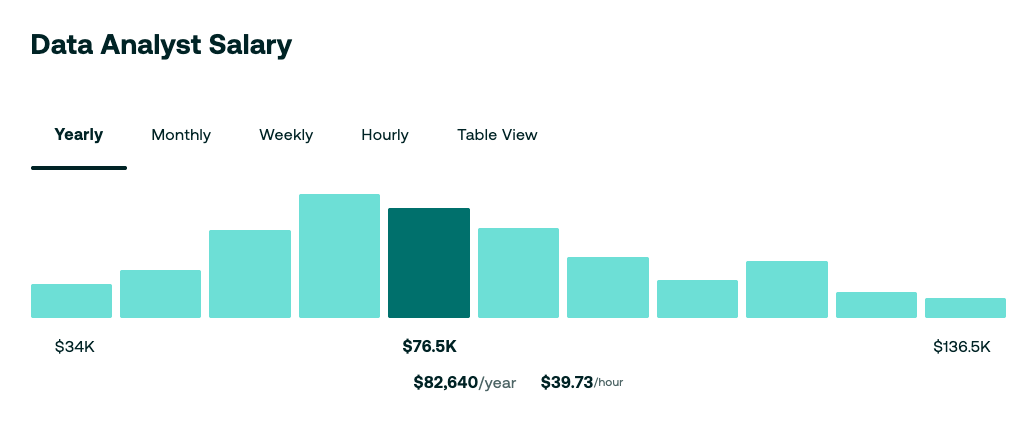
Average salary: $82,640
Average time to land this role: 4 to 14 months
QA tester
QA testers help make sure software works before users rely on it.
They test features, identify bugs, document issues, and help teams improve product quality before a product goes live.
This can be a strong fit for career changers who are detail-oriented, patient, process-driven, and good at spotting problems.
Core skills: Manual testing, bug reporting, test cases, attention to detail, communication, and basic software development knowledge.
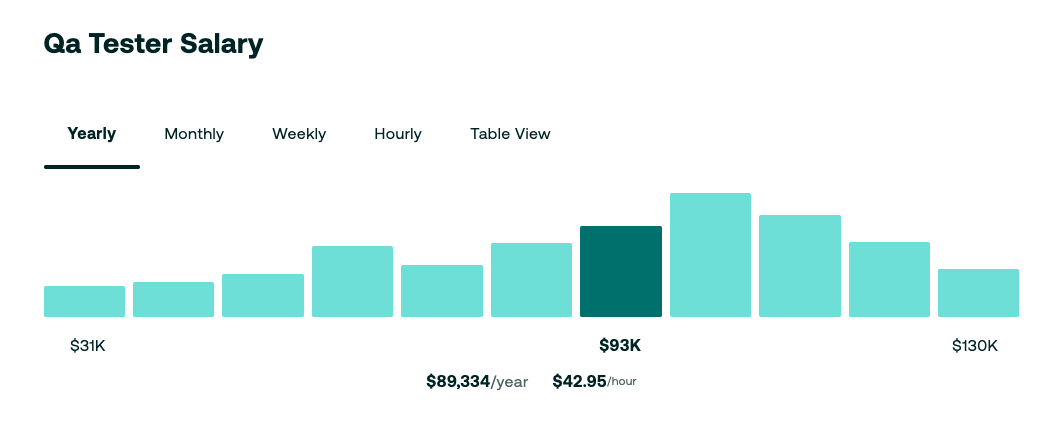
Average salary: $89,334
Average time to land this role: 5 to 15 months
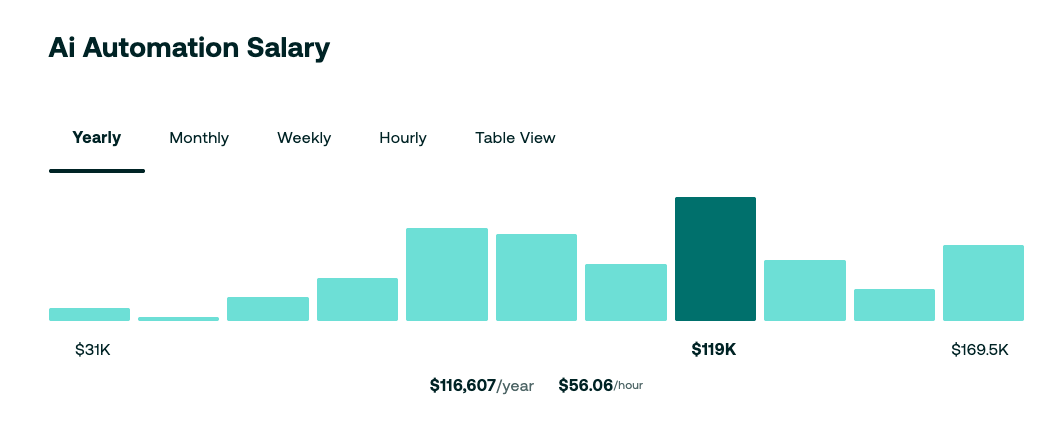
AI automation specialist
AI automation specialists help businesses save time by automating repetitive work.
They build workflows, connect tools, create AI-supported processes, and improve how teams get work done.
This can be a strong fit for career changers with experience in operations, administration, reporting, customer workflows, or process improvement.
Core skills: Workflow design, automation platforms, integrations, APIs, prompt writing, process mapping, and problem-solving.
Average salary: $116,607
Average time to land this role: 4 to 14 months
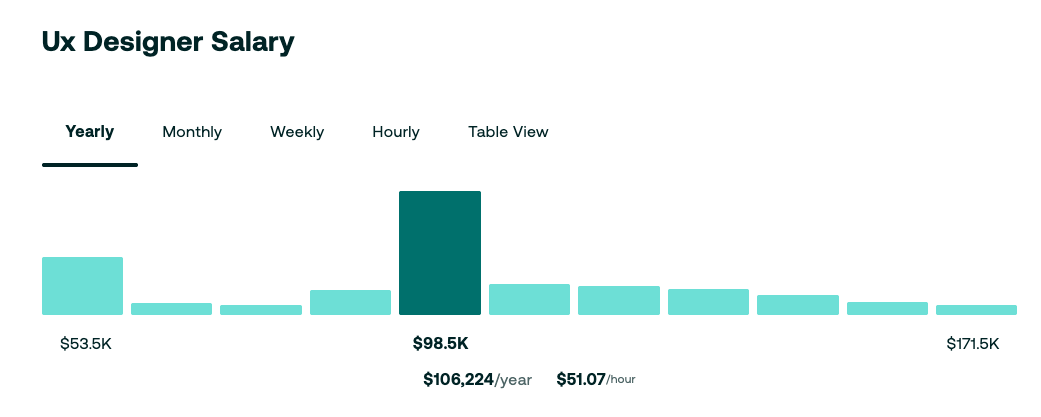
UX designer
UX designers improve how digital products work for real people.
They research users, map journeys, create wireframes, test designs, and help make websites, apps, and tools easier to use.
This can be a strong fit for career changers with experience in teaching, social work, customer service, research, marketing, communication, or creative problem-solving.
Core skills: User research, wireframing, prototyping, usability testing, Figma, communication, and visual thinking.
Average salary: $106,224
Average time to land this role: 5 to 15 months
How to explain a career change at 55 in interviews
Keep your interview story simple.
Do not lead with your age. Do not apologize for changing careers. Focus on how your experience connects to the role you want now.
Use this structure:
“I’ve spent my career in [previous field], where I built strong skills in [transferable skills]. I’m now moving into [target role] because it builds on those strengths. I’ve been learning [tools or skills], and I’ve completed projects that show I can [relevant outcome].”
For example:
“I’ve spent my career in finance, so I’m used to working with reports, accuracy, and business decisions. I’m now moving into data analytics because it builds on those strengths. I’ve been learning SQL, dashboards, and data visualization, and I’ve built projects that turn raw data into business recommendations.”
This is stronger than saying:
“I know I’m older, but I’m willing to learn.”
You are not asking employers to overlook your age.
You are showing them how your experience, new skills, and practical projects make you ready for the role.
Change careers without starting from scratch
Changing careers at 55 does not mean erasing everything you have already done.
Your experience, judgment, resilience, and transferable skills can all become part of your next move. The key is choosing a realistic role, building the missing skills, and creating proof that you can do the work.
Start with a clear path. Learn the right tools. Build practical projects. Use your network. Make the transition gradually.
TripleTen can help you structure that process with part-time online programs, project-based learning, career support, and tech paths designed for career changers.
Frequently asked questions
Can I learn tech skills at 55?
Yes, you can learn tech skills at 55. The key is to stay focused on a specific role. Don’t try to learn “tech” as one big category. Look at job descriptions for your target role to identify the tools and skills that keep coming up. That tells you what to learn first.
Can I change careers at 55 without losing income?
Yes, you can change careers without losing income if you transition gradually. You can learn new skills while you continue working in your current role. Many people also use bridge roles to move closer to tech. That can include sales, customer success, and technical support.
What is the safest way to change careers at 55?
The safest way is to avoid making one sudden leap. Keep earning while you retrain, if you can. Choose one target role. Build the skills for that role. Create a few strong portfolio projects. Then start applying before you feel completely ready.
Should I apply for entry-level jobs at 55?
Yes. Entry-level jobs can be worth applying for at 55 if they help you get into the field you want. Your application should show the technical skills you have built and the experience you already bring from your previous career.

.avif)


.avif)


