


At 45, you could still have 20+ working years ahead of you.
That is way too much time to stay in a career that you have outgrown.
The full retirement age in the US is 67 for people born after 1960. So 45 is not the end of your career. You are closer to the middle.
And at this point, you likely already have transferable skills that can help you move into growing industries like tech.
The key is to choose a career where those skills still count. Then you build the practical skills employers want.
This guide shows you how to change careers at 45, avoid common myths, and find realistic career paths worth exploring.
Is 45 too late for a career change?
No, 45 is not too late to change careers. It’s much more common than you might think.
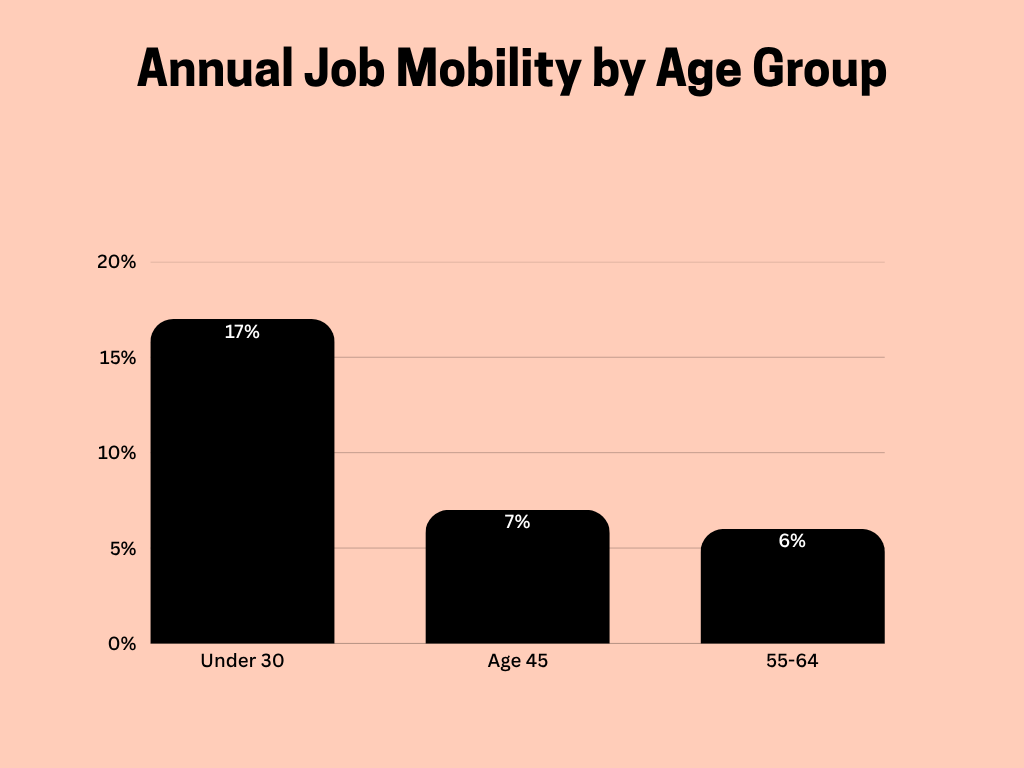
OECD research found that around 7% of workers aged 45 change jobs each year.
Career changes often happen in your 40s because your priorities become clearer. You may want more meaningful work, better flexibility, stronger earning potential, or a career that feels more future-proof.
Thinking about a career change but unsure where to start? Try TripleTen’s Future-Proof Career Quiz to explore tech career options that match your strengths.
You also have a better understanding of what you are good at and what drains you.
That’s all useful.
At 45, you bring professional maturity, communication skills, leadership experience, problem-solving ability, and a stronger understanding of how businesses work.
Those skills can be valuable in a new field.
The biggest myths about a career change at 45
A lot of people talk themselves out of changing careers before they even start. Usually, it is because of one of these myths.
Myth 1: You have to start from the bottom
Changing careers at 45 does not mean wiping the slate clean. You may be new to a specific role, but you are not new to work.
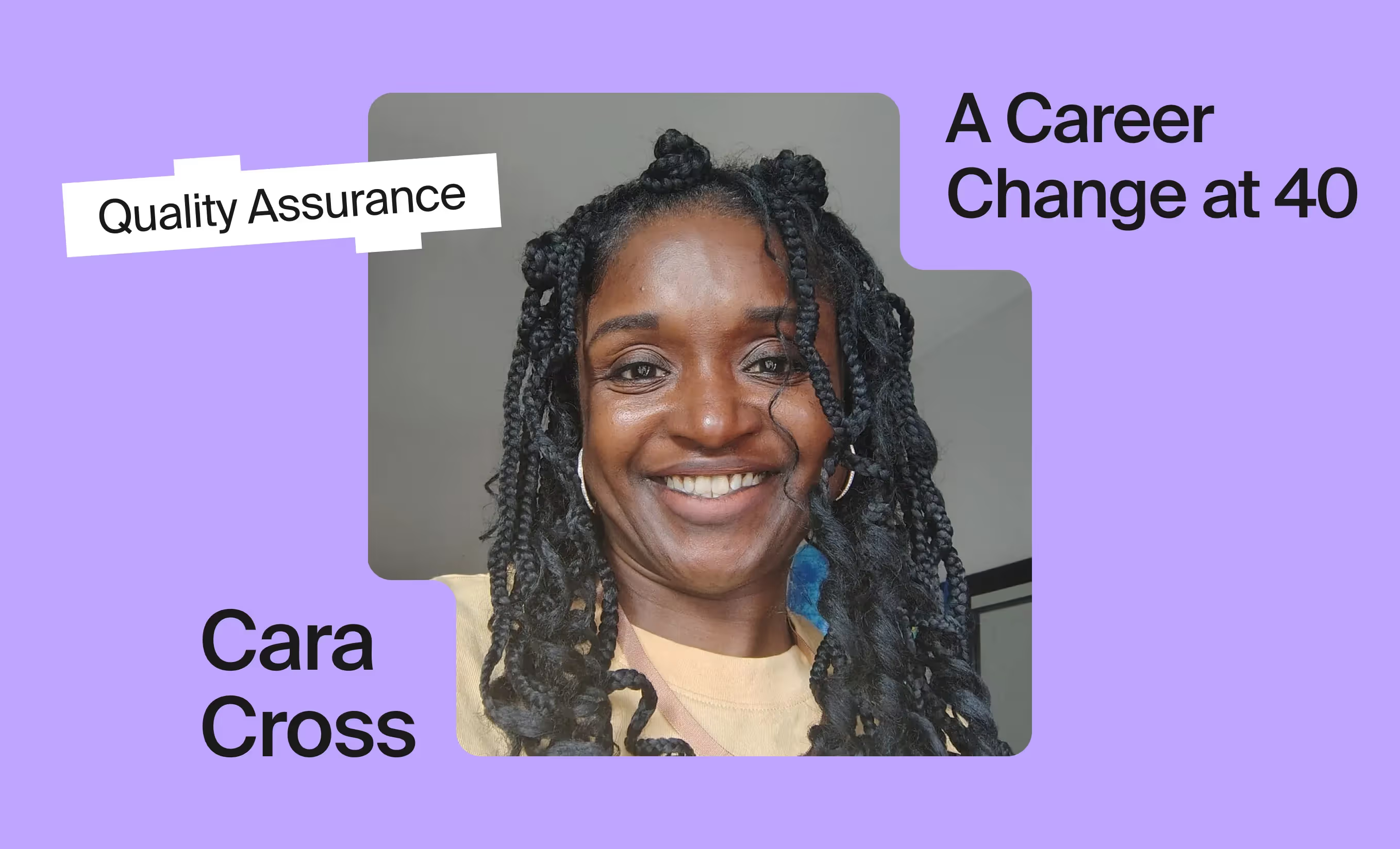
Cara Cross’s story is a good example. After nearly 20 years as a mail clerk and landscaper, she used TripleTen to move into quality assurance. Her previous roles had taught her discipline, persistence, responsibility, and problem-solving. TripleTen helped her turn those strengths into practical QA skills through bug jams, an externship, and career coaching.

Being a mom of three, working a full-time job, having things to take care of, I would say time management was my biggest challenge, but once I learned how to put it all together, it flowed pretty smoothly.
Read full storyMyth 2: You need another degree
You do not always need another college degree to change careers at 45.
Some careers require specific degrees or licenses. You can’t become a doctor or a lawyer without the right paperwork.
But tech is different.
For many roles in software, AI, and data, employers focus on practical skills, certifications, and portfolio projects. You don’t need to return to university to snag a new degree.
That can make a big difference if you have financial responsibilities or do not want to spend years retraining.
TripleTen’s Employer Report supports this shift. In a survey of more than 1,000 U.S.-based decision makers, 86% of hiring managers said they were confident or very confident in hiring bootcamp graduates. In contrast, 79% said they actively hire candidates from nontraditional or non-tech backgrounds.
Jeremy Laurange’s story shows how practical training can help. He was working in operations at a nonprofit when he joined TripleTen’s Business Intelligence Analytics Bootcamp. Instead of going back to college, he built BI and analytics skills that helped him move into a more analytical role at his organisation.

What I would do is I put the kids to bed and essentially study for around three or four hours each night. And it was kind of my relax time.
Read full storyMyth 3: Switching careers takes years
Many professionals can become job-ready within 6 to 12 months of focused learning, depending on the role, schedule, and weekly time commitment.
The key is to get specific. “Work in tech” is too vague. A clearer target makes it easier to choose the right training path.
Not sure which path fits you? Try TripleTen’s Future-Proof Career Quiz to explore tech careers that match your strengths.
TripleTen’s outcomes data support this. Nearly two-thirds of graduates landed jobs within 10 months of completing their program, with an average salary increase of $16,300.
Myth 4: Employers only want younger candidates
Age bias is real. AARP found that 60% of workers age 50+ have seen or experienced age discrimination at work.
But that does not mean employers only want younger candidates. Workers aged 45 to 64 now make up 41% of the OECD workforce, up from 29% in 1990.
Many employers also value reliability, ownership, communication, maturity, and business context. These can be real strengths for mid-career professionals.
The key is how you frame your experience. Instead of saying, “I’m new to tech,” you could say, “I’m moving into QA after years of process-driven work, documentation, and problem solving.”
Matt Lansing’s story shows how powerful that framing can be. Before TripleTen, he worked in construction, teaching, and healthcare compliance. After completing QA training, he connected his new technical skills with his existing people skills and professional experience.
That helped him move into a Customer Success Manager role, where he could combine his software knowledge with communication, client understanding, and problem-solving.

I really do credit TripleTen's career coaching program with giving me the strategy and the boldness to proceed with my job search.
Read full storyHow to change careers at 45: step-by-step guide
A career change at 45 becomes much easier when you treat it like a project. You need a goal, a timeline, a budget, and a way to prove progress.
Here’s how to approach it.
Step 1: Identify your strengths and career goals
The first step is to get clear on what the next role needs to do for your life.
You don’t want to waste time and energy chasing a role that isn’t going to be enjoyable or pays less than what you currently earn.
So open a document or spreadsheet and create four columns:
What I’m good at
These are the tasks you do well. Think beyond your current role and look back at your last few jobs. What did you handle day to day? Where did you make the most impact?
For example, if you worked as an office manager, you might be good at coordinating teams, tracking budgets, solving problems, and improving processes.
What I enjoy
These are the parts of work you would like to do more often. Think about the tasks that keep you engaged, not just the ones you are good at.
For example, if you work in healthcare, you might enjoy calming people down, spotting small changes, and keeping records accurate.
What I need
These are your non-negotiables. Think about what your next career has to provide.
This can include the things you want like remote work or a certain salary. And it can include the things you want to change from your current role. That might be more flexible hours that fit around your life or room to grow and progress.
Minimum income
Money is always going to be part of the decision.
Before you choose a new career path, work out the lowest salary you could realistically accept. Add up your monthly essentials, debt payments, savings goals, insurance, childcare or family costs, and a small emergency buffer. Then multiply that number by 12.
That gives you a practical baseline.
It helps you avoid spending time on roles that sound exciting but do not fit your income needs.
Step 2: Map your transferable skills
You already have skills you can carry into a new career. You just need to identify what you do well in your current role and how those strengths could support your next move.
Open a blank document or grab a pen and paper. Start listing the skills you use every day at work. Not your job title — your actual skills.
So if you’re a teacher, you’ll likely bring a lot of experience in planning, clear communication, giving feedback, and organising information. That could point you toward training, support, or UX research.
Finance professionals usually have strong analytical skills, accuracy, and confidence working with data. That could make data analytics or QA a realistic fit.
Sales professionals know how important it is to understand customers, handle objections, and communicate clearly. That could point toward customer success, CRM support, or sales operations.
Step 3: Choose and research your target role
Next, use your transferable skills to choose two or three realistic roles to explore.
Do you like organising work and improving processes? Look at operations-focused tech roles.
Good at helping people use tools? Look at implementation or support roles.
Enjoy patterns, systems, or problem-solving? Analytics or testing could be a better fit.
Once you have a shortlist, check what each role actually requires.
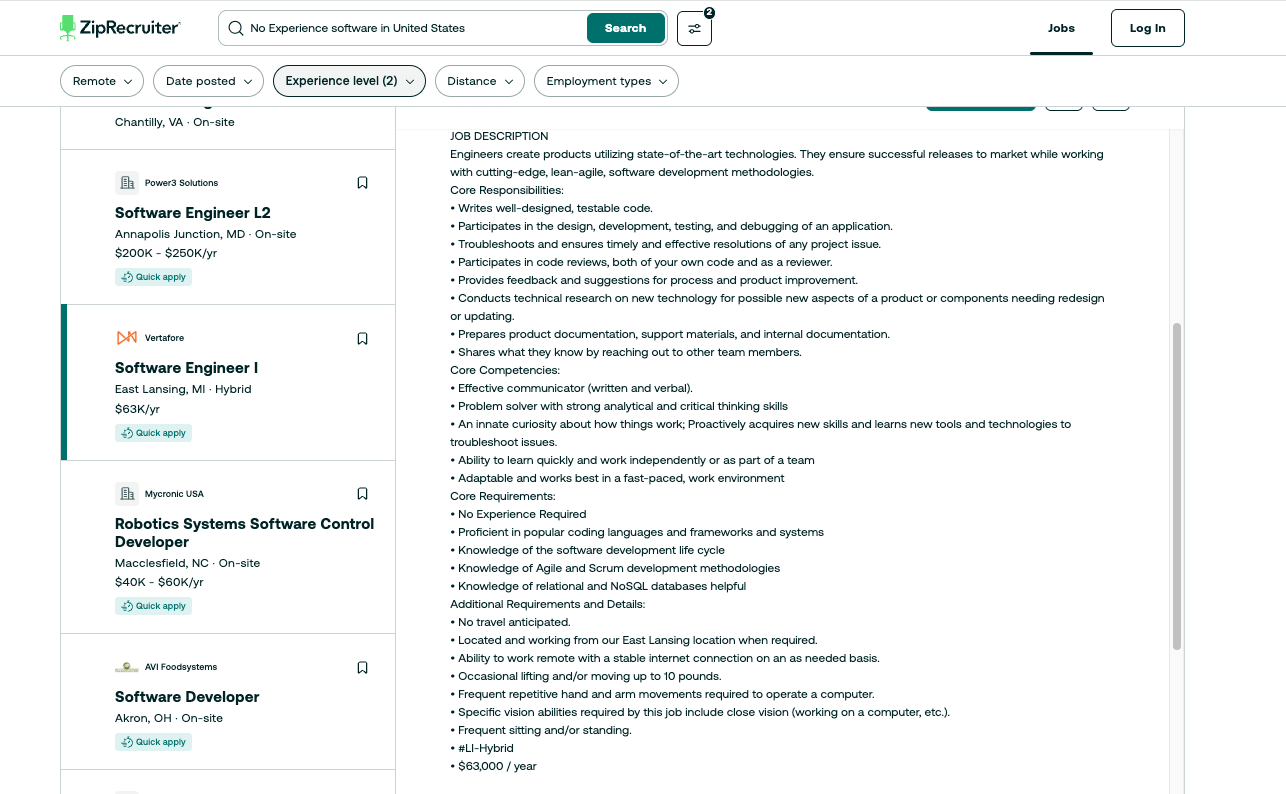
Open five to ten job posts for the same role on LinkedIn, Indeed, ZipRecruiter, or company career pages. Look for the skills, tools, and responsibilities that appear more than once.
Then sort them into three groups:
- Skills you already have
- Skills you need to learn
- Skills that are useful, but not essential yet.
Finally, compare each role with your requirements.
Does the salary range meet your minimum income?
Can you study for it without burning out?
Does it offer the flexibility, remote options, or growth you actually want?
By the end of this step, you should have chosen one main target role and one backup option.
Step 4: Upskill or retrain
Now turn your skills checklist into a learning plan.
Start with the skills that appear most often in job descriptions. These are your priorities. For example, if QA roles keep mentioning test cases, bug reports, API testing, and basic automation, start there.
You can learn through self-study, but it can be hard to know what to learn first, whether you are practising the right skills, or how to prove your ability to employers.
That is where a structured program like TripleTen can help.
TripleTen’s part-time, online programs focus on practical, job-ready skills.
You work on real projects. You build a portfolio. And you get feedback from experienced mentors as you go.
You also get career support after graduation. That includes help with your resume, LinkedIn profile, interview prep, soft skills, and job search.
Step 5: Build proof of your skills
Employers want proof that you can apply what you have learned.
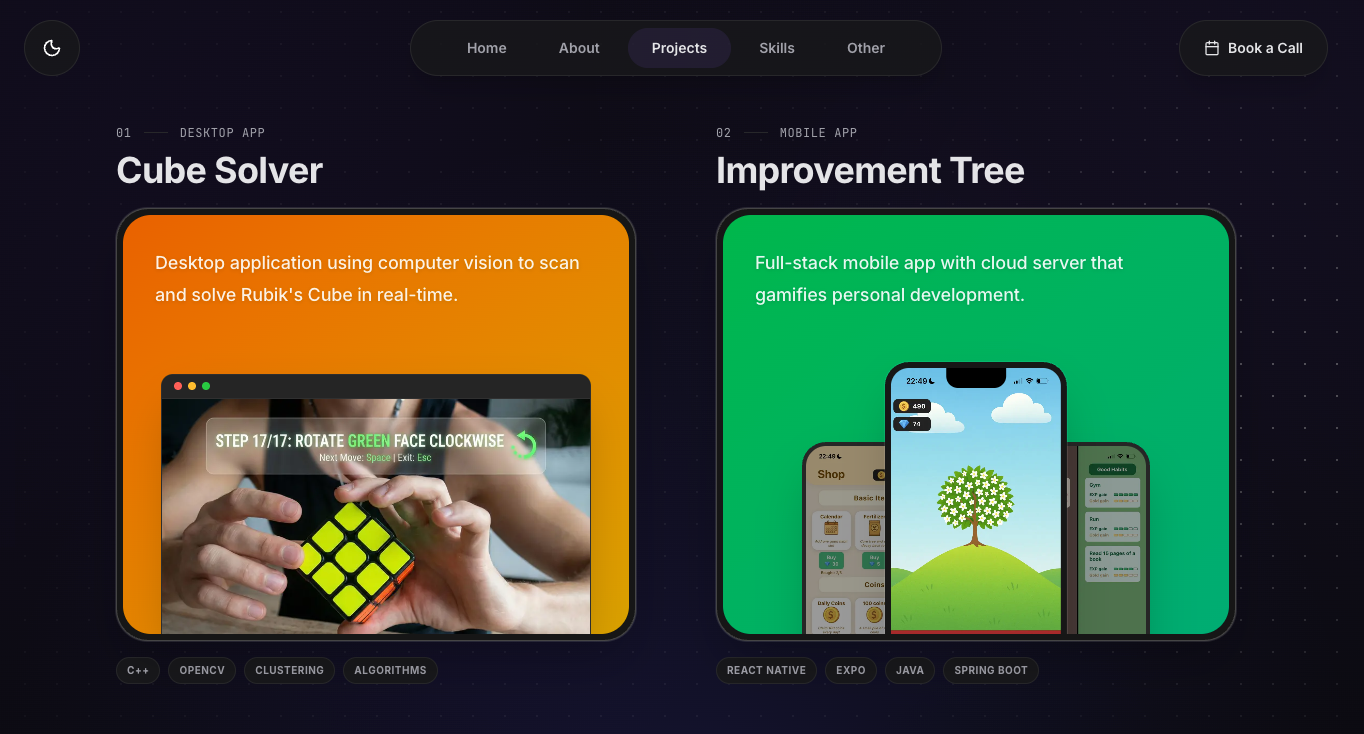
That proof could be a portfolio project, dashboard, prototype, report, GitHub repository, case study, or documented work sample.
For each project, answer three questions:
- What problem did you solve?
- What tools or methods did you use?
- What was the outcome?
For data analytics, you might build a dashboard using a sample business dataset.
For UX/UI design, you might create a case study that improves an app or website's flow.
For QA engineering, you might document test cases, bug reports, and your testing process for a sample product.
This is another reason structured training can help. With TripleTen, you work on practical projects throughout the program. When you graduate, you’ll already have a portfolio of work that shows what you can do.
Do not just show the finished work. Show how you think, how you make decisions, and how you approach real problems.
Step 6: Network with professionals
Networking can help you understand how people actually get hired in your target role.
Start small. Follow people on LinkedIn who already work in the role you want. Pay attention to the skills they mention and the projects they share.
Then reach out to a few people. Ask what helped them get started, what skills mattered most, or what they wish they had known earlier.
If you study with TripleTen, speak to graduates. Ask which projects helped them most, what interviews were like, and how they explained their previous experience.
You are not networking to “sell yourself.”
Use these conversations to find out what employers expect, which skills matter, and what helped other people get hired.
Step 7: Transition gradually
You do not have to quit your job tomorrow.
It takes time to learn new skills, build a portfolio, and get ready to apply for new roles. That is why it makes sense to start learning while you are still working.
That is also how TripleTen bootcamps are designed. Our online, part-time programs fit around work, family, and other responsibilities, so you can keep your income while moving gradually toward your target role.
You can also test the move in low-risk ways. Take on a small freelance project. Ask for a tech-adjacent task at work. Help a nonprofit or local business with a simple project.
Each one gives you more experience and more proof for your portfolio.
Then start applying before you feel 100% ready.
You do not need to know everything. You need enough evidence to show you can learn, solve problems, and do useful work.
Best career change ideas at 45
The best career change at 45 depends on your strengths, goals, income needs, and learning timeline.
These tech roles can be a strong place to start.
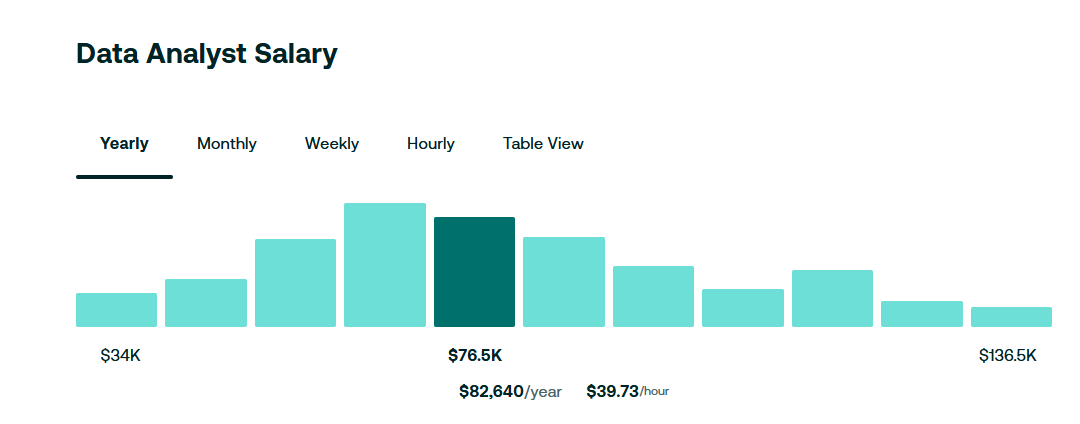
Data analyst
Data analysts help organizations turn raw information into useful insights. They clean data, build dashboards, create reports, analyze trends, and help teams make better decisions.
Core skills: Excel, SQL, Python, data visualization, dashboards, analytical thinking, and reporting.
Average salary: $82,640
Average time to land this role: 4 to 14 months
Quality assurance engineer
QA engineers test software before it reaches users. They identify bugs, write test cases, check features, document issues, and help teams improve product quality.
Core skills: Manual testing, bug reporting, test cases, API testing, debugging, automation basics, communication, and attention to detail.
Average salary: $95,168
Average time to land this role: 5 to 15 months

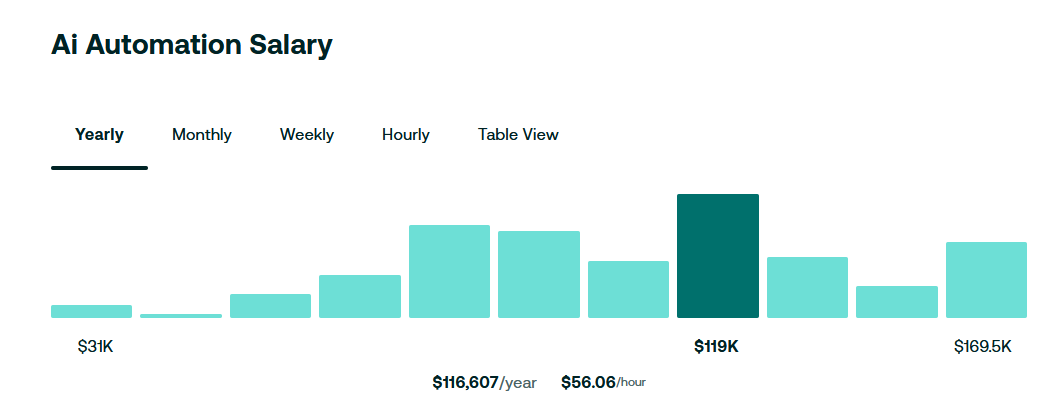
AI automation specialist
AI automation specialists help businesses save time by automating repetitive work. They connect tools, build workflows, create AI-powered assistants, and improve internal processes.
Core skills: Workflow design, automation platforms, integrations, APIs, prompt writing, process mapping, and problem-solving.
Average salary: $116,607
Average time to land this role: 4 to 14 months
UX/UI designer
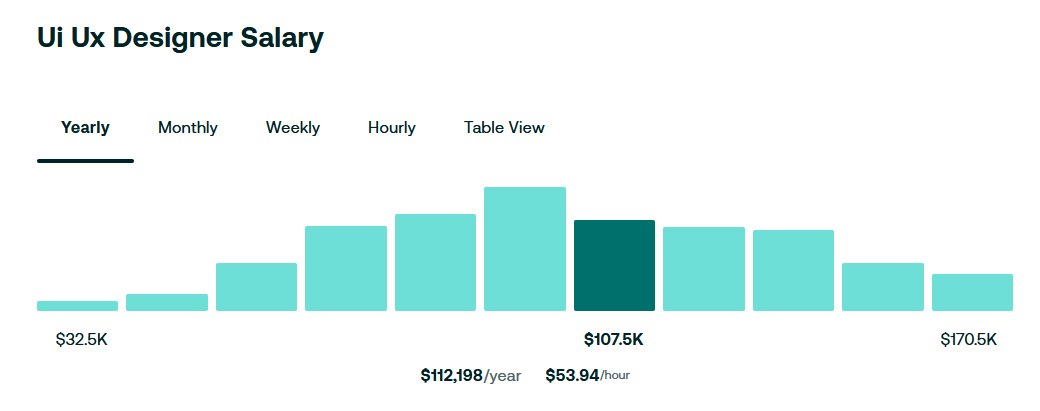
UX/UI designers improve how digital products look, feel, and work. They research users, map journeys, create wireframes, design interfaces, build prototypes, and test how people interact with a product.
Core skills: Figma, user research, wireframing, prototyping, usability testing, visual design, and communication.
Average salary: $112,198
Average time to land this role: 5 to 15 months
Your Next Career Can Build on What You Already Know
Changing careers at 45 is possible.
You already have skills, experience, and a better idea of what you want from work. The next step is finding a role that fits your life and building the skills to get there.
You do not need to start over.
You just need to start moving.
Frequently asked questions
How do I explain a career change at 45 in an interview?
To explain a career change at 45 in an interview, connect your past experience to your target role.
Briefly explain why you are changing careers, what skills you have built, and how your previous experience helps you bring value. Do not present your past career as wasted time. Show how it gives you useful experience, maturity, and perspective.
How do I change careers at 45 if I have financial responsibilities?
To change careers at 45 with financial responsibilities, start by calculating your minimum income needs and how much time you can realistically spend retraining.
You can reduce risk by learning on the job, choosing a part-time program, building a transition fund, comparing salary ranges, and applying before you feel completely ready.
If paying for training is one of your biggest concerns, read our guide on how to pay for a bootcamp. It walks through payment options, financial aid, and practical ways to make your career change more manageable.
Which career changes at 45 are best for remote work?
The best remote-friendly career changes at 45 are roles where your existing experience still gives you an edge. For many career changers, data analytics or QA testing can be a good fit. If you are stronger with people than technical tasks, customer success or technical support may be a better route.
These roles suit career changers because they rely on clear communication, documentation, and problem-solving. Those are skills many mid-career professionals already have.

.avif)
.avif)


