
%20(2).avif)


We can't promise you a tech job (no one honestly can). But if you want to break into tech, we can give you better chances to thrive there: the skills employers are looking for, coaching through your job search, and a safety net if things don't work out. You bring the work, and we bring the tools, platform, practitioners, and coaching.
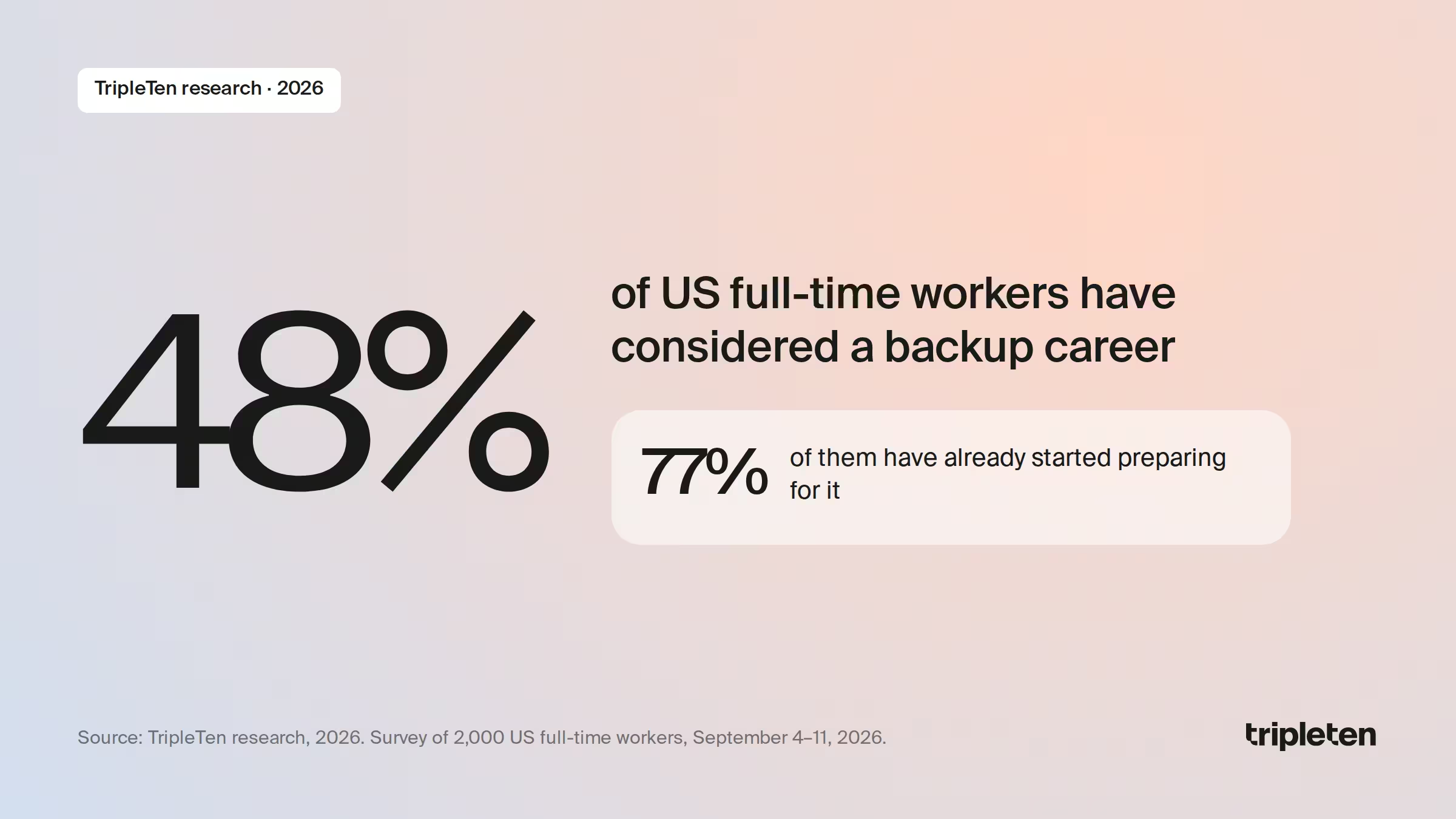
If you're thinking about it, you're in good company. According to 2026 TripleTen research of 2,000 US full-time workers, 48% have considered a backup career, and 77% of them have already started preparing for it. Most are building on what they know: 83% say the skills from their current job would be useful in their backup career.
How to break into tech: what you'll need
Whether you want to build software, work with data, test products, protect systems, or automate work with AI, there's a TripleTen program for it: AI Software Engineering, Data Analytics, Quality Assurance, Cybersecurity, and AI Automation. Here's what it takes to break into tech, and how we support each part.
In-demand skills employers are looking for
You'll learn AI, use AI, and graduate AI-fluent. Our programs are taught by working professionals, on a curriculum reviewed every two months, so what you learn keeps pace with what employers need. That matters, because being told to use AI isn't the same as being trained to use it.
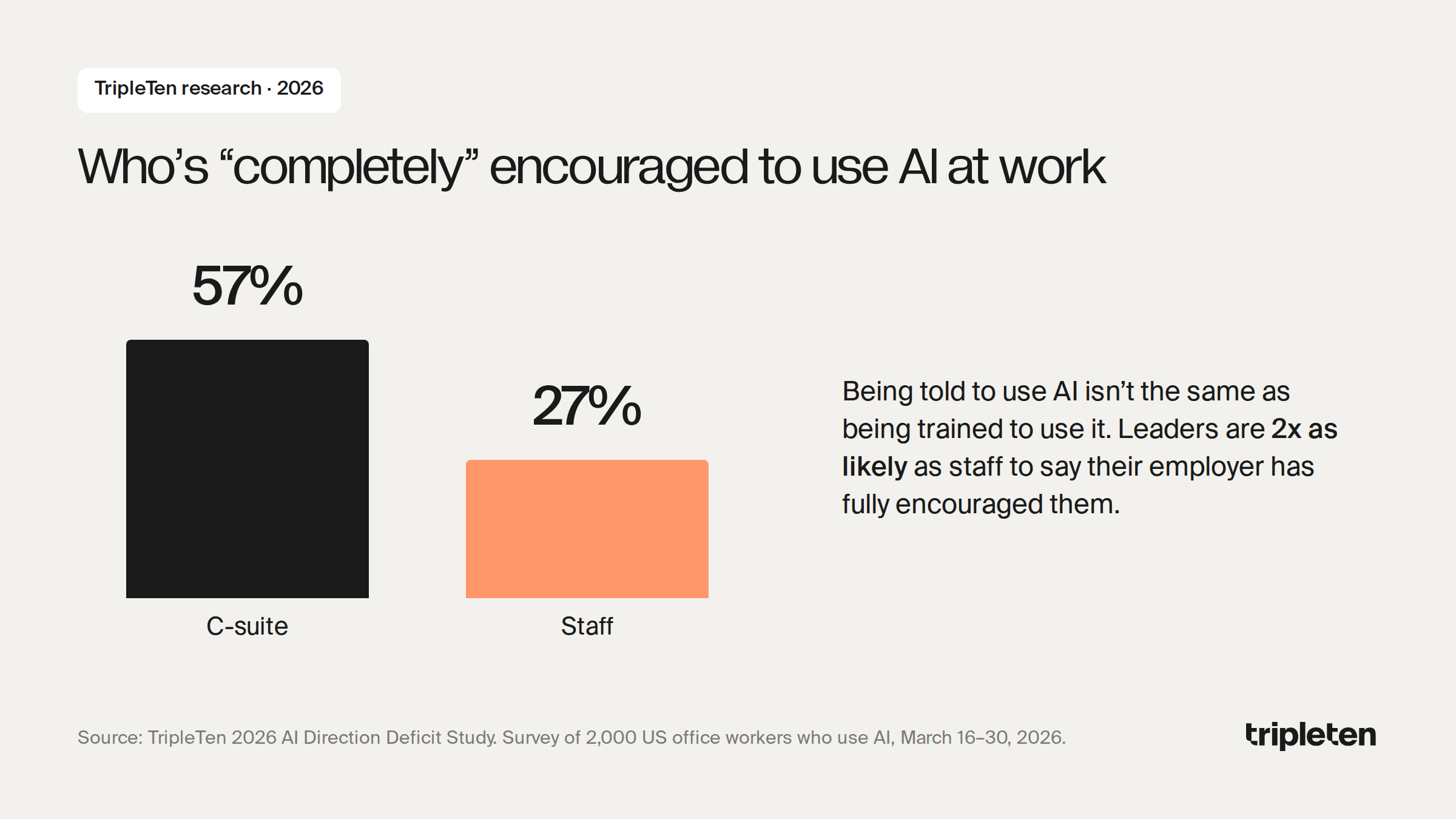
In the 2026 AI Direction Deficit Study of 2,000 US office workers who use AI, only 27% of staff said their employer had "completely" encouraged them to use it, compared with 57% of C-suite leaders.
Wondering how to get into tech without a degree? 80% of TripleTen students start with no prior tech background, and 61% don't have a bachelor's degree.
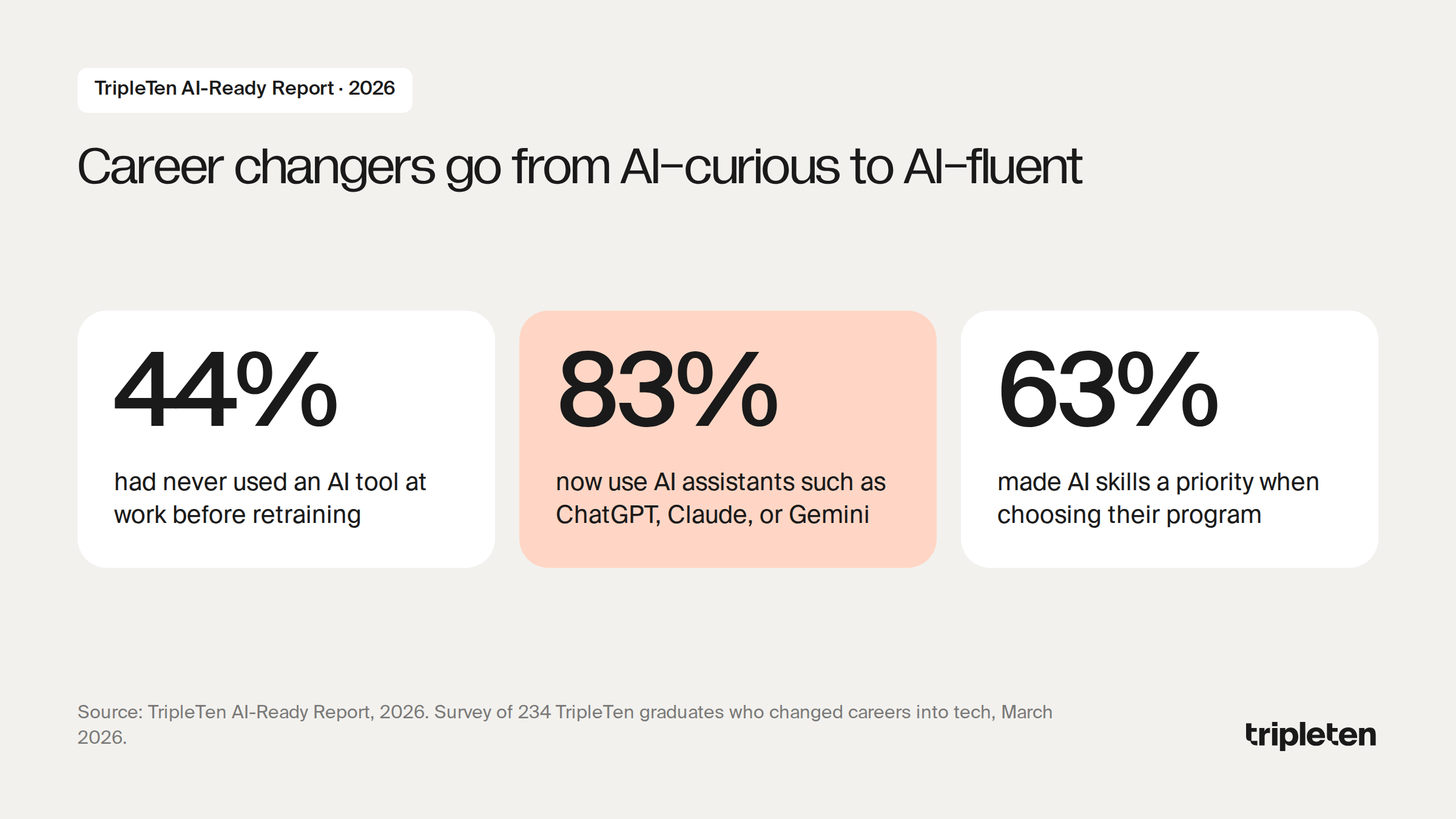
In our AI-Ready Report, a March 2026 survey of 234 TripleTen grads who switched careers, most came from non-technical, in-person roles such as customer service and the trades, and 44% had never used an AI tool at work before retraining. Today, 83% use AI assistants such as ChatGPT, Claude, or Gemini, and 63% said AI skills were a priority when they chose their program.
So you'll learn the job by doing the job. You'll put technical skills to the test in code reviews, Code Jams, and externship projects with employer partners, and you'll practice the soft skills around them: solving problems, presenting your work to stakeholders, juggling priorities on team projects, and answering behavioral interview questions.
You'll finish with a portfolio of projects that shows employers what you can do. As TripleTen's VP of Enrollment, Victor Menin, put it in the AI-Ready Report:
The bar has moved from 'completed a program' to 'can demonstrate what they built,' and that's a bar serious students can clear. Victor Menin, Ed.D. Vice President of Enrollment, TripleTen
Career coaching through your job search
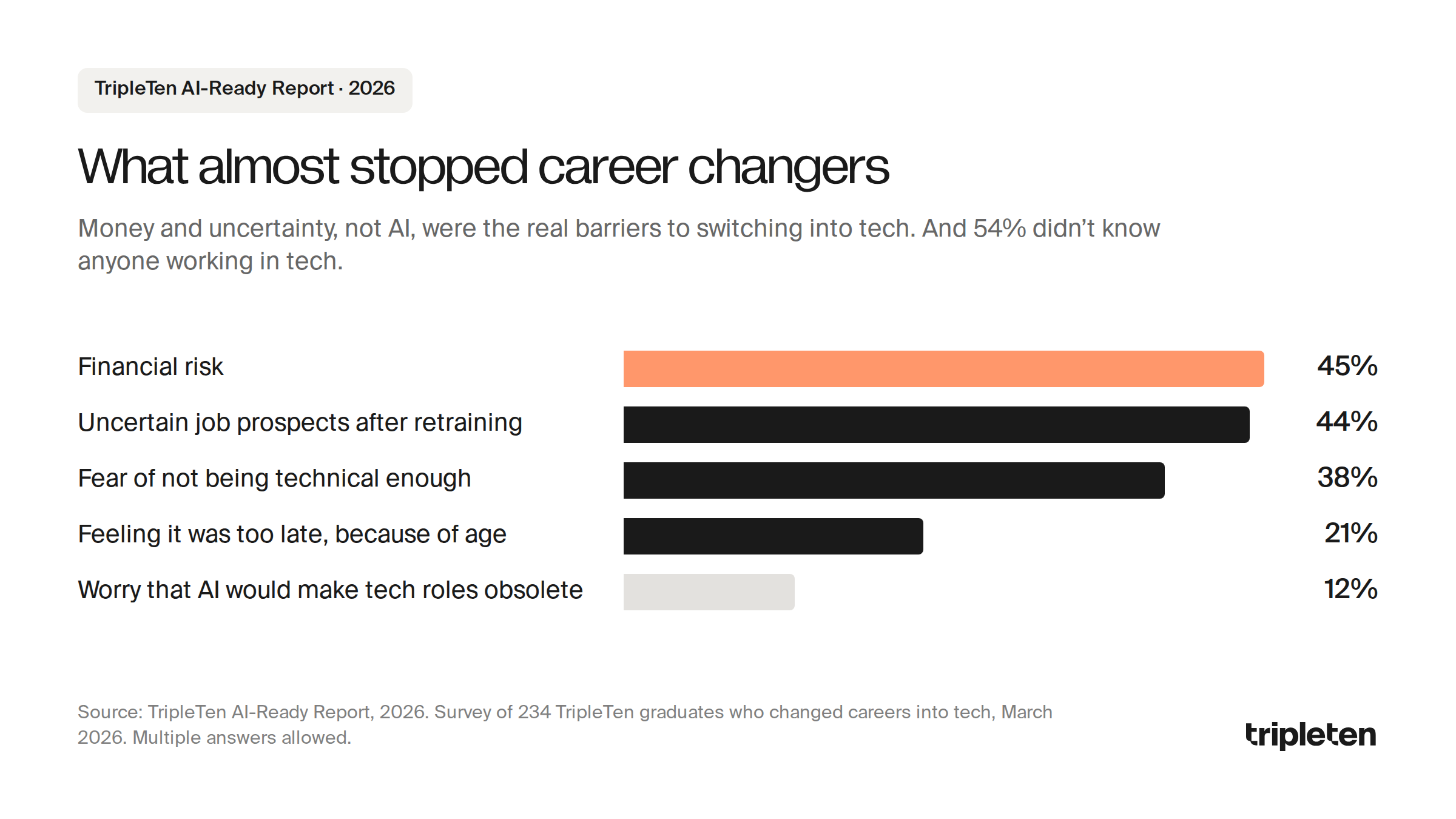
Figuring out how to get a job in tech, especially when you're switching careers, isn't always easy, and it can feel lonely. In the AI-Ready Report, 54% of career changers said they didn't know anyone working in tech when they decided to switch. Their biggest worries were practical ones: financial risk (45%), uncertainty about job prospects after retraining (44%), and fear of not being technical enough (38%). That's why you won't do it alone.
While you're learning, tutors are there when you get stuck, with live sessions, office hours, and one-on-one help. After you graduate, you'll move into a Career Sprint: career projects and job-search prep, including your resume, LinkedIn, GitHub, portfolio, and cover letter. Then comes your active job search, organized on our job-search platform with a career coach supporting you along the way.
The two fears I hear most are 'I can't afford to bet on this' and 'I don't know a single person in tech to ask.' No one does this alone here. Every student gets a dedicated career coach and a community of people making the same leap at the same time. Victor Menin, Ed.D. Vice President of Enrollment, TripleTen
You'll get at least two live career activities a month, such as workshops and industry projects. You'll practice with AI mock interviews, and once you reach a real employer's interview stage, you'll do a live mock interview with your coach. All of this is included in your tuition.
And it doesn't end when you land a job. You'll keep lifelong access to program updates and career coaching.
What breaking into tech looks like for our grads
We publish our outcomes so you can decide with clear eyes. More than 2,600 US students have graduated from TripleTen. Nearly two-thirds (63%) were hired within 10 months, and 88% of employed grads were still in their role a year later. The average starting salary is $68,300, and grads report an average salary increase of $16,300.
Breaking into tech still takes persistence. In the AI-Ready Report, 25% of grads in an active job search said it was taking longer than they'd planned (20% said it was going faster). Their advice to people still in their old fields was consistent, though: AI is a tool, not a threat, so don't wait until you have no choice but to adapt.
How to get into tech: degree vs. self-study vs. bootcamp
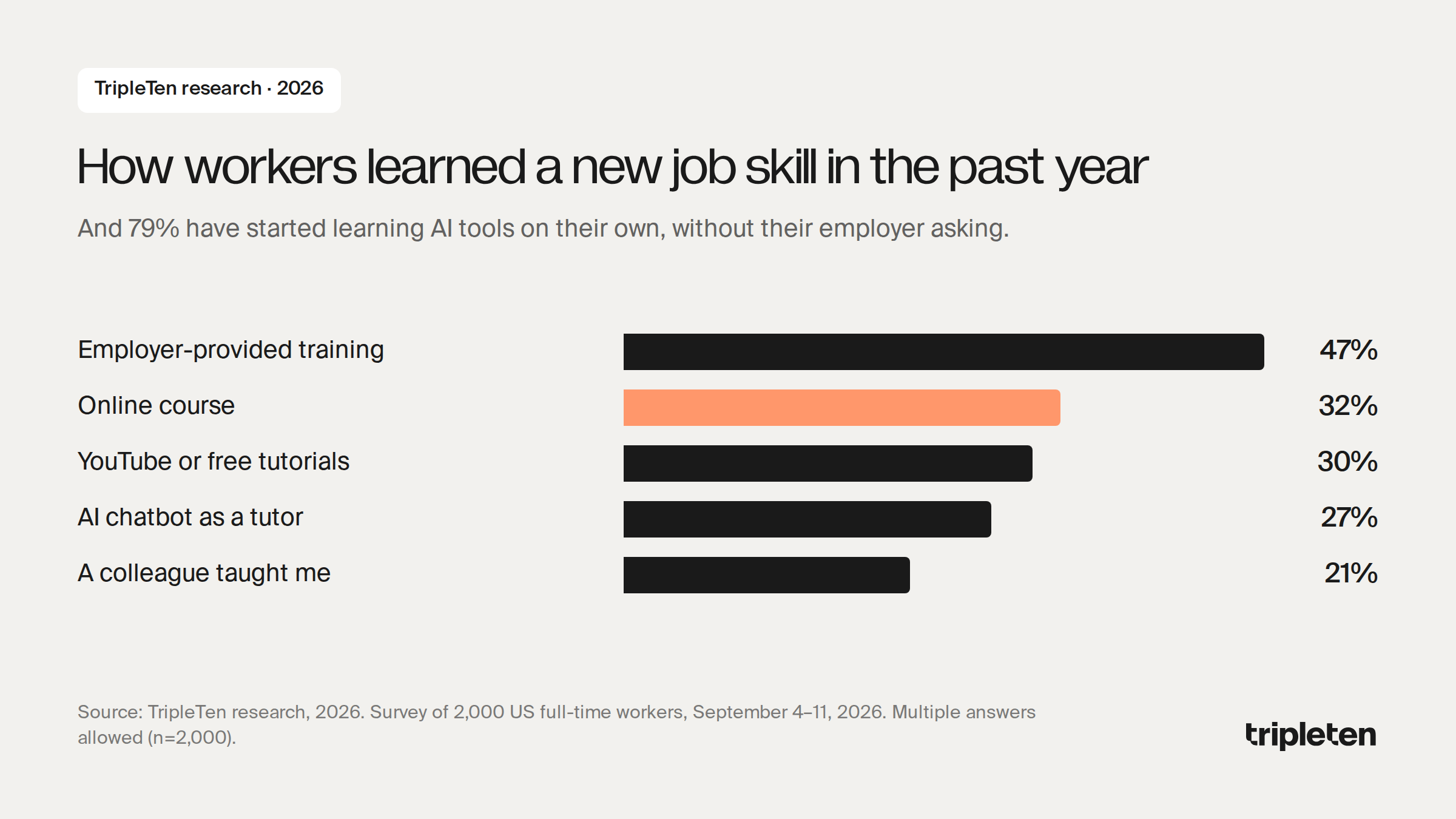
There's more than one way to get into tech, and programs like ours aren't the only one. Many people succeed by going back to school or by teaching themselves with resources such as YouTube videos. Many people are already learning on their own, too. In the same 2026 TripleTen research, 79% of workers said they've started learning AI tools without their employer asking, and while employer-provided training was the most common way workers picked up a new skill in the past year (47%), online courses (32%) and YouTube or free tutorials (30%) followed close behind.
Each route has its pros and cons. Degree programs can be more immersive and prestigious, but they cost more and focus less on job training. Teaching yourself to code is the cheapest and most flexible option, but it's hard to know whether the advice is sound, and it takes self-awareness, diligence, and strong time management.
Bootcamp-style programs balance the two. They're part-time, online, and flexible, they usually cost less than a degree, and many offer payment plans or financing. They're also built around getting you job-ready, with portfolio projects, career services, and employer partnerships. TripleTen works with 250+ employer partners.
Is a TripleTen right for you?
Getting into tech starts with knowing which route fits you. You won't know whether a program like this makes sense until you learn more about yourself, how you like to learn, and the programs themselves.
Here's a hint on where to start. Take our career quiz, read our student success stories, or book a call with our team to get your questions answered.