



- Web development remains one of the best-paid entry-level tech paths for career changers, with web developers earning a median annual wage of roughly $95,000.
- The best web development bootcamps compress that career change into 3 to 9 months. But there’s a catch: tuition, learning formats, and career support vary significantly. And student outcomes aren't always transparent.
- The five bootcamps in this guide are among the highest-rated web development programs across Course Report, SwitchUp, and Career Karma. We break down what makes each program special.
For career changers who don't want to spend four years and six figures on a traditional computer science degree, a web development bootcamp offers one of the fastest routes into one of tech’s best-paid entry-level roles.
Source: U.S. Bureau of Labor Statistics
The U.S. Bureau of Labor Statistics projects web developer and digital designer roles to grow by 7% from 2024 to 2034 (faster than the average for all occupations). Meanwhile, Glassdoor data puts the base annual pay for web developers at $64,000 to $108,000.
Unsurprisingly, the job market for web developers is incredibly competitive. While it’s true that degrees are optional, and agencies and tech startups will typically look at GitHub repositories, you will need another trust signal to make your application stand out.
This is where web development bootcamps come in. But there’s a catch: not all bootcamps are equal. Providers offer varying tuition levels, and some companies are more transparent about their student outcomes than others.
We pulled the top-rated online web development bootcamps across Course Report, SwitchUp, and Career Karma and compared them on the criteria that actually matter to students:
- Curriculum
- Format
- Career support
- Transparency
- Cost.
All five programs below have notched an average review rating of 4.6+ across the three sites. Each has earned its place on this list, and the right fit depends on your goals, budget, and learning style.
How we evaluated the best web development bootcamps
We scored each program against the same criteria:
- Curriculum depth and technical coverage: Does the syllabus prepare students for real developer roles, including modern frameworks, databases, and deployment?
- Format and scheduling: Full-time or part-time, synchronous or self-paced? Does the bootcamp’s structure fit typical career-changer constraints?
- Career support quality: What does post-graduation support include? How long does it continue? Is it baked into the tuition, or is it a separate service?
- Verified student outcomes: Are placement rates and salary figures publicly available?
- Cost and financing transparency: Verified all-in numbers, discounts, and payment flexibility.
- Student ratings: Averaged across Course Report, SwitchUp, and Career Karma, the three most-cited independent review platforms in the bootcamp industry.
The top-rated web development bootcamps in 2026
1. TripleTen: Best for career changers transitioning to AI-ready tech roles
Ideal for: Career changers who want to build a deployable web app portfolio with a JavaScript-first stack (React, Node) that aligns directly with junior web developer roles.
- Format: Online, part-time
- Duration: 7 months
- Tuition: $9,800 standard (before discounts); installment plans available up to 24 months
- Rating: 4.8/5 on Course Report | 4.87/5 on SwitchUp | 4.7/5 on Career Karma.
TripleTen highlights
- 80% of TripleTen students come from non-tech backgrounds, and 88% of graduates who land a role stay employed in that field for at least a year.
- Full-stack web development curriculum built around HTML, CSS, JavaScript, React, Node.js, MongoDB, Git/GitHub, and AI-assisted workflows.
- Every project is reviewed line by line by a working software engineer, not an automated grader.
- Externships with partner companies let students build real-world portfolio pieces before graduation.
- Money-back guarantee: get your tuition back if graduates don't get hired within 10 months (terms apply).
TripleTen's AI Software Engineering Bootcamp targets beginners and career changers with no coding background. With no admissions test and a zero assumed baseline, the program teaches students not just how to write code, but also how to use AI effectively to accelerate workflows.
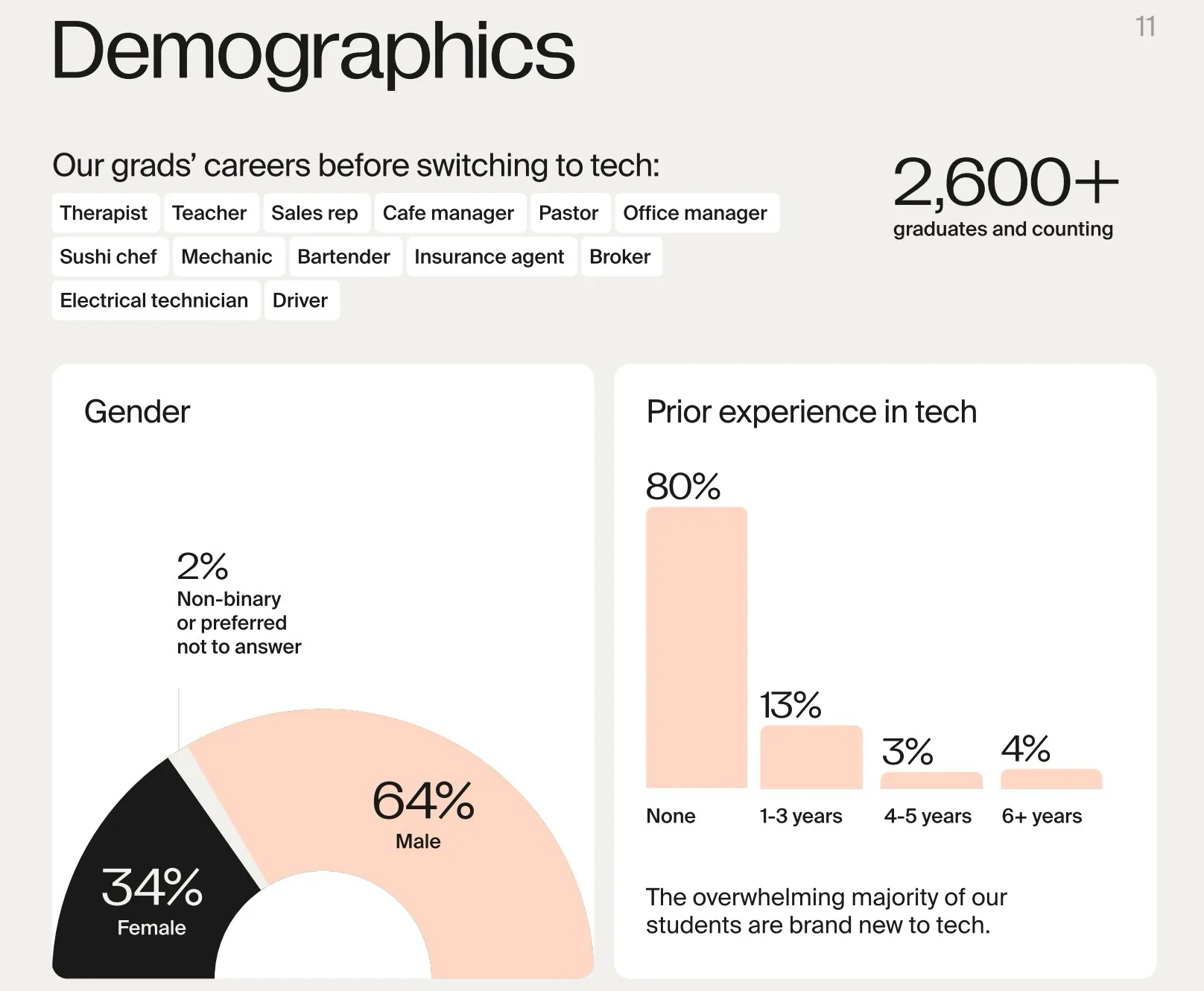
Since 2020, 2,600+ graduates have completed TripleTen's tech bootcamps, with 80% having no previous technical experience (read more in TripleTen’s Student Achievement Highlights 2026). The web development curriculum is heavily focused on hands-on learning, taking students through six cumulative, real-world projects built using actual business data.
Each student's project is reviewed line by line by a working engineer who provides written feedback before the next sprint. TripleTen tutors are available by appointment and in open office hours throughout.
Tuition and financing information
Tuition information: Standard full tuition is $9,800, but paying upfront brings the cost down to $7,350 (a $2,450 discount as of this writing). This can be paid in a single installment or up to 4 payments.
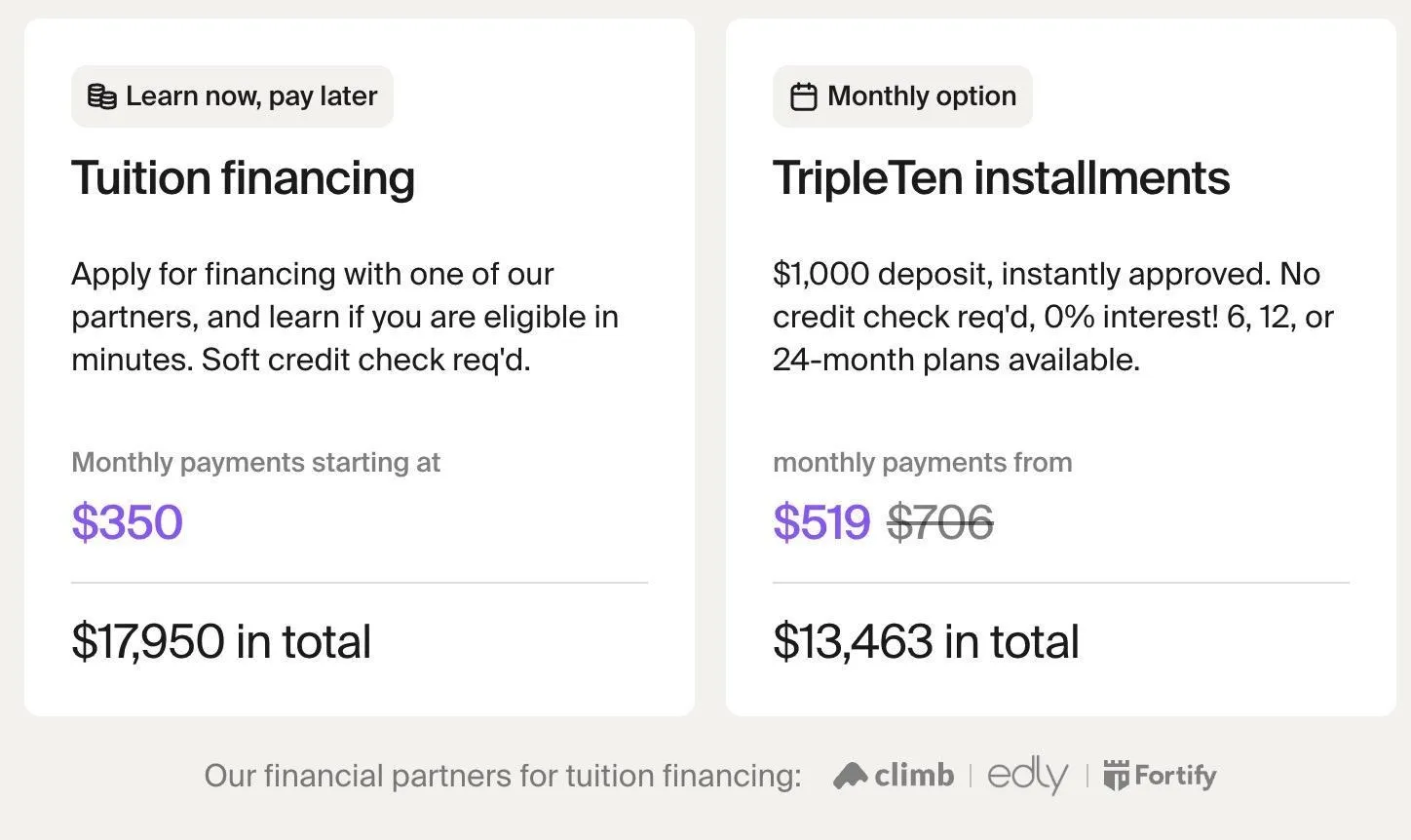
Financing: TripleTen offers in-house financing approved instantly with a $1,000 deposit (no credit check required) for plans ranging from 6, 12, and 24 months. Third-party financing through third-party institutions is also available, with monthly payments starting at $350.
TripleTen hands-on learning and career support
To ensure graduates are immediately job-ready, TripleTen supplements the core curriculum with extensive practical experience:
- Code Jams: In 2025, TripleTen hosted 56 hackathon-style team contests featuring unique challenges that generated portfolio-worthy projects.
- Externships: Students receive actual on-the-job training with partner companies, completing over 60 real-world projects through this pipeline.
TripleTen treats job searching as a key component of post-graduation support. Students received over 1,600 hours of career coaching in 2025 alone, plus access to career tools, unlimited interview prep, and a job board with 300+ new opportunities daily.
What students are saying
2. Le Wagon: Best for a global community and an immersive in-person experience
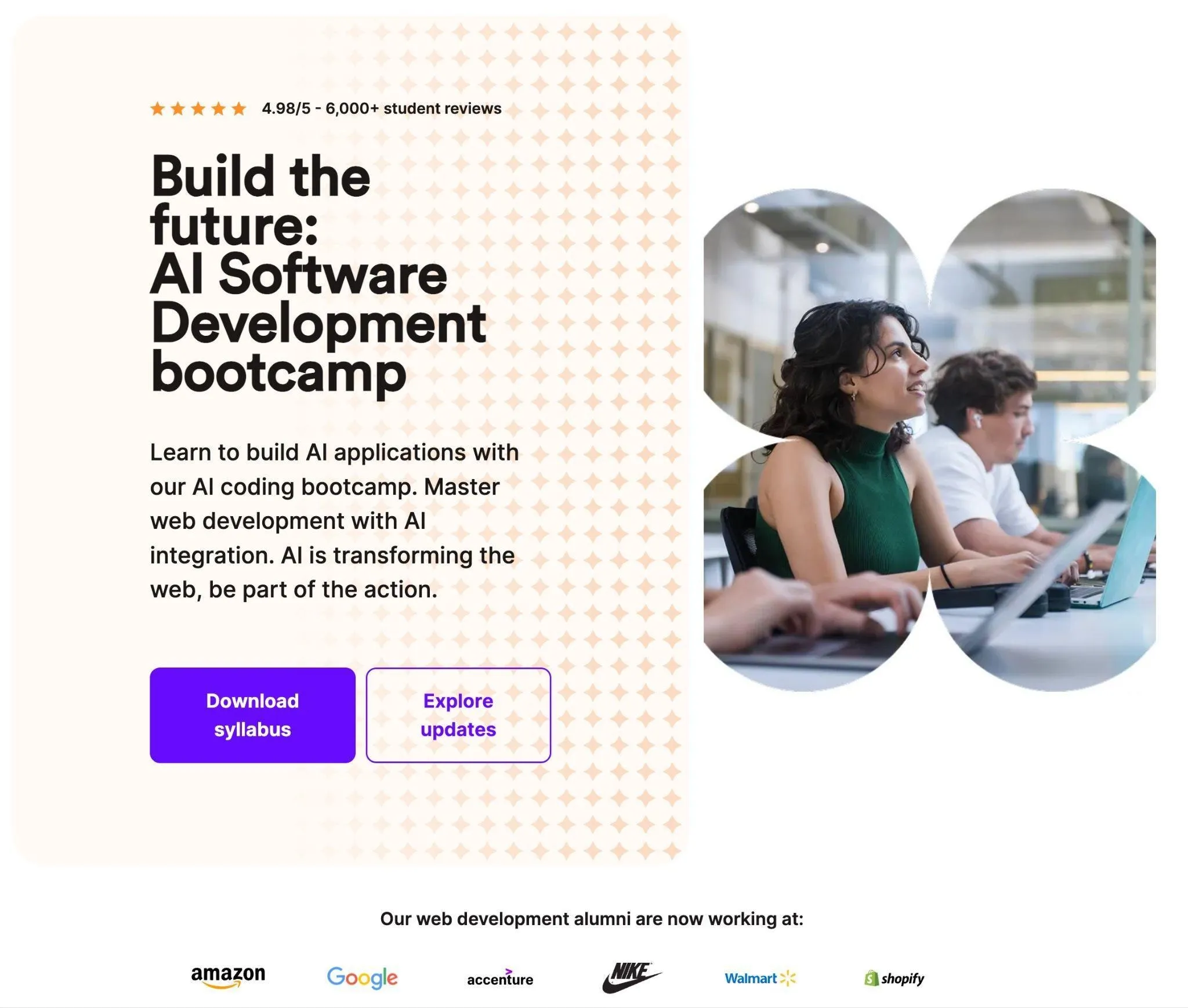
Ideal for: Aspiring web developers who want to ship a working product fast, especially anyone eyeing freelance client work or a startup project.
- Format: Online or in-person at 40+ campuses worldwide; full-time or part-time
- Duration: 9 weeks full-time, 7 months part-time
- Tuition: Varies by location; typically $6,000-$8,000
- Rating: 4.95/5 on Course Report | 4.97/5 on SwitchUp | 4.8/5 on Career Karma.
Le Wagon highlights
- 32,000+ graduates worldwide across 40+ cities.
- Full-stack web development curriculum built around Ruby, Rails, JavaScript, and now AI integration.
- 90% of alumni found employment, freelance work, or launched a startup within six months, per Le Wagon's 2023 employability study.
- Career services include 1:1 coaching, job fairs, and access to 1,000+ hiring partners.
Le Wagon is one of the most globally accessible bootcamps in the world, with campuses in more than 40 cities across Europe, Asia, the Americas, and Africa, plus a fully online option. The 9-week full-time program is intense (Monday to Friday, 40 hours a week), while the 7-month part-time option (16 hours a week) is designed to fit around a full-time job.
The web development curriculum has been updated to integrate AI throughout, with modules on AI-assisted coding using tools like Claude Code and building AI-powered applications. Students still master the full-stack foundation (Ruby, Rails, JavaScript, databases, deployment), but the final marketplace project has been reworked to include AI integration.
Tuition and financing information
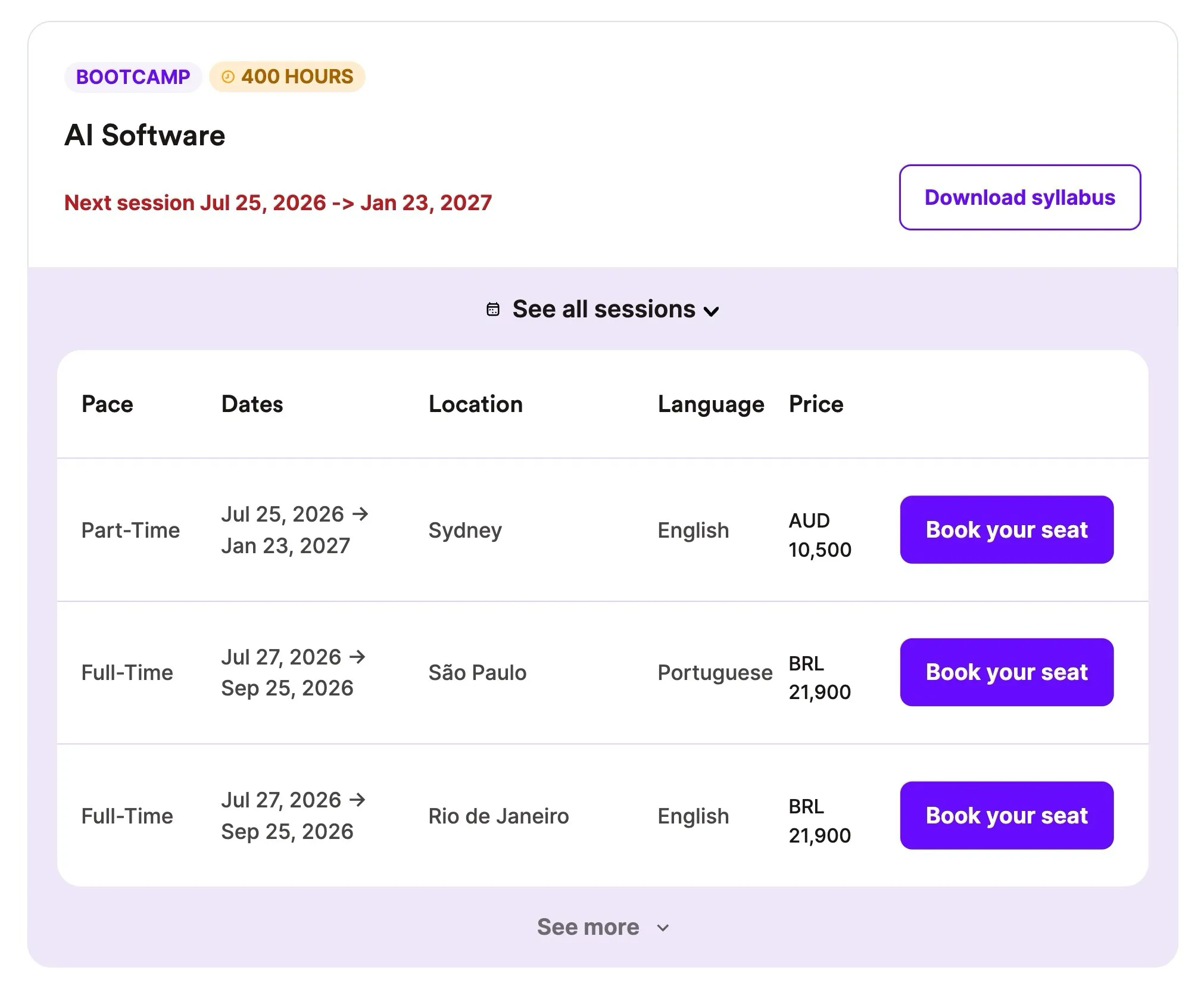
Tuition information: Le Wagon’s pricing is highly location-specific: "Tuition fees are tailored to each location, reflecting local cost of living and economic factors, ensuring accessibility across cities. For exact pricing and available payment options, visit the course page for your chosen city on Le Wagon's website."
For U.S-based learners, the practical route is the online North America (EST) cohort, currently listed at CAD 12,500 for the January 2027 intake.
Financing: Financing options include upfront payments, installment plans, deferred payment, and Income Share Agreements (ISAs) in select cities. Public funding covers up to 100% of tuition in certain countries, though this is more limited for U.S-based students.
The fine print: Le Wagon doesn’t appear to offer a money-back job guarantee. Certain programs in certain cities offer subsidized refunds for successful job seekers.
In addition, Le Wagon’s most recent public employability data shows European and online cohorts from 2023. We’ve been unable to verify any U.S-specific outcome.
Le Wagon career services
Career support runs on Le Wagon's global network rather than a U.S-focused hiring partner model. Students can expect:
- 1:1 coaching from a Talent Manager
- Networking events
- Job fairs
- Introductions from a 1,000+ hiring partner network
- Lifetime access to course materials and alumni Slack channels.
What students are saying
Alumni feedback across Course Report and SwitchUp centers on three themes: the intensity of the 9-week format, the quality of teachers, and the strength of the alumni community.
3. Hack Reactor: Best for accelerated timelines and VA students
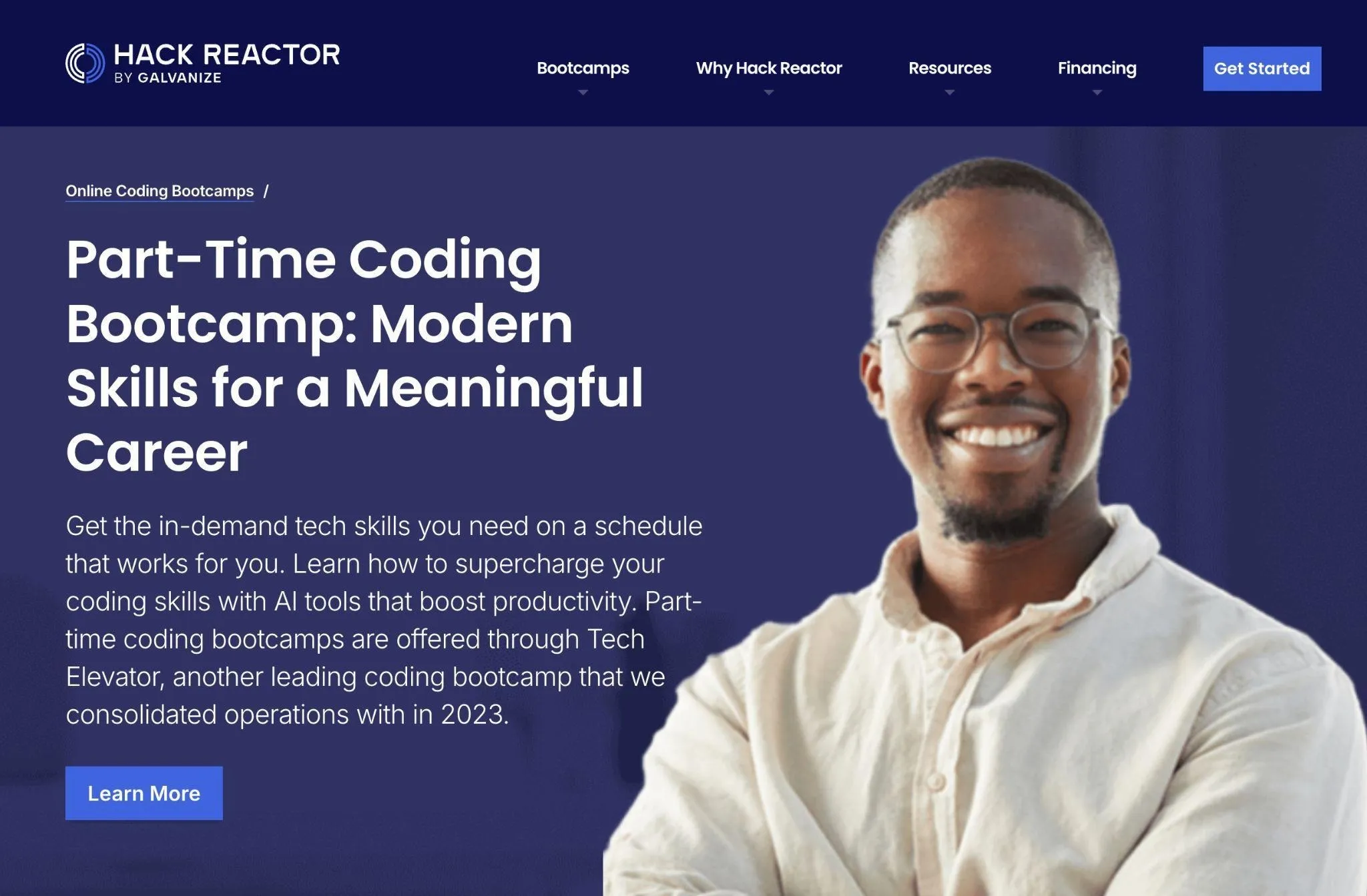
Ideal for: Learners who can study full-time and want a deep JavaScript and computer-science grounding.
- Format: Online immersive, full-time, or part-time
- Duration: 16 weeks full-time, 30 weeks part-time
- Tuition: $19,480; ISA and loan financing available
- Rating: 4.62/5 on Course Report | 4.75/5 on SwitchUp | 4.8/5 on Career Karma.
Hack Reactor highlights
- 14,000+ alumni across 1,100+ companies.
- The beginner track requires no prior coding experience.
- VET TEC eligible; qualifying veterans can attend at no cost.
- 15-minute Criteria Cognitive Aptitude Test (CCAT) for admissions; $2,500 Merit Scholarship discount for high scorers.
Hack Reactor runs a 16-week full-time and 30-week part-time online coding bootcamp with a JavaScript-first curriculum. The full-time program expects 40 to 60 hours per week, while the part-time option is designed to fit around other commitments. Both tracks are open to complete beginners.
The curriculum is JavaScript-first and covers algorithms, data structures, React, Node.js, databases, deployment, and modern AI-assisted coding with GitHub Copilot. Admissions include a 15-minute CCAT, and students must pass a Summary Assessment to graduate.
Tuition and financing information
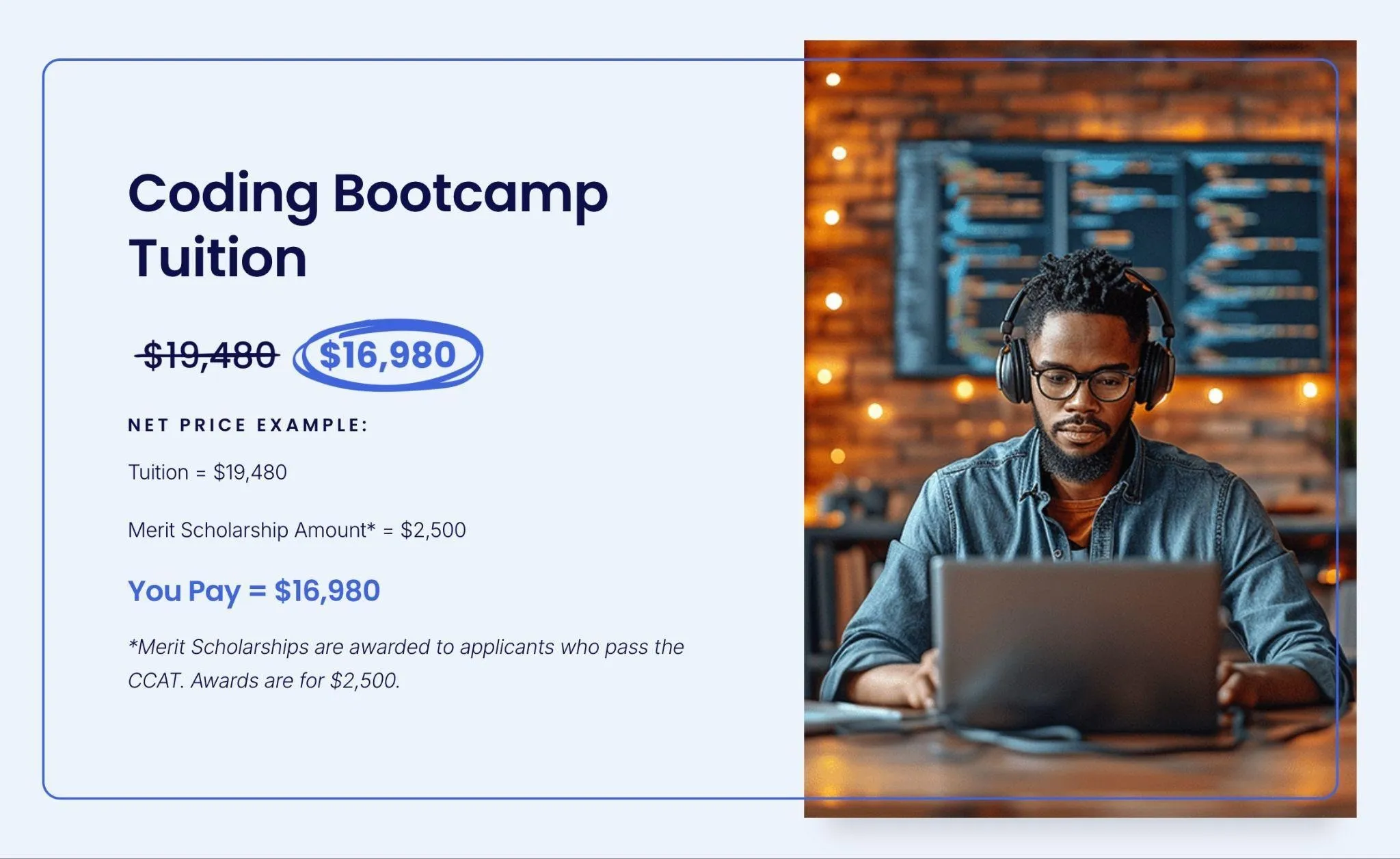
Tuition information: Hack Reactor's $19,480 tuition is the highest on this list. Flexibility options include a 50/50 split (half upfront, half at midpoint) and third-party loan financing. Passing the CCAT with a strong score unlocks a $2,500 Merit Scholarship.
Financing: Upon enrollment, students can choose between paying the full tuition upfront, a 50% split payment at the start and midpoint of the program, or paying through a third-party lender.
The standout financial feature is VET TEC eligibility: qualifying veterans can attend at no cost through the VA program without using their GI Bill entitlement.
The fine print: Hack Reactor doesn’t offer a money-back job guarantee. They've replaced their previous Income Share Agreement with a "Payment Protection Loan" (PPL) that requires a hard credit check and a $100 non-refundable deposit.
Maintaining PPL eligibility during the job search requires high weekly application targets tracked through the Huntr platform. The program also sets a firm academic bar: failing the Summary Assessment can lead to dismissal with only a prorated refund.
Hack Reactor career services
Career services include access to Hack Reactor's 14,000+ alumni network spread across 1,100+ companies.
What students are saying
4. App Academy: Best for a low upfront cost and a built-in tech residency
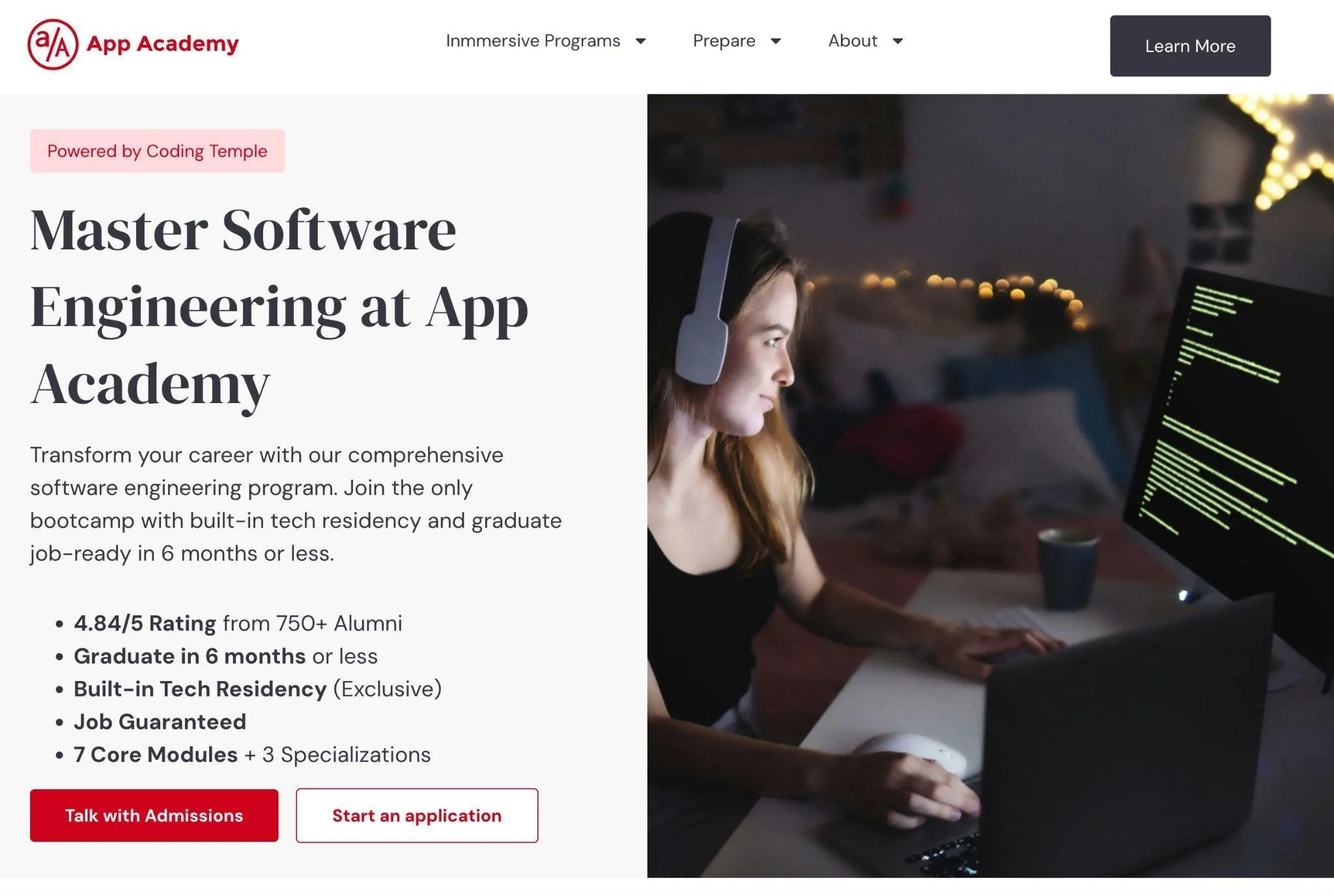
Ideal for: Web development learners who want to keep upfront costs low (the pay-in-full price is among the lowest here) and who value real client-team experience through a built-in tech residency.
- Format: Online, part-time live or flexible blended (powered by Coding Temple)
- Duration: Up to 6 months; Blended track runs at about 20 hours per week
- Tuition: $10,000 before discount; $3,500 paid in full (a $6,500 discount), or a 36-month installment plan with no deposit and 0% interest
- Rating: 4.7/5 on SwitchUp | 4.7/5 on Career Karma.
App Academy highlights
- Now powered by Coding Temple, with graduates working at 2,000+ companies, including Uber, Amazon, Google, and Microsoft.
- Job guarantee: land a software engineering role after graduation or your tuition is refunded (terms apply).
- Built-in Tech Residency gives students live project experience with real companies before they graduate.
- LaunchPad platform provides access to a large employer network and thousands of practice challenges.
App Academy, now powered by Coding Temple, runs a software engineering bootcamp that aims to get students job-ready in six months. Learners can choose between a Part-Time Live track and a flexible Blended Learning track (roughly 20 self-paced hours per week and live support), with both tracks leading to a portfolio of guided projects and a capstone.
One thing to note: App Academy's listed core modules center on Python and AI engineering (FastAPI, RAG, Docker). This may be a poor fit for students who want to focus specifically on front-end web development.
Unlike the other bootcamps on this list, App Academy has an admissions process that includes a personality and logic assessment, a video interview, and technical challenges in HTML/CSS, Git, and Boolean logic.
Tuition and financing information
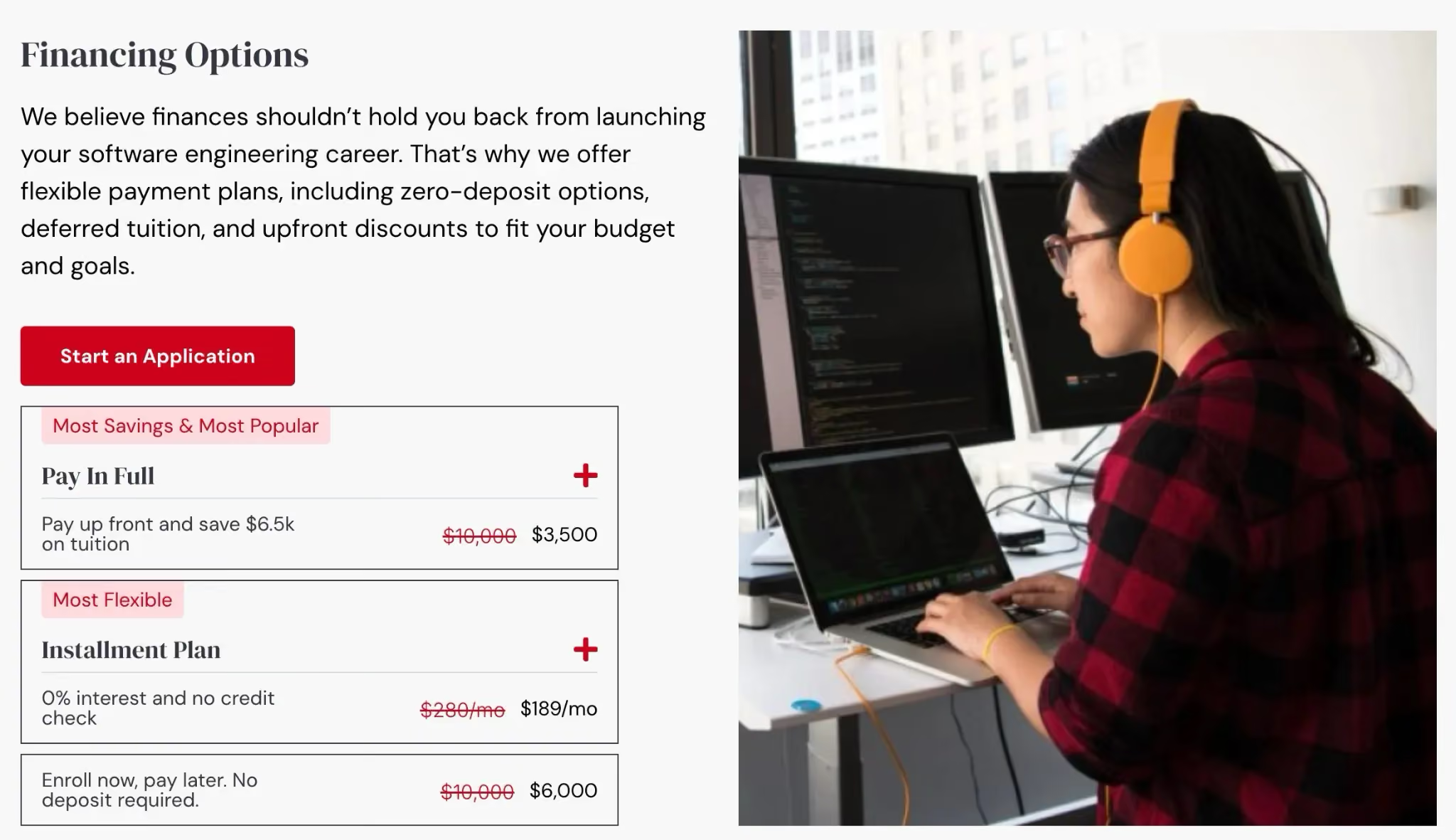
Tuition: App Academy lists tuition at $10,000 before discount. Paying in full brings it down to $3,500 (a $6,500 discount), which is the most affordable pay-in-full option on this list.
Financing: Alternatively, a 36-month installment plan is available with no deposit, no credit check, and 0% interest. The program is backed by a job guarantee: land a software engineering role after graduating, or your tuition is refunded.
The fine print: As with every job guarantee on this list, the refund is conditional. App Academy ties it to completing the program and meeting the terms of its guarantee, so read the current conditions with admissions before enrolling.
The steep pay-in-full discount ($10,000 down to $3,500) also means the headline and effective prices are very different, so be clear on which figure applies to your chosen payment path.
App Academy career services
Career support includes one-on-one career coaches for resume building and interview prep, student success managers, and lifetime career services with no expiration. Students also get access to the exclusive Tech Residency, where they work on live projects for real companies and get professional code reviews.
App Academy doesn’t currently publish recent placement-rate data on its program page, so specific web developer outcomes are difficult to verify independently.
What students are saying
5. Springboard: Best for self-directed learners who thrive on 1:1 mentorship
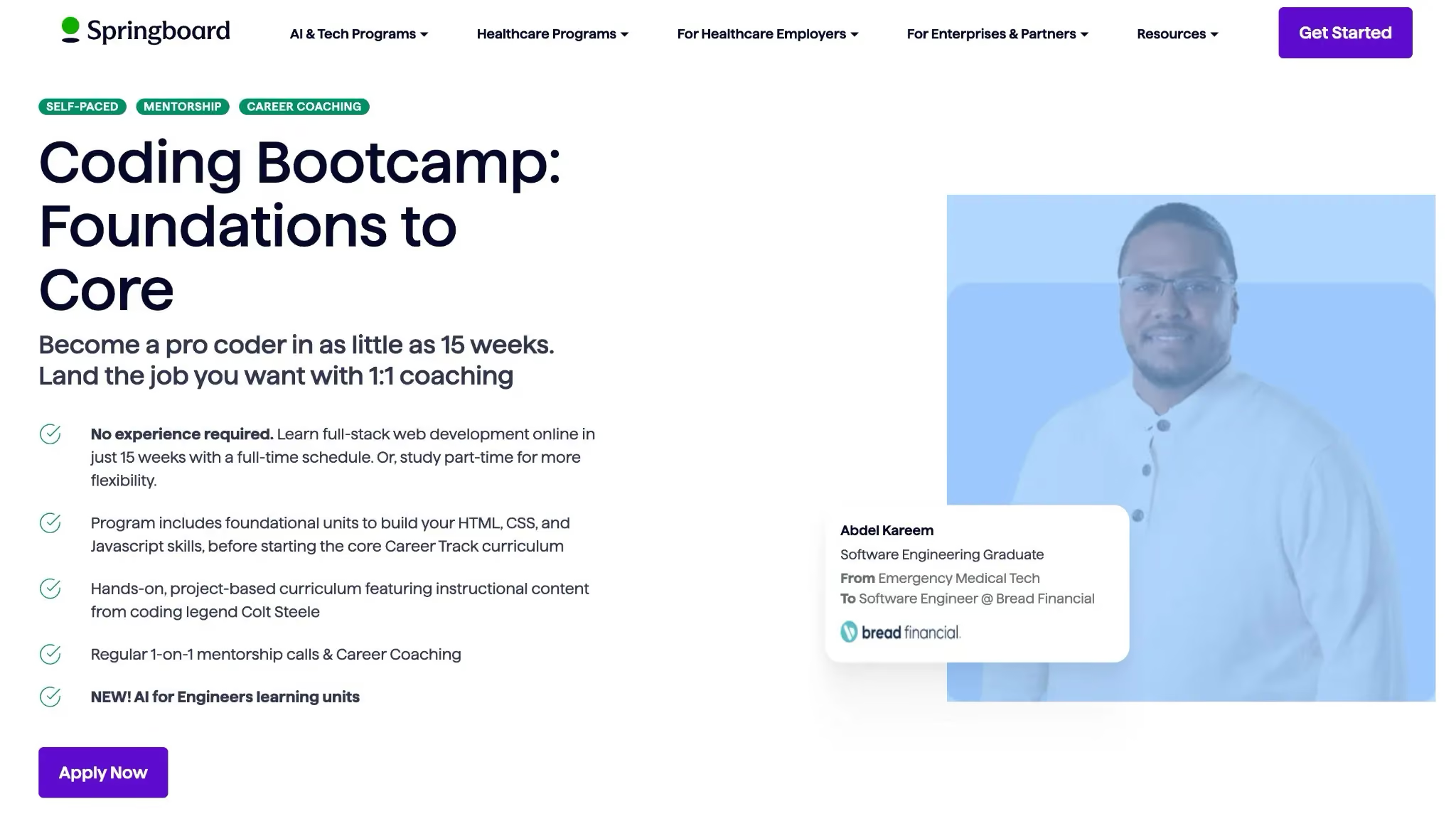
Ideal for: Independent learners building toward a full-stack web portfolio who want a working developer in their corner every week instead of a live classroom setting.
- Format: Full-time and part-time, self-paced with structure
- Duration: 15 weeks full-time, 9 months part-time
- Tuition: $9,900 upfront (with discount); financing and deferred tuition available
- Rating: 4.6/5 on Course Report | 4.7/5 on SwitchUp | 4.6/5 on Career Karma.
Springboard highlights
- Weekly 1:1 sessions with an assigned working software engineer.
- 85.6% placement rate (based on 2023 data).
- Curriculum designed with Colt Steele of Udemy; covers JavaScript, React, Node.js, MongoDB, and Python.
- Scholarships are available for veterans, women, and underrepresented groups.
Springboard runs two web development bootcamps at the same price:
- A full-time Coding Bootcamp: Foundations to Core (no experience required, starts with HTML/CSS/JavaScript basics).
- A part-time Software Engineering Career Track (requires JavaScript fundamentals, skips straight to full-stack development).
Both share the same core curriculum, developed in partnership with Colt Steele, and cover JavaScript, React, Node.js, MongoDB, and Python across five portfolio projects, including a MERN stack capstone. Both also include a newer AI for Engineers unit.
The support structure is identical for both: a dedicated 1:1 mentor (a working software engineer), a personal career coach, and a student advisor.
Tuition and financing information
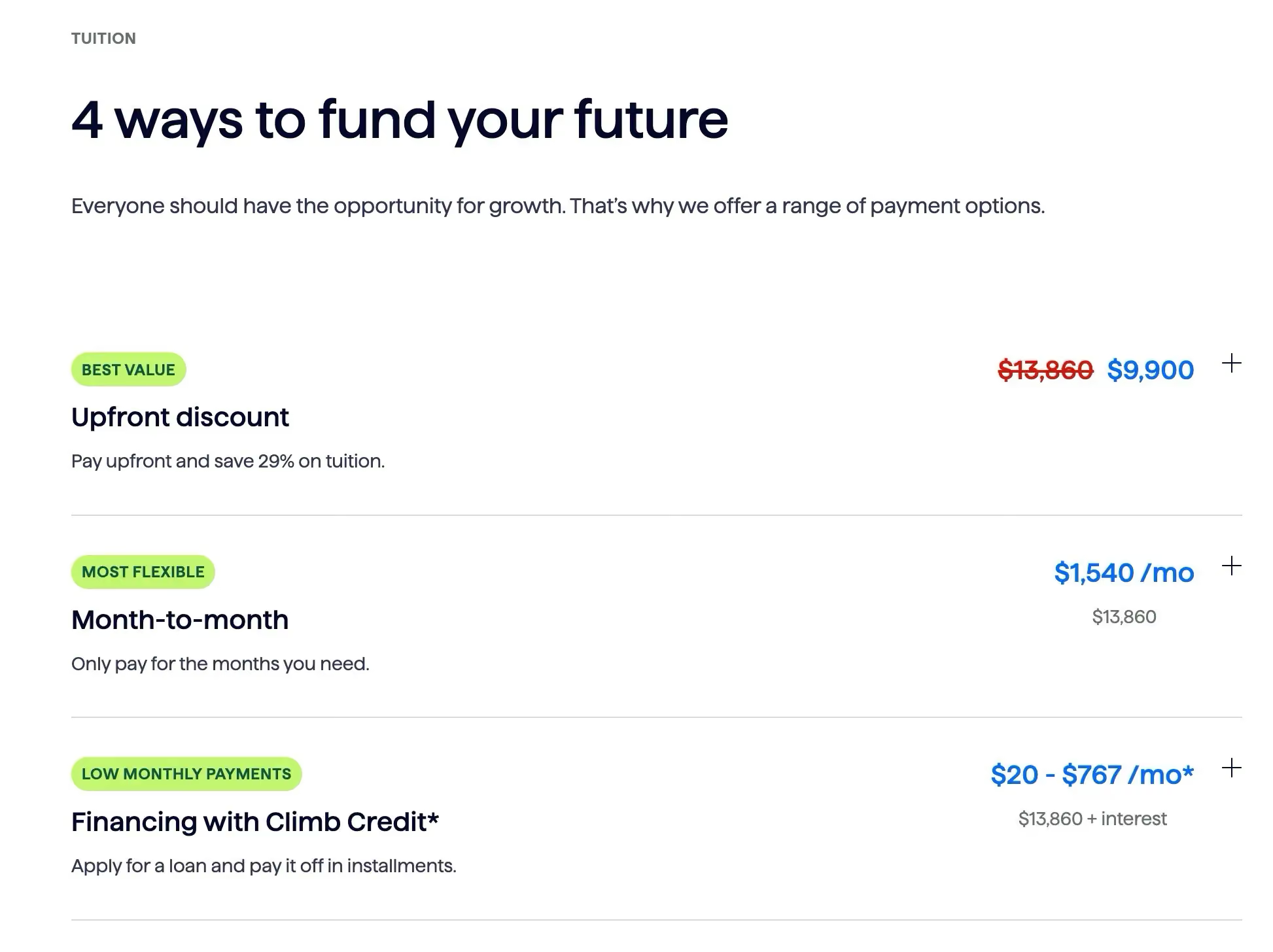
Tuition: Springboard's standard tuition is approximately $13,860, but paying upfront cuts it to $9,900. You can also opt for month-to-month and pay for the months you need (this requires a $1,540 down payment).
Financing: Multiple payment paths include a 0% deposit deferred tuition option, with monthly payments ranging from $20 to $767. Scholarships are available for veterans, women, and underrepresented groups.
The fine print: Springboard offers a 6-month money-back job guarantee with stringent requirements:
- Completing all coursework on time
- Hitting weekly job application quotas
- Attending regular career coaching calls
- Documenting all job search activities.
Accepting a job outside of software engineering also voids the refund immediately.
Springboard career services
Career services are built around 1:1 support: an assigned mentor, a personal career coach, and a student advisor. If 1:1 support matters more to you than group cohort energy, Springboard is structurally built for that.
Springboard’s placement data hasn’t been updated in years, with the last report dating back to December 2023. This means any outcomes data from Springboard may not account for the rapid pace of AI adoption in web development.
What students are saying
Quick comparison: Best web development bootcamps at a glance
How to choose the right web development bootcamp
Enrolling in a web development bootcamp is a major commitment that requires significant money, time, and effort. If you’re not sure where to start, it helps to think of the following (apart from the syllabus, of course).
- Check outcomes claims against the bootcamp's own official reporting: Some bootcamps publish detailed outcomes reports (TripleTen's Student Achievement Highlights 2026 is one example); others don't. A bootcamp that won't share current placement data is signaling something.
- Talk to alumni directly: A 15-minute call with a recent graduate reveals more than 50 written reviews.
- Read the fine print on job guarantees: Every money-back guarantee on this list carries strict requirements. Missing documentation or accepting the "wrong" job voids the refund. Know what you're agreeing to.
- Match the format to how you can actually learn: Be honest with yourself about the number of hours you can commit to continuing education. Do you need in-person tutoring or are you more comfortable with learning independently online? There's no universally best format, only the one that fits how you'll actually study.
If the bigger question on your mind is whether someone from a non-technical background can even make this switch at all, don’t worry. It’s more common than you think. TripleTen's AI-Ready Report found that most career changers who broke into tech came from non-technical, in-person roles like customer service and the trades.
Whatever the case, the best web development bootcamp is the one whose structure, cost, and career support match your realistic situation over the next 12 months. If TripleTen's approach sounds like a fit, book a call with an advisor to walk through the specifics for your situation.
Frequently asked questions
Do I need coding experience to start a web development bootcamp?
No. None of the web development bootcamps featured in this list requires students to have in-depth coding experience. However, App Academy and Springboard's more advanced tracks include a technical assessment.
If you're a complete beginner, the "no prerequisites" programs are the right entry point.
How long does a web development bootcamp take?
Full-time immersive programs typically run 9 to 16 weeks. Part-time programs designed to fit around a full-time job usually take 6 to 9 months. The shortest full-time program on this list is Le Wagon's 9-week bootcamp; the longest commitments are the part-time tracks at TripleTen (7 months) and Springboard (9 months).
Are web development bootcamps worth it compared to a computer science degree?
Yes. For career changers transitioning to entry-level web development or full-stack roles, bootcamps offer a significantly faster and cheaper path to a tech job. They typically require 3 to 12 months, rather than 4 years, and $6,000 to $19,000, rather than $80,000 to $200,000+ for a four-year CS degree.
What salary can I expect after a web development bootcamp?
According to the U.S. Bureau of Labor Statistics, the median annual salary for web developers is $95,380 (May 2024). TripleTen's Student Achievement Highlights 2026 reports a median software engineering graduate salary of $65,000.


.webp)