



Key takeaways
- Job seekers changing careers into tech aren’t motivated by fear of technologies like AI. The majority are driven by opportunities for better pay (51%) and flexibility (51%); only 20% were influenced by job security in an increasingly AI-driven world.
- Respondents largely come from non-technical, in-person roles like customer service and the trades. Most of them (87%) were at least aware of AI as a workplace trend, and roughly half (56%) had used AI tools before retraining. Interestingly, fewer than 1 in 10 felt threatened by AI.
- For 40% of respondents, this was their first career pivot, and the decision to build a career in tech was largely made alone. More than half of career changers had no one in their network working in tech.
- Despite stories about AI reshaping entire industries, the job market hasn’t fully caught up — half of active job seekers said employers never once asked about their AI experience in interviews.
- The overwhelming majority of career changers had a recurring piece of advice for those still in their old fields: AI is a tool, not a threat. But don’t wait until you have no choice but to adapt.
Introduction
Public conversation around artificial intelligence and its impact on the workforce tend to follow a familiar script: AI is disrupting the workforce, forcing people into a mad dash to retrain before they get displaced. That narrative is fear-driven, which, in turn, fuels uncertainty among job seekers. And they’re not exactly wrong to feel that way.
In May 2025, IBM let go of hundreds of employees1 and said that 94% of their routine HR tasks are now handled by AI. Later in September, Salesforce cut 4,000 customer support roles2 — a move that came on the heels of CEO Marc Benioff announcing that AI is doing half of the company's work. And according to a Challenger, Gray & Christmas report3, the companies that announced a combined 97,000 job cuts in May 2026 (the highest in the month since 2020) identified AI (40%) as the reason.
In other words, the AI economic transformation is well underway, and job seekers — from fresh graduates to mid-career switchers — are facing a new reality.
But the data in our survey tells a different, and more nuanced, story. TripleTen surveyed 234 of our program graduates across the US, all of whom had decided to change careers and join tech after retraining. We asked them about:
- Their awareness of AI before they switched
- Factors motivating their decision
- Blockers that nearly stopped them
- And their relationship with AI since then.
Our findings challenge many of the assumptions dominating media coverage of AI and the jobs landscape. For starters, most respondents weren’t displaced by AI, nor were they running away from future job cuts caused by AI (at least in their view). If anything, the majority of them were curious and excited about AI. Only 10% cited fear and anxiety as their emotional response to AI.
And when asked what drove them to switch careers, the top two answers — higher earning potential and flexibility (i.e., remote work) — had nothing to do with AI anxiety at all.
Of course, this doesn’t mean AI is irrelevant to the current wave of career switchers. But it does suggest that AI’s role may be less ‘gloom and doom’ and more about opportunity. Our surveyed group of job seekers saw AI as the backdrop against which their bold decision to enter tech was made, and not the force that made it for them.
TripleTens' AI-Ready Report: How Career Changers Are Entering Tech is an account of that decision, the people who made it, their journey, and what they discovered after retraining.
Methodology and respondent profile
In March 2026, we surveyed 234 respondents who completed tech programs through TripleTen. They represent a cross-section of working Americans who completed their training and are now either:
- Actively seeking work or
- Transitioning into their new tech roles.
The respondents’ backgrounds are largely non-technical; this is not a survey of people who were already adjacent to the tech industry.
Section 1. The AI backdrop: Did career changers see AI coming before they switched?
Key findings
Nearly 9 in 10 career changers felt excited and curious about AI before they retrained. Just 10% felt threatened or anxious. AI was the context for our respondents’ career decisions, not the factor driving their decision to enter tech.
Awareness but not anxiety
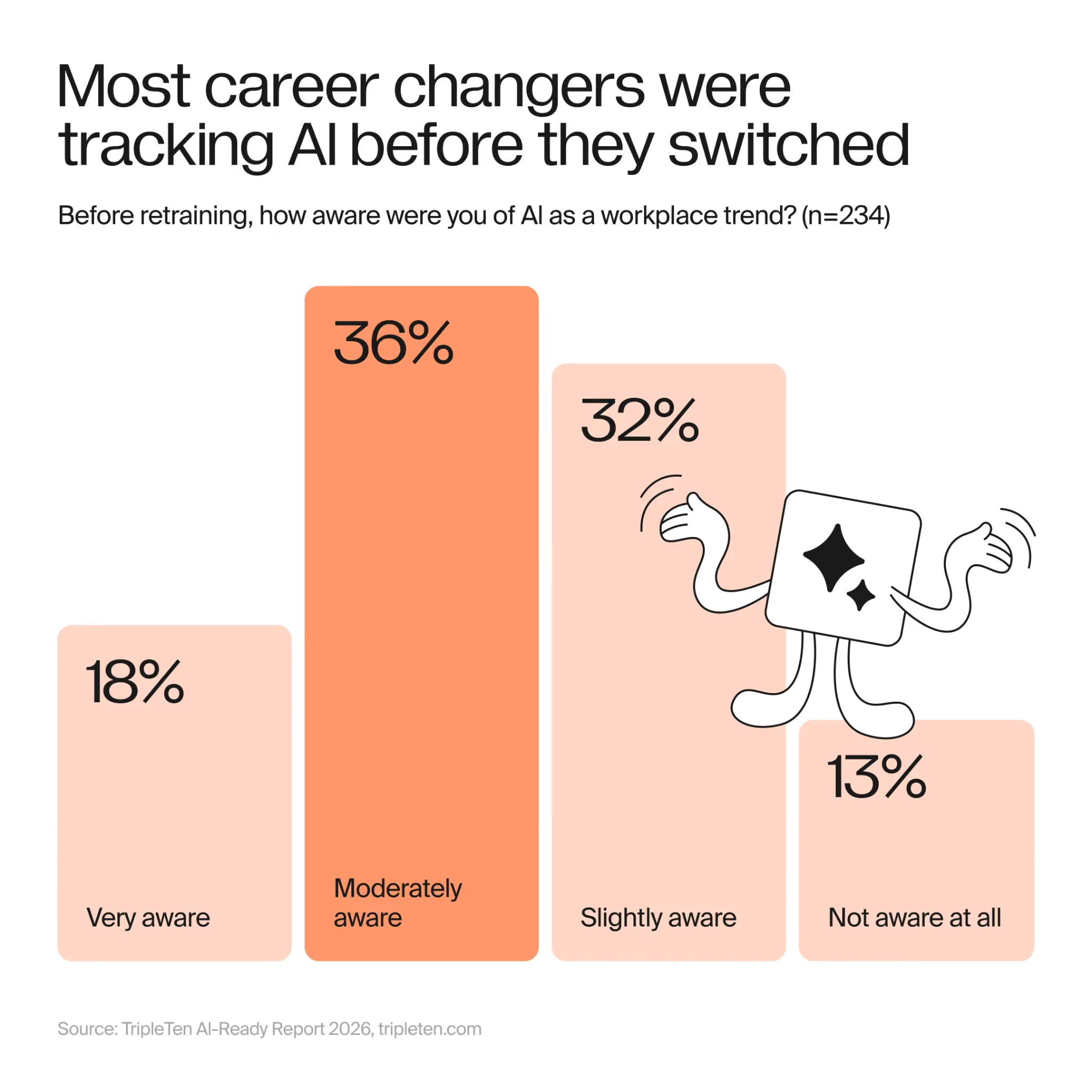
Before retraining, 87% of respondents described themselves as at least somewhat aware of AI as a workplace trend, and 18% said they followed it closely. However, awareness didn’t necessarily translate into alarm.
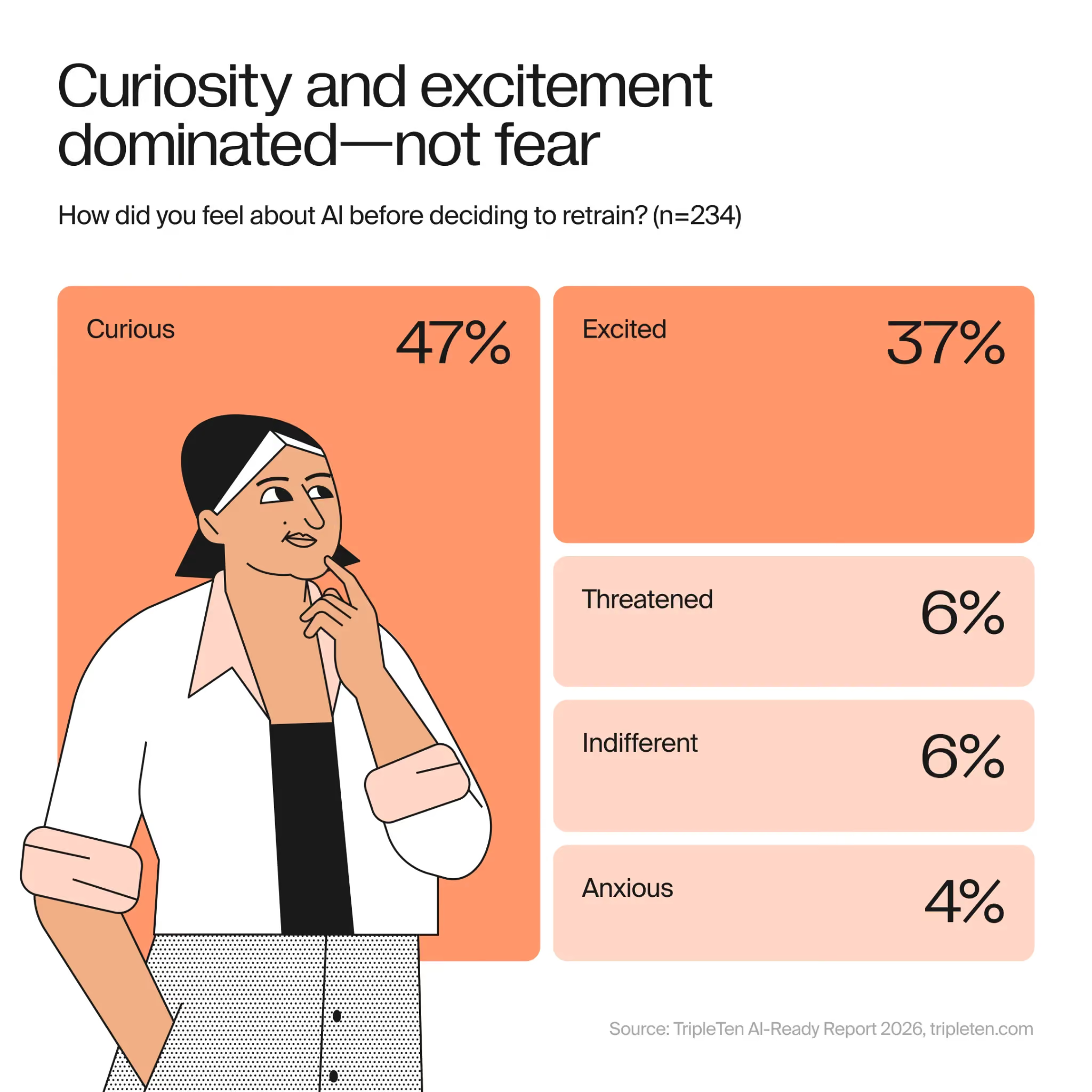
When asked to describe their primary emotional response to AI before signing up with TripleTen, most (84%) responded positively to it. Around 6% felt threatened, and 4% felt anxious about AI. And for another 6% of people, AI just wasn't a significant factor in how they thought about their career.
These findings go against the common framing of AI as a great disruptor of workforce stability. For instance, a Pew Research study4 found that 52% of American workers are worried about the future impact of AI use in the workplace — 32% think it will lead to fewer jobs in the long run.
But the career changers we surveyed didn’t feel cornered by AI. On the contrary, they viewed it in a positive light and even felt drawn to it.
AI in the workplace: Familiar but not central
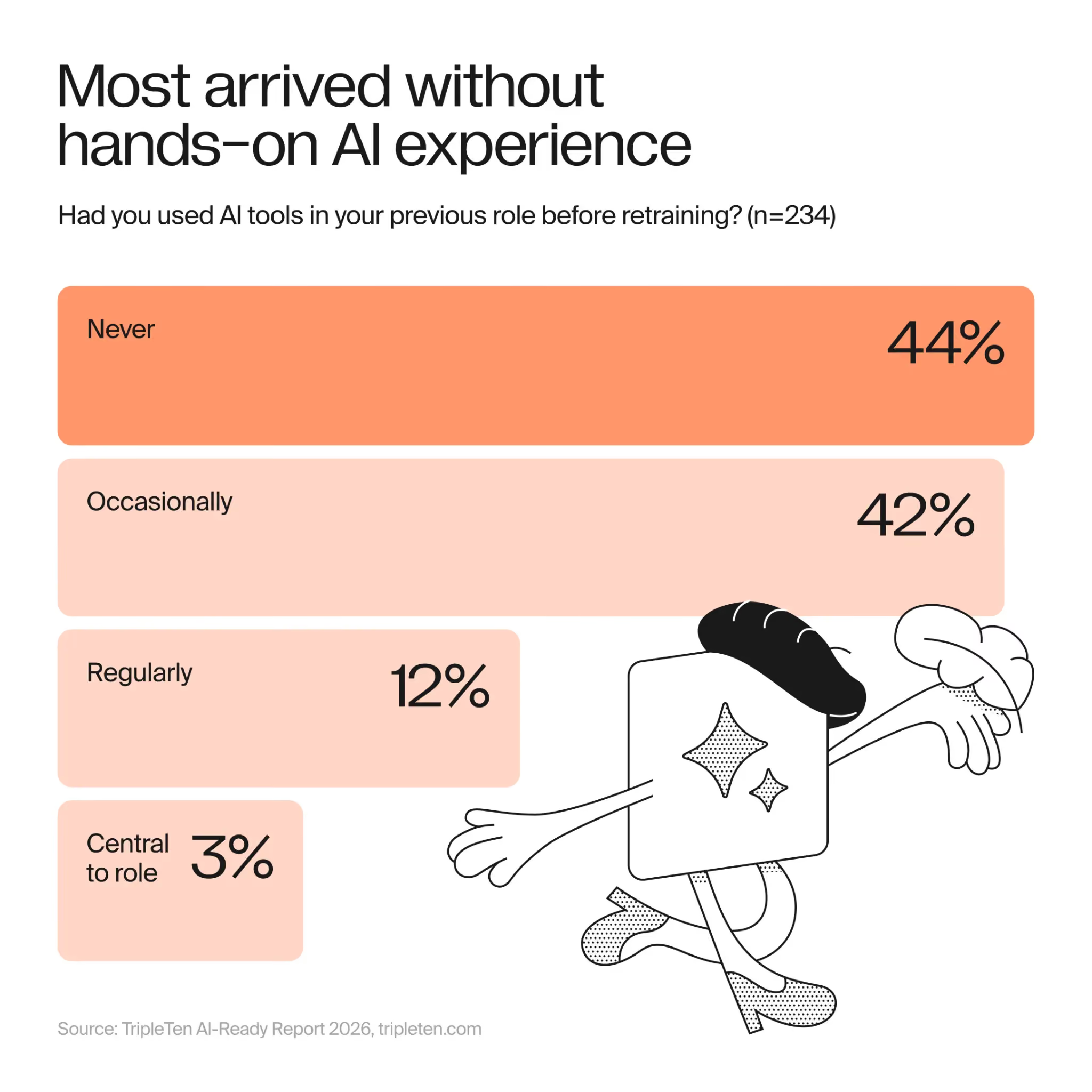
Despite being aware of AI, our respondents had limited exposure to AI applications in the workplace. Nearly half (44%) had never used an AI tool in any professional capacity, while 42% said they had used AI tools occasionally but not as a core part of their work. Just 15% described themselves as using AI regularly or centrally in their previous jobs.
This adds much-needed context to this report’s later findings. By and large, these career changers did not begin the retraining process already fluent in AI — completing a training was key to developing that fluency.
Section 2. What they hope for: Salary, security, or something else?
Key findings
Opportunities for higher pay and flexible working outrank job security as the top motivations for switching into tech. Job security anxiety linked to AI was largely a non-factor in career changers’ decisions.
Most career changers moved before AI made the decision for them
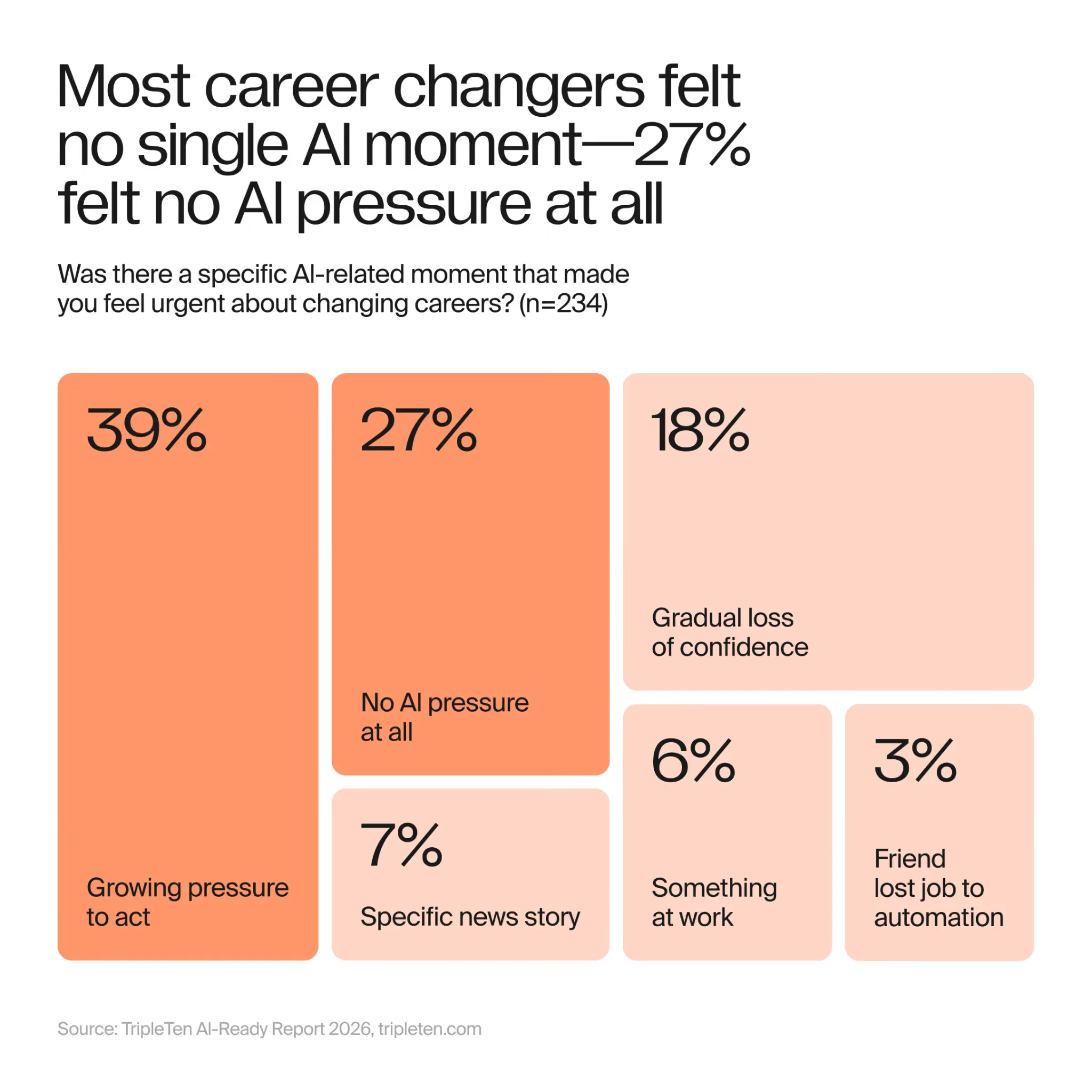
For most career changers, no single AI-related moment pushed them to act — no headline that changed everything, no colleague whose redundancy made it real.
Only 16% of respondents pointed to a specific event: a news story, something that happened at work, or a friend losing their job to automation. The largest group (39%) said they had a growing sense that if they didn't act soon, the window to switch careers might close.
And finally, 27% said AI created no sense of urgency whatsoever; they simply decided to move toward something better.
What they were actually running toward
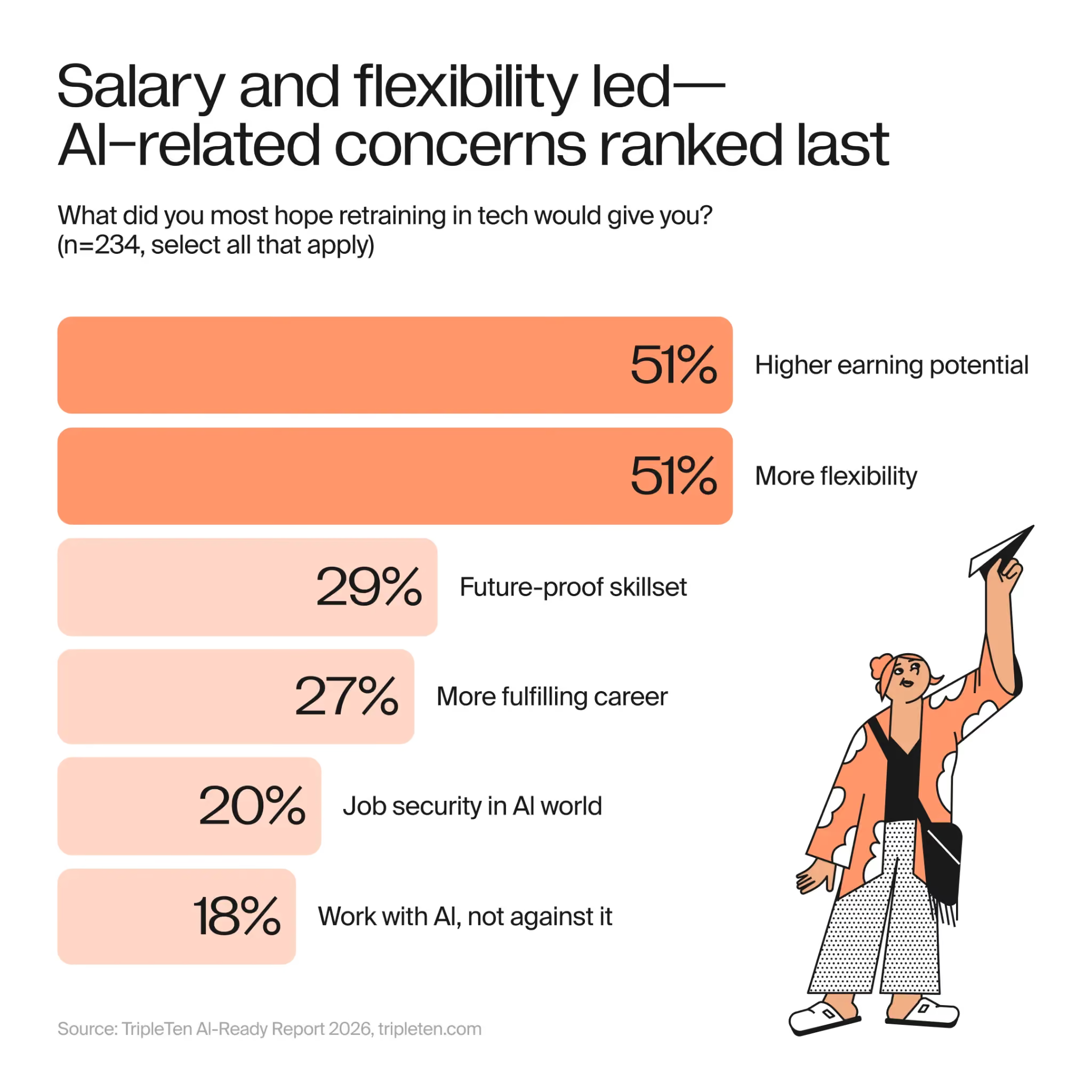
When asked what they most hoped retraining in tech would help them achieve, respondents were predominantly motivated by higher earning potential (51%), desire for flexibility (51%) (e.g., remote work and better hours), a future-proof skillset (29%), and building a more fulfilling career (27%). Job security in an AI-driven world ranked fifth at just 20%, and the ability to work with AI came last at 18%.
These results aren’t surprising. Data from the Bureau of Labor Statistics on jobs in ‘Computer and Information Technology Occupations’ showed a median annual wage of $105,990 in May 2024 — more than double the median of $49,500 for all occupations.5
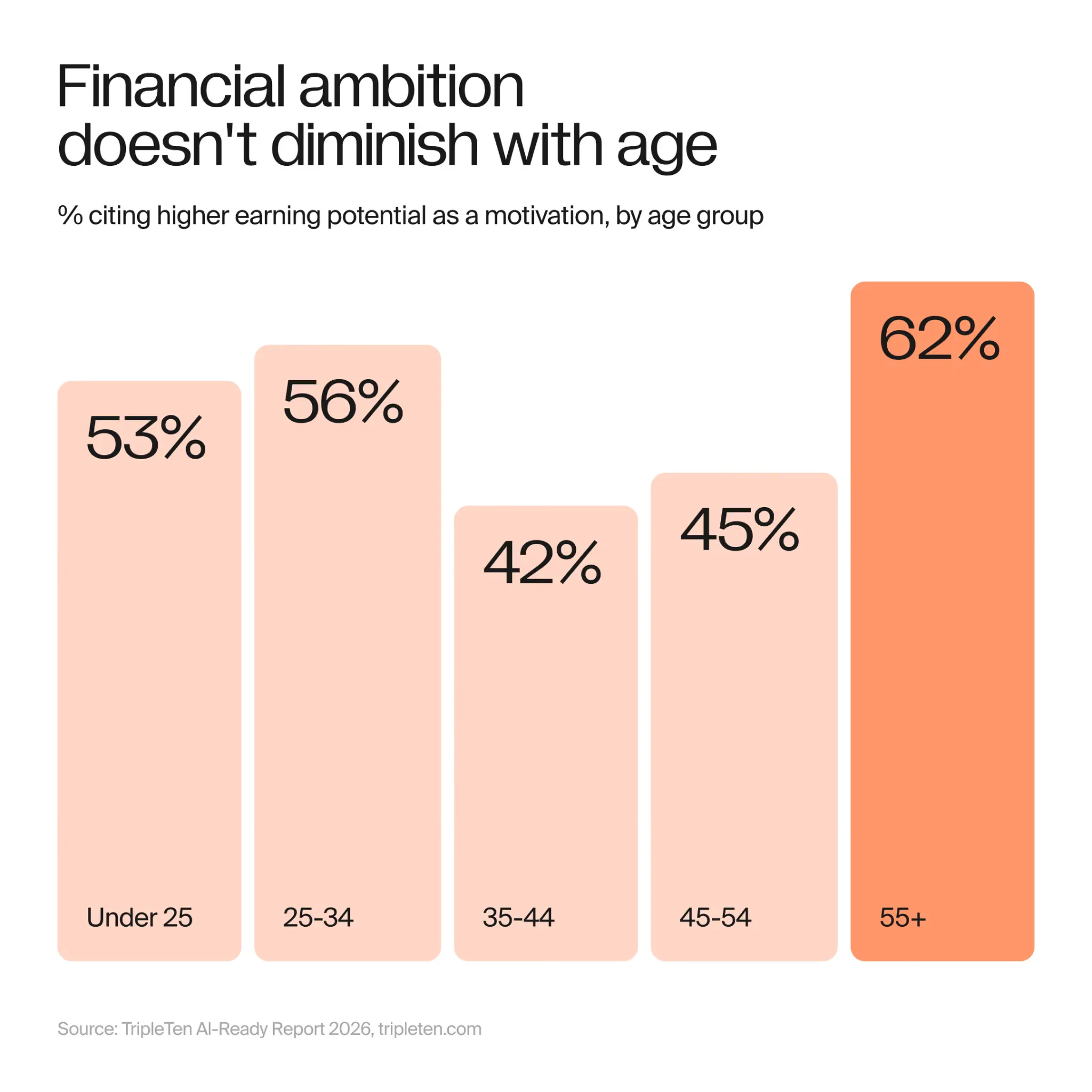
Desire for better pay is consistent across all age groups:
- 53% of those under 25 to 56% of 25–34 year olds.
- 62% of those 55 and over.
- Even among the 35–44 and 45–54 groups, where the figure dips slightly to 42% and 45% respectively, salary remains a leading motivation.
This suggests financial ambition doesn't diminish with age.
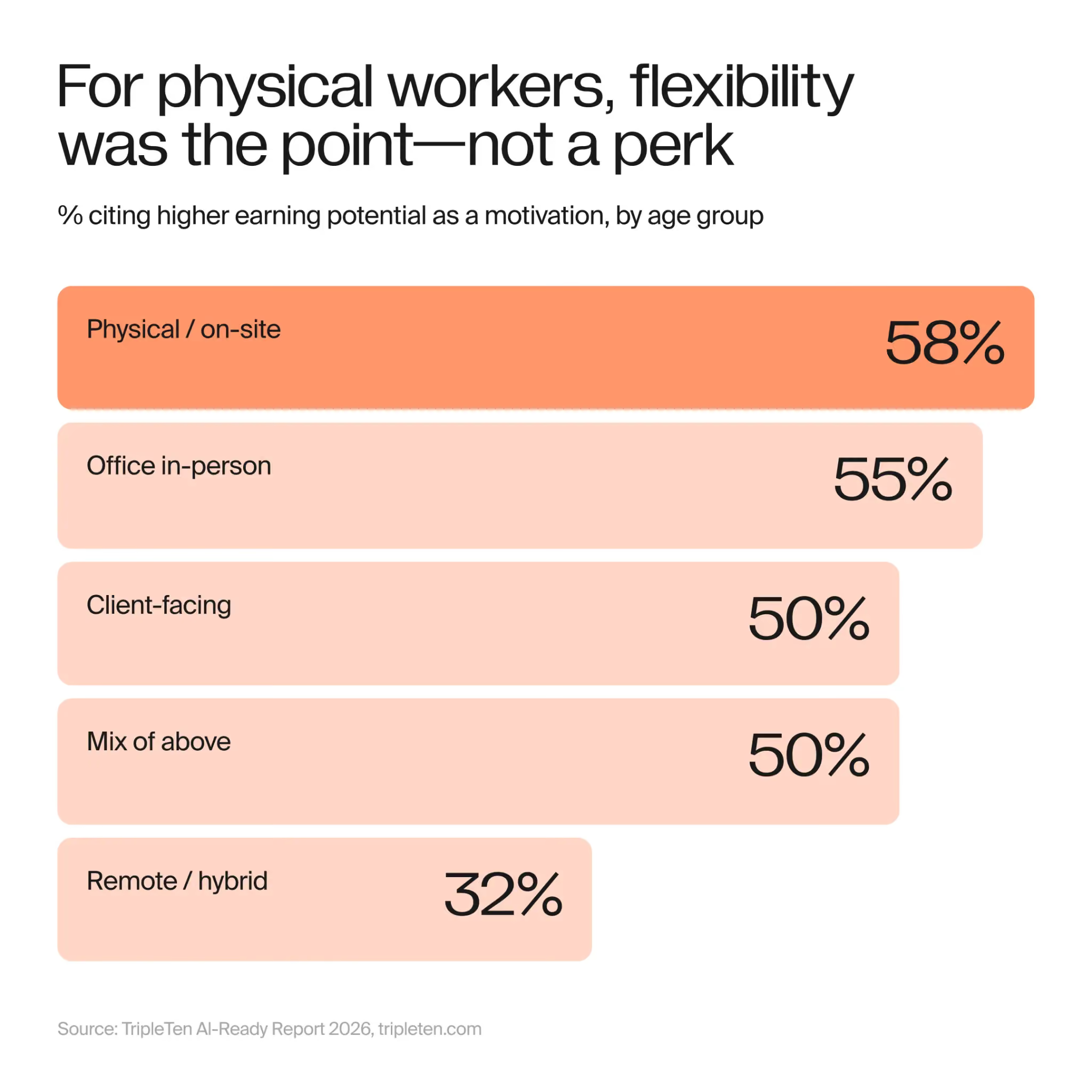
Similarly, the flexibility finding makes sense when you look at where most of these career changes are coming from. For instance, 58% of those from manual and trade roles cited flexibility as a motivation — the highest of any work environment group. For these workers, remote or hybrid tech work represents a fundamental change in their work-life balance.
The responses to this question are arguably the most counterintuitive finding of the report. The media narrative frames career retraining as a fear response to AI disruption.6
But the data clearly shows our career changers weren't running from anything. They were running toward something: better pay and a better life.
The Lightcast numbers are hard to ignore: across 1.3 billion job postings, roles that call for AI skills pay roughly 28% more — around $18,000 a year. I see that play out with the people I coach, too. Our graduates report an average salary increase of $16,300 once they land their new roles. Monica Bencze, Senior Career Coach, TripleTen
Section 3. Barriers and doubts: What almost stopped them, and what pushed them through
Key findings
For nearly half of the respondents, this was their first significant career pivot. What's more, 54% had no one in their network working in tech — they made the switch completely blind.
Career change experience varied widely, but the barriers didn’t
For many of our respondents, this was their first time changing careers.
- Nearly 22% had only ever held one job or been in a single career before retraining
- Another 21% had stayed on the same path for five years or more.
Combined, nearly half of the respondents were making their first significant career pivot with no prior experience of navigating the uncertainty that comes with it.
The other half, however, were no strangers to reinvention.
- 39% had changed jobs or careers once every one to three years.
- 18% had made the switch every three to five years.
And yet despite these varied experiences, our respondents faced the same barriers as their less experienced counterparts.
Money and uncertainty (not AI) were the real barriers
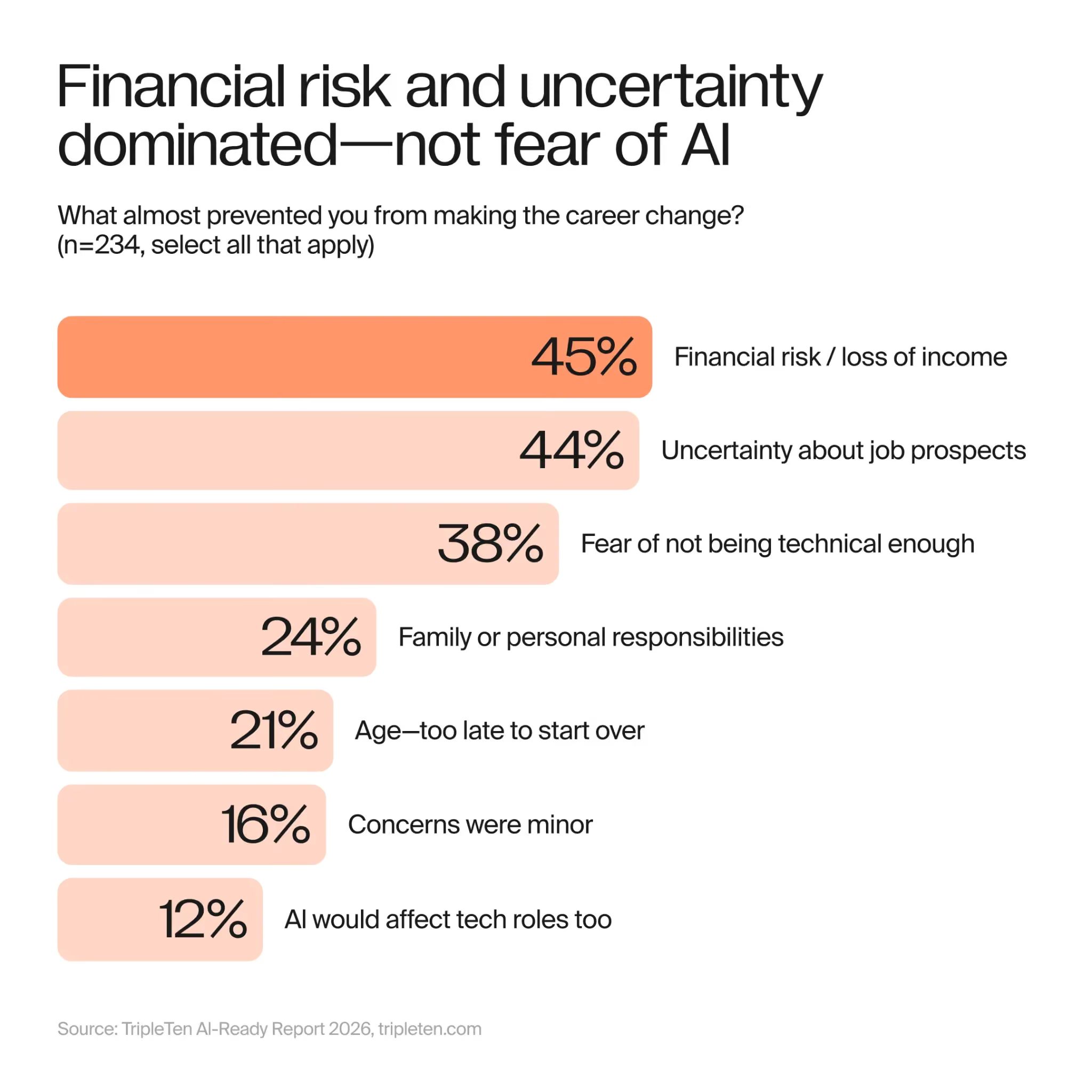
When asked what nearly stopped them from retraining and changing careers, financial risk topped the list of barriers at 45%. Income loss with no guarantees after retraining was a very real risk for respondents.
Uncertainty about job prospects after retraining followed closely at 44%, and fear of not being technical enough came third at 38%. By contrast, concerns that AI would make even tech roles obsolete were cited just 12% of the time.
Simply put, our career changers’ most pressing doubts were of a practical and financial nature.
Age was a barrier, but mainly for those it affected most
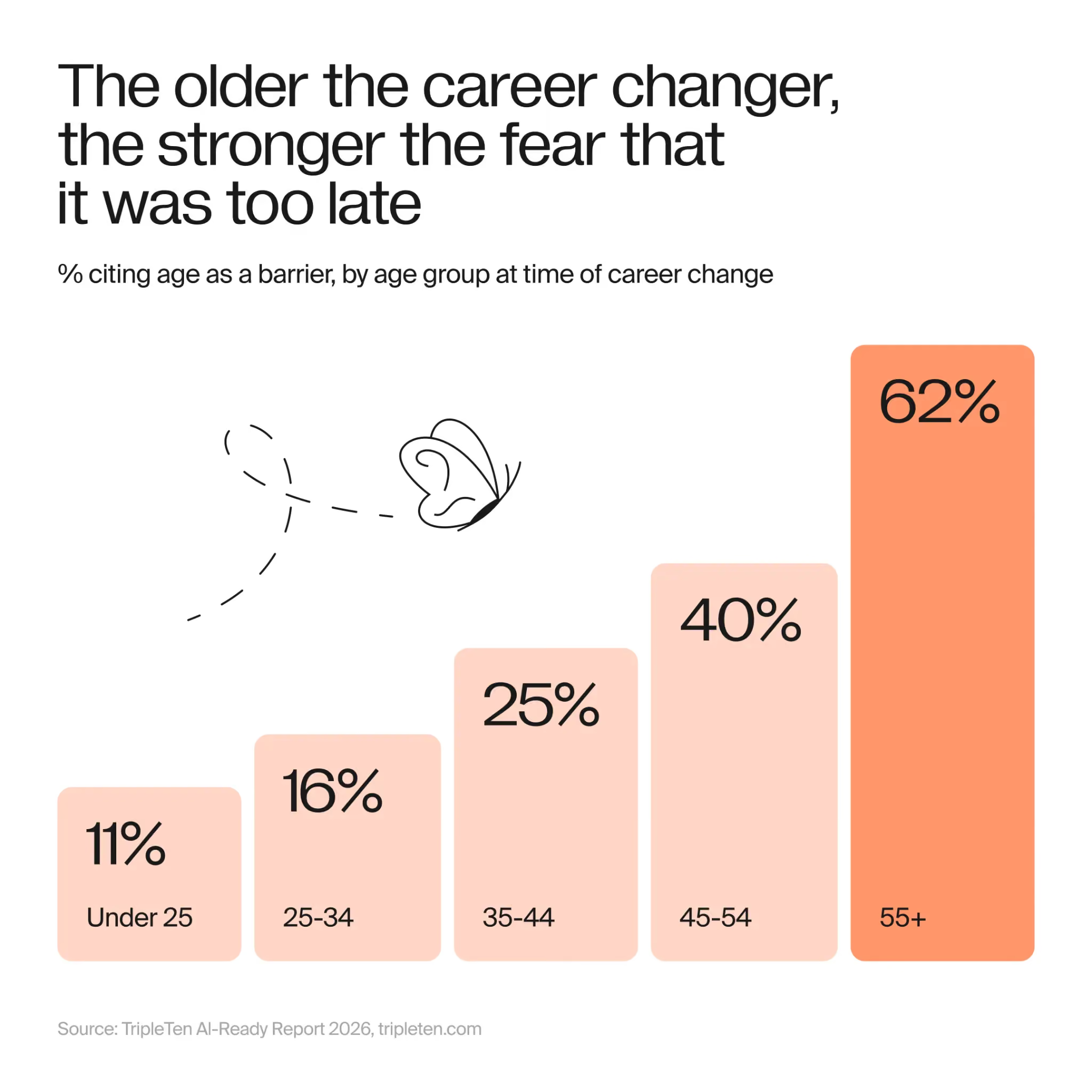
21% of respondents said their career switch was nearly derailed by their age, the feeling that it was too late to reset their career. Unsurprisingly, the data shows this concern wasn't evenly distributed.
- Under 25: 11%
- 25–34: 16%
- 35–44: 25%
- 45–54: 40%
- Over 55: 62%.
The data shows a clear linear relationship — the older the career changer, the more likely they were to feel it was too late to start over. The fact that the oldest group of respondents proceeded with retraining and completed it gives their presence in this dataset significant weight.
Most made the decision to change careers alone
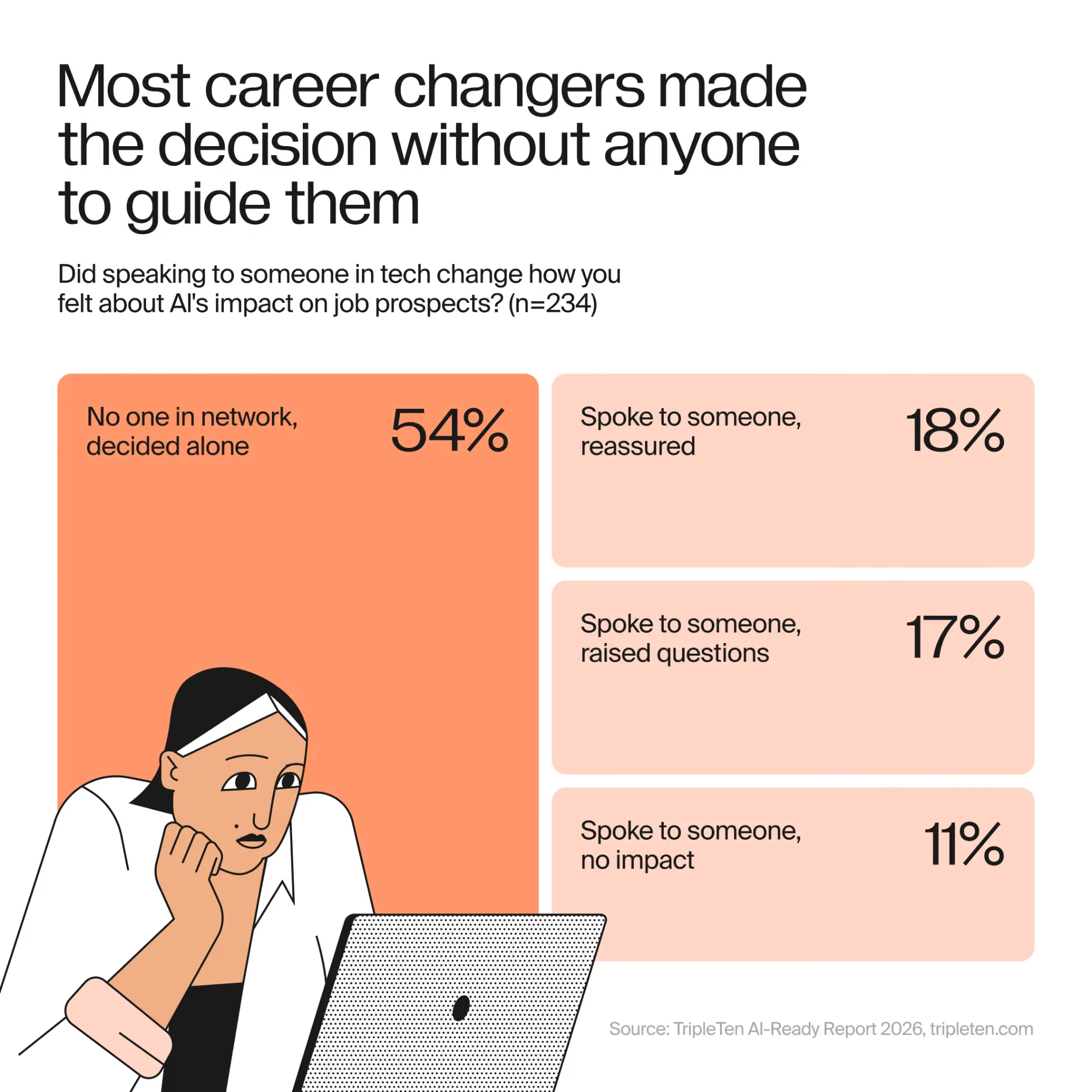
Roughly half (54%) of respondents said they made the decision to switch careers on their own and didn’t know anyone working in tech to speak to. Another 11% spoke to someone, but it didn't change their mind. In total, 65% navigated this decision without meaningful advice from anyone with direct experience of the industry they were entering.
This is perhaps the most underreported dimension of career change: the isolation of the decision itself. These were people making a major financial and professional commitment, often for the first time and without insider knowledge or a safety net.
The two fears I hear most are 'I can't afford to bet on this' and 'I don't know a single person in tech to ask.' On the money side, that's why we offer flexible financing and installment plans, alongside a money-back guarantee for students who do the work and still don't land a role. And on the isolation side, no one does this alone here. Every student gets a dedicated career coach and a community of people making the same leap at the same time. Victor Menin, Ed.D., Vice President of Enrollment, TripleTen
Section 4. From curiosity to fluency: How career changers really felt about AI after the retraining
Key findings
After retraining, nearly two-thirds of career changers are now even more optimistic about AI and see it as critical to their career. However, 1 in 5 say training made them more cautious, not less. For this group, understanding AI better was a wake-up call.
Training shifted AI attitudes among most, but not all
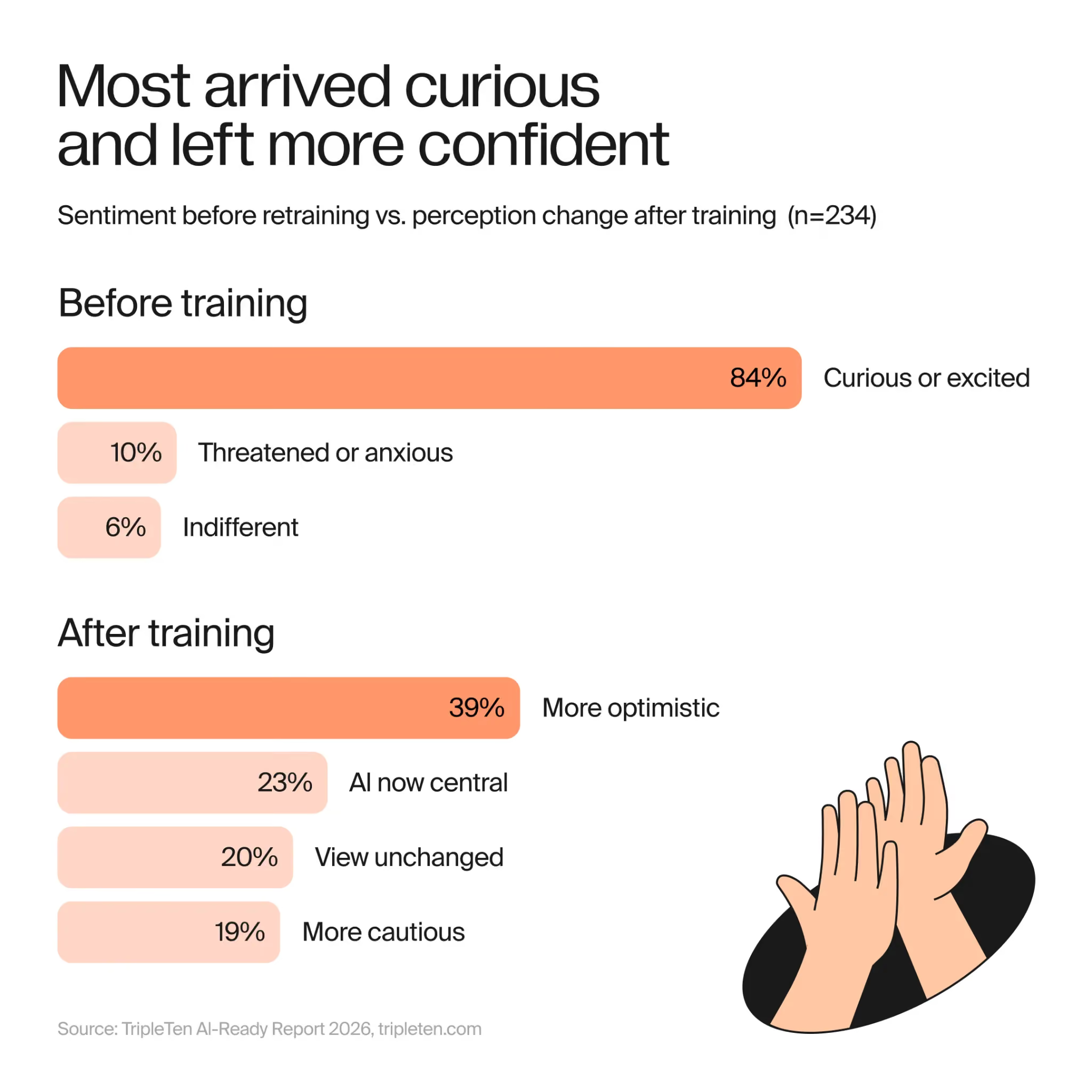
As established earlier, before signing up for tech programs, 84% of respondents had a broadly positive attitude towards AI — curious, excited, or both. After training, that positivity deepened.
- 39% said they were more optimistic about AI than before.
- 23% now see it as central to their career prospects.
But there’s a catch — 20% said their views on AI remained unchanged, but 19% said training made them more cautious about AI.
The assumption is that more knowledge equals more confidence. For this group, understanding AI more deeply sharpened their awareness of what’s at stake.
Where AI caution is loudest
Concerns over AI follow an interesting distribution when broken down into respondent age and their previous sector.
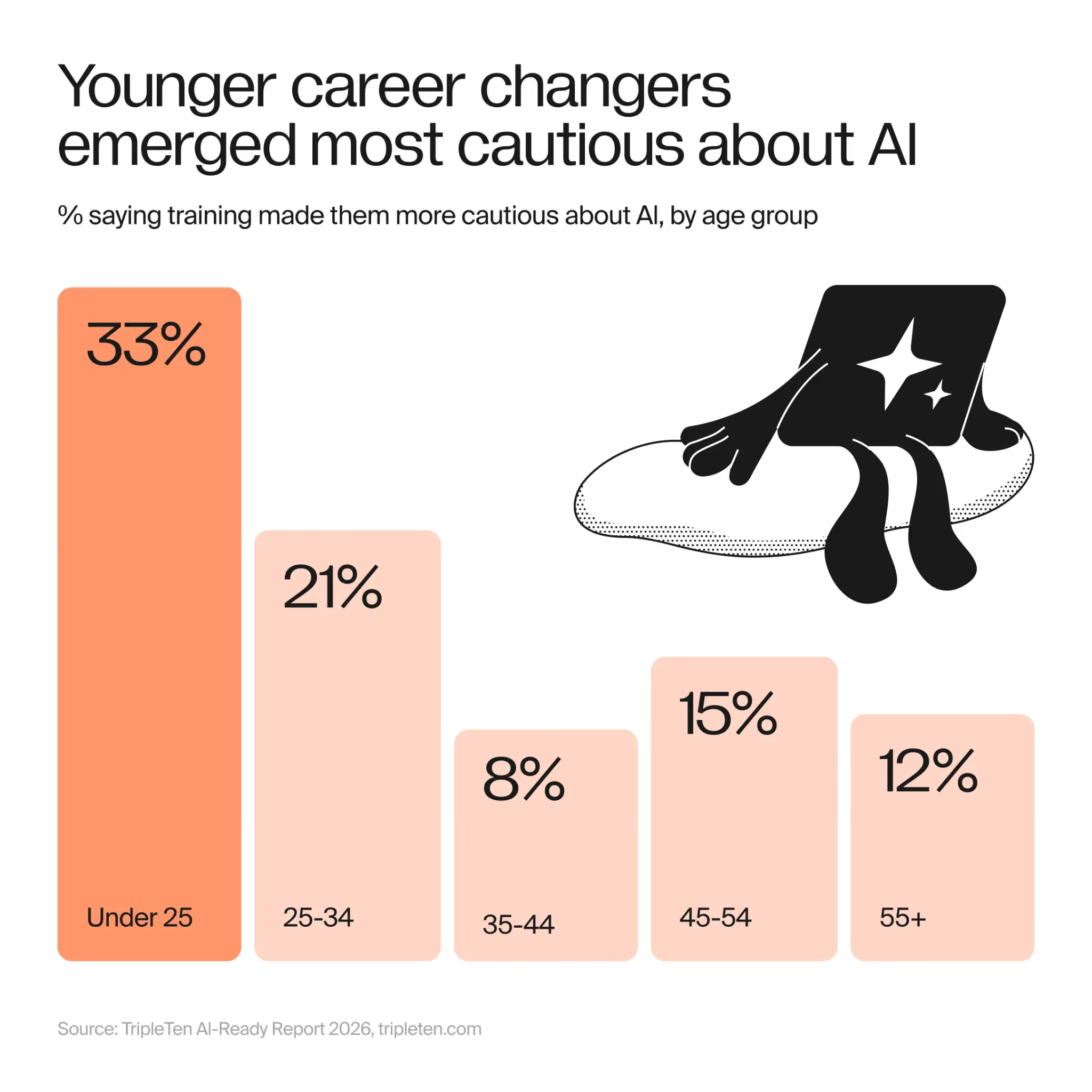
Among career changers under 25, a third (33%) came out of training more cautious than before. These concerns were less pronounced in people over 35. This might suggest that younger adults may have the most to gain and face the longest runway ahead for AI adoption.
The sector breakdown is just as telling.
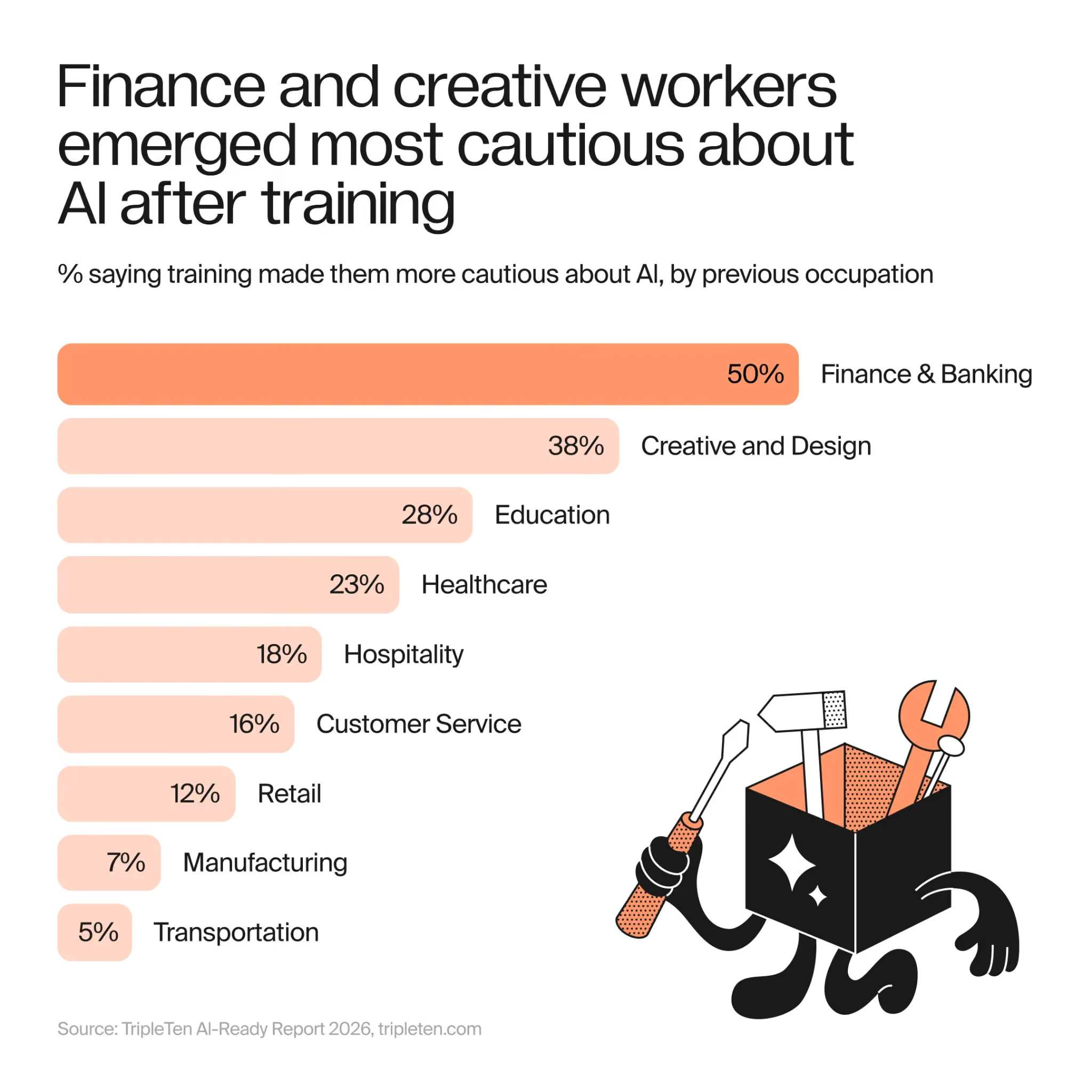
Respondents who came from finance and banking had the highest caution rate at 50%, followed by creative and design at 38%. By contrast, manufacturing (7%) and transportation and logistics (5%) had the lowest. Interestingly, they also had the highest rates of people now seeing AI as central to their careers (43% and 48%, respectively).
These patterns make sense when you consider the rate of AI adoption across industries.
KPMG research shows that 71% of firms are now using AI in their finance operations.7 Meanwhile, 94% of companies in the creative sector have already embedded AI in their workflows, albeit at varying levels of maturity.8 Respondents from these industries, where AI is moving swiftly, have emerged from training more alert to its implications.
On the other hand, workers from industries like manufacturing, where the shift is slower,9 emerged with greater confidence and are more bullish about AI.
In both cases, training changed how they see AI, just not always in the same direction.
As models become exponentially smarter, they don't look less reliable; they look flawless. That is the trap: the mistakes don't disappear, they just become nearly invisible. It is exactly why Anthropic keeps its most powerful model, Mythos 5, restricted to vetted partners rather than releasing it raw. True fluency isn't knowing how to prompt a model — it’s knowing when to trust it, when to question it, and when to wrap it in your own guardrails. Ana Riabova, AI Strategy & Enablement, TripleTen
Section 5. From observers to AI practitioners: validation and AI fluency
Key findings
63% of career changers actively prioritized AI skills when choosing their training program. The majority (83%) are already using AI assistants daily.
And the industries they left? 39% say AI is already reshaping them faster than expected. Their read on AI's trajectory was right.
They’re now using AI tools
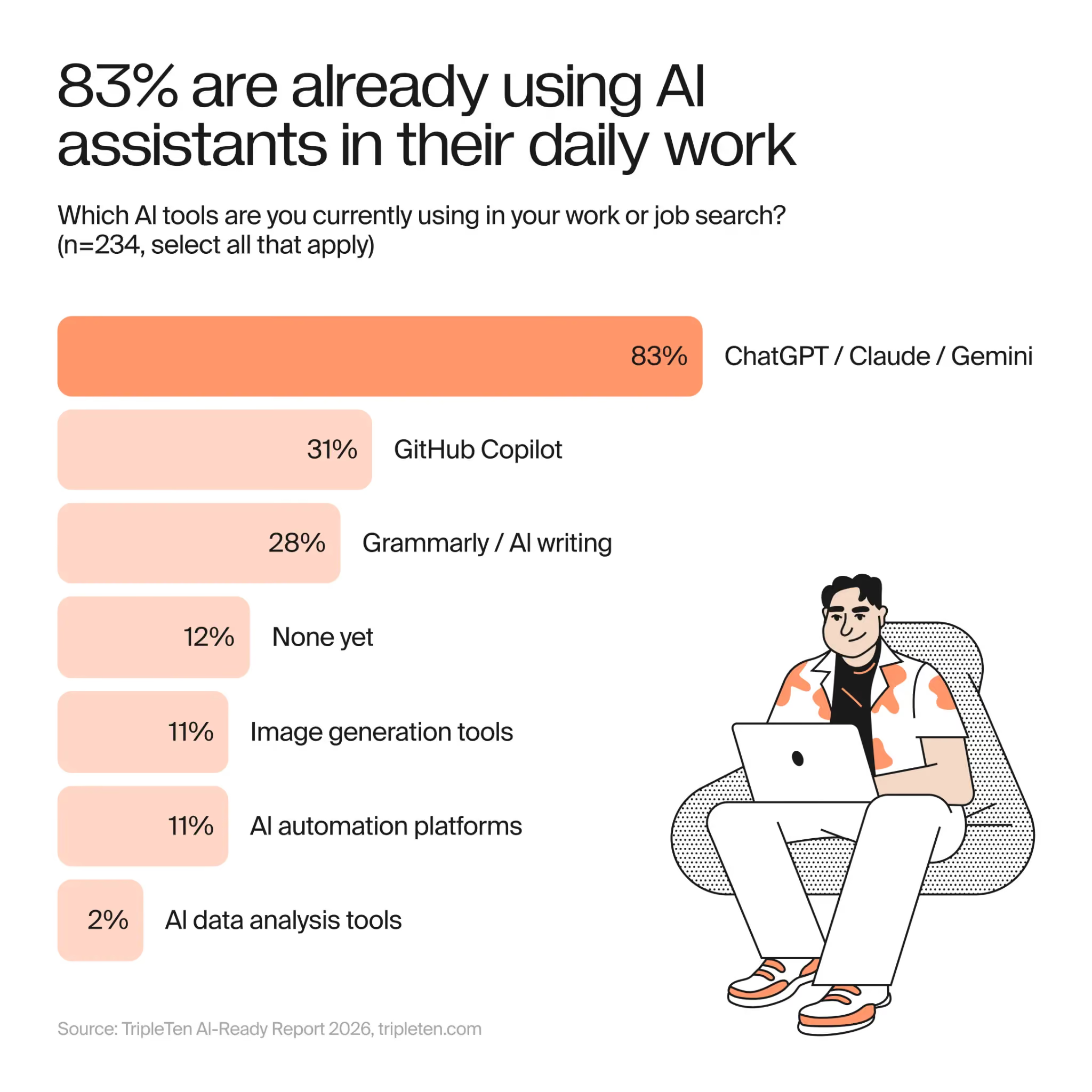
These career changers are now building deep fluency in AI, moving from observers to practitioners.
- 83% of respondents now use ChatGPT, Claude, Gemini, or similar AI assistants.
- 31% use GitHub Copilot or AI coding tools.
- 28% use AI writing assistants like Grammarly.
- Just 12% say they aren't using any AI tools yet.
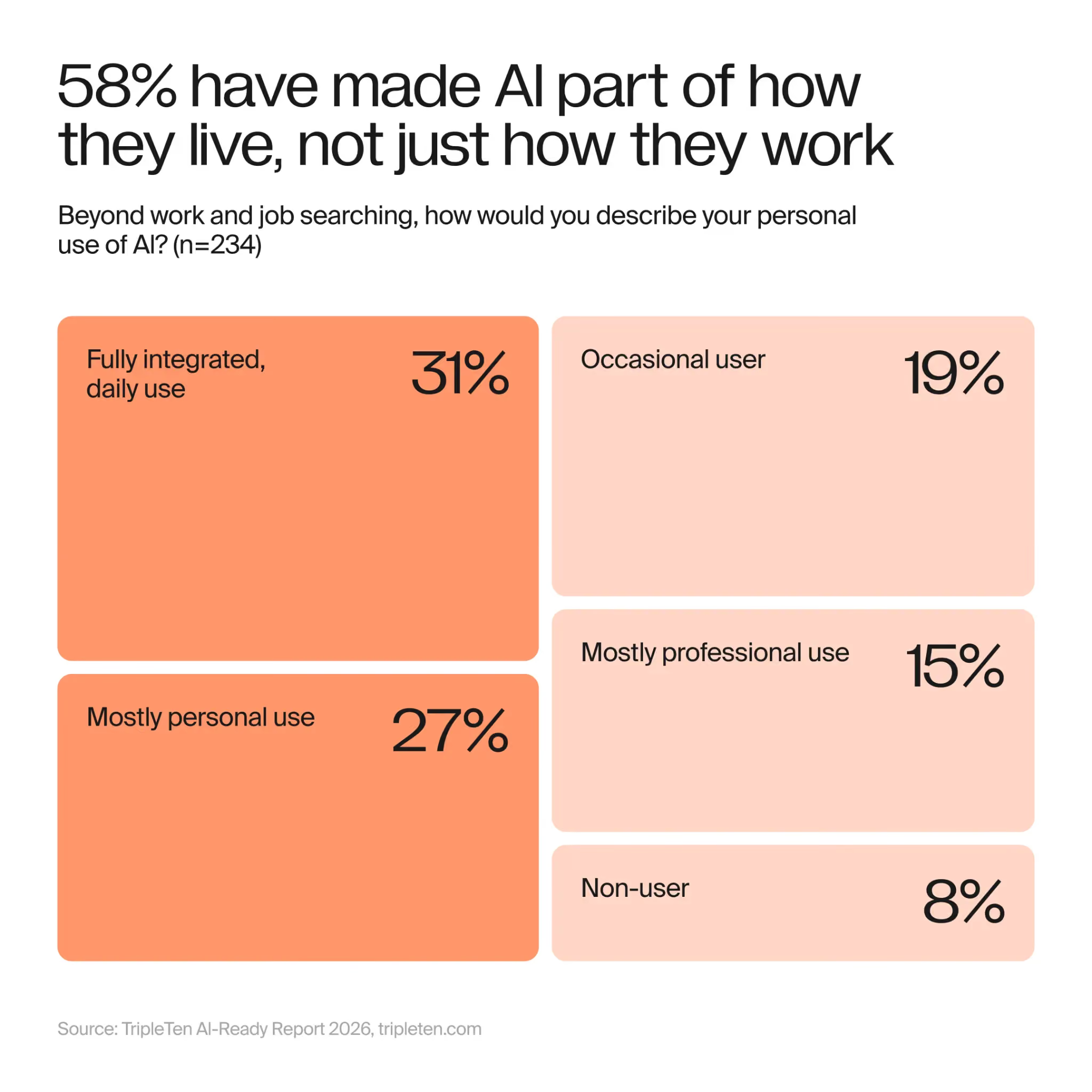
But their use of AI isn’t limited to work either.
- 31% describe themselves as fully integrated — using AI tools daily across both their professional and personal lives.
- 27% use AI frequently in their personal lives, even if it hasn't fully embedded into their work yet.
Combined, 58% of career changers have made AI part of both their work and daily lives.
Their instincts about AI were right
Looking back at the industries they left, our career changers' read on AI's trajectory is proving to be accurate.
- A third (39%) say AI is already significantly reshaping their previous field, faster than they expected.
- 23% say change is underway, but more slowly than anticipated.
- Only 6% think they overestimated AI's impact.
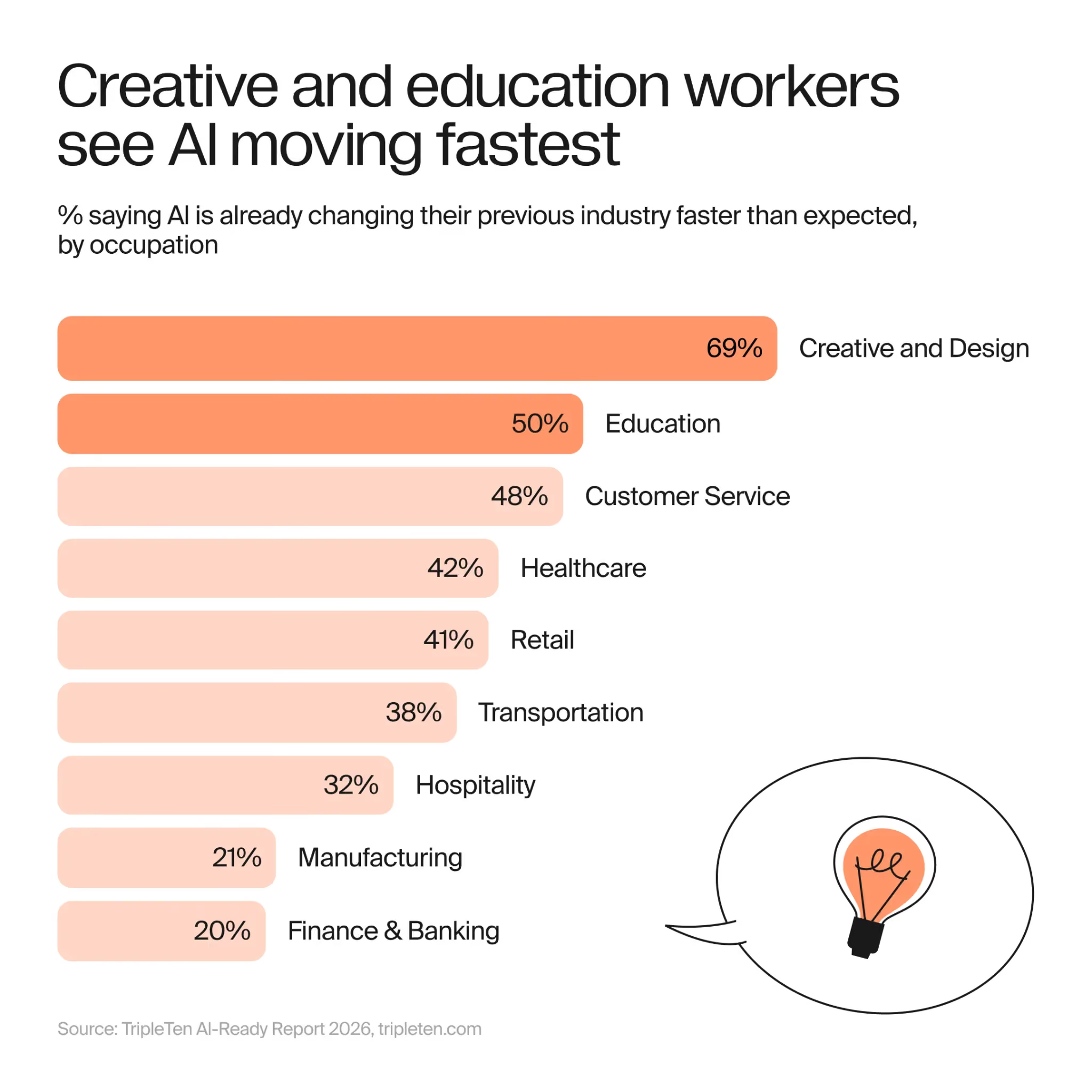
The sector breakdown reveals some striking contrasts:
- 69% of respondents from creative and design occupations say AI is already changing their industry faster than expected — the highest of any group.
- Customer service (48%) and education (50%) follow closely.
- Manufacturing (21%) and finance (20%) sit at the lower end — consistent with the caution patterns we saw in Section 4.
The industries they came from are changing and, for most, faster than they anticipated. Whether that was part of their calculation or not, the data suggests their timing was good.
Programs that teach not just modeling but deployment, scaling, and MLOps produce graduates who can close that gap. As an example of what that looks like in practice, our AI & Machine Learning program is structured end-to-end: students build models with frameworks like TensorFlow and PyTorch, deploy with Docker and Kubernetes, and learn to monitor and retrain systems in production. Victor Menin, Ed.D., Vice President of Enrollment, TripleTen
Section 6. Emerging from retraining: Entering the job market and the advice they’d give to everyone still waiting
Key findings
The tech job market is proving harder to break into than many expected. Half of active job seekers (74 out of 145 active job seekers) say employers never ask about their AI experience in interviews — despite the majority using AI tools every day. The skills are there, but the hiring market hasn't caught up yet.
The job market reality is not quite what they expected
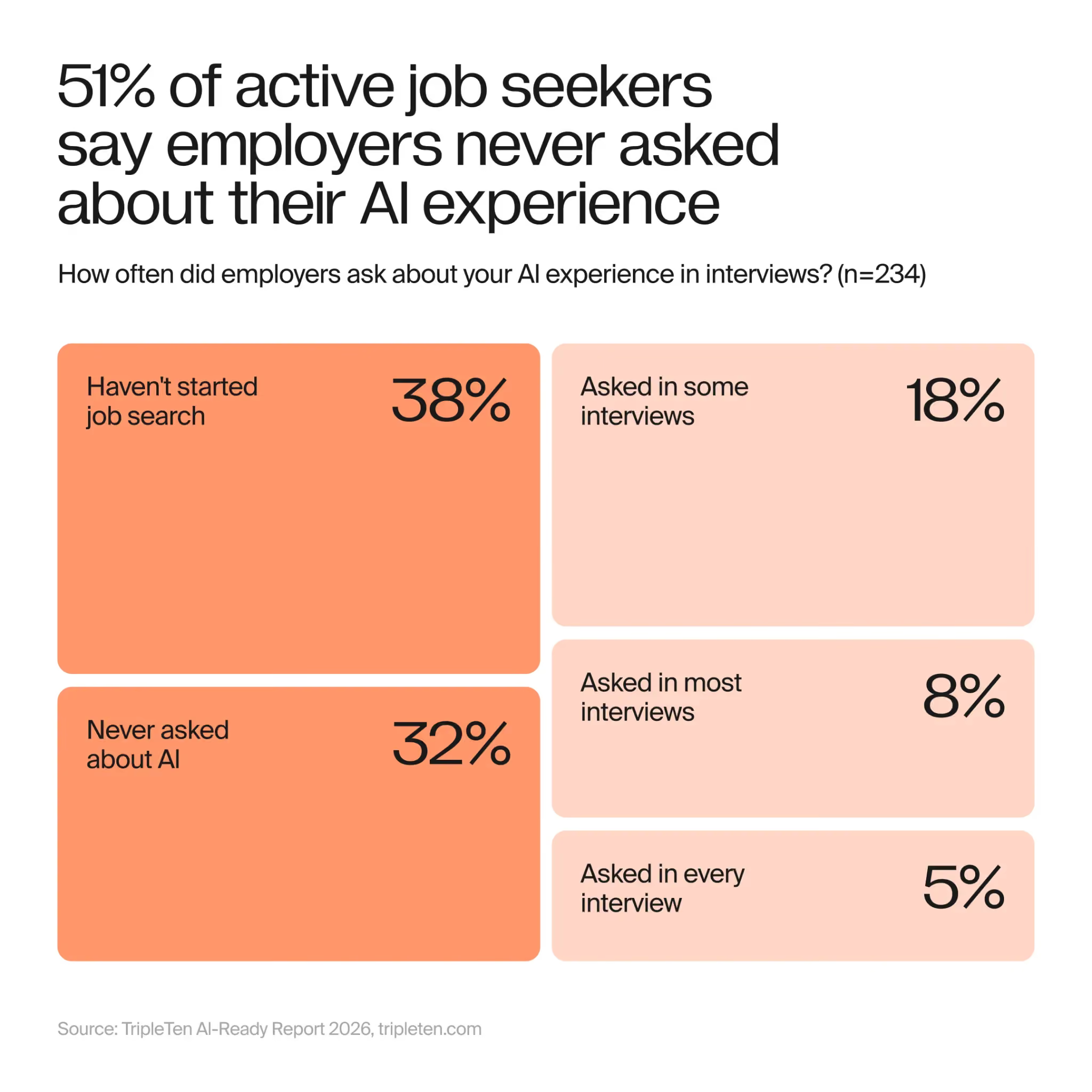
Roughly a third (38%) of respondents have yet to begin their job search and are either still in training or recently graduated from TripleTen’s programs.
Of those who have (145 respondents), the picture is mixed. Half (51%) said employers never asked about their AI experience in interviews. Conversely, just 12% and 8% said AI came up in most or every interview, respectively.
This inconsistency may reflect a broader confusion in firms that don’t quite know how to embed AI into their workflows. As one senior consultant told the BBC, many organizations are "not getting the ROI from AI that they were expecting and not getting their people engaging with it." 10 This could mean the gap between candidates’ AI-readiness and employer recognition is a matter of timing, not relevance.
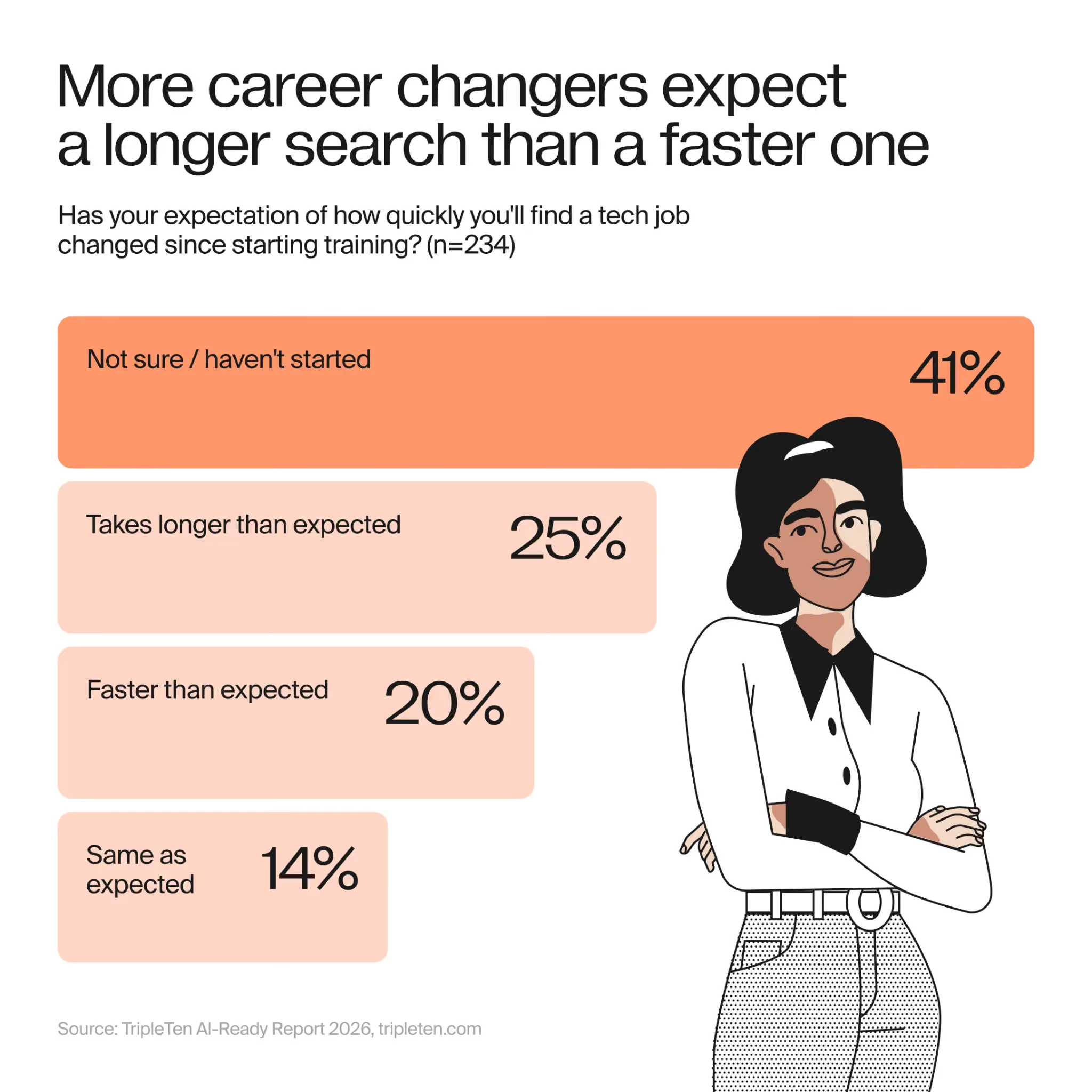
When it comes to timelines, more respondents now expect their job search to take longer than originally planned (25%), rather than faster than expected (20%). It’s not a dramatic gap, but it's consistent across most age groups. Breaking into tech is taking longer than many anticipated — a reminder that fluency in AI is necessary but not yet sufficient on its own.
What they’d tell their old colleagues
When asked to advise someone in their previous profession who was wondering if AI would change their career prospects, the responses varied in detail but converged under one theme: AI is a collaborator, not a replacement, and the time to engage with it is now.
A sample of responses:
"AI will change your workflow more than it replaces your role. Focus on learning how to use it as a tool, not compete with it."
"This is the new era — we must adapt to the use of AI and view it as a tool, not as a threat."
"Life is all about change. This latest change with AI is sweeping through just about every industry. Either you ride the wave or get swept up in it."
"AI isn't replacing warehouse workers overnight, but it is changing what the job looks like. The best move is to adapt early."
The advice shared by these career changers isn’t alarmist, nor is it dismissive. More than anything, it’s practical. It carries the credibility of people who’ve made the risky decision to quit their jobs, embark on a training journey, and come out the other side with a clearer view of AI’s impact on their working lives.
The bar has moved from 'completed a program' to 'can demonstrate what they built,' and that's a bar serious students can clear. The right time to retrain is not three years from now, when the salary premium has been competed away, and the field has stabilized around AI-fluent talent. It's right now, while the demand-supply gap is open and companies are still figuring out who can actually deliver. Victor Menin, Ed.D., Vice President of Enrollment, TripleTen
What it really means to be AI-ready
The story this report tells goes against the prevailing view that paints workers as casualties of AI — anxious and vulnerable to layoffs that seem to be happening everywhere. What this survey shows is something more considered.
These 234 career changers didn’t see AI as a threat but as something closer to a stepping stone toward better pay, more flexibility, and a working life worth having. But what they found after retraining is more complicated than the outcomes promised by many tech bootcamps. Their training built genuine AI fluency, but the hiring market is still catching up.
What remains consistent is respondents’ optimism over AI. Their read on its trajectory has proved accurate, even if some of them have only just fully realized the entire scale of its impact on people’s jobs. And looking back, they encourage their peers to take action rather than wait for AI developments to make their career decisions for them.
References
- IBM Replaces Hundreds With AI As HR, L&D Leaders Rethink Roles
- Salesforce CEO confirms 4,000 layoffs ‘because I need less heads’ with AI
- Jun 04 Challenger Report: May Job Cuts Rise 16% from April; Highest May Total Since 2020
- U.S. Workers Are More Worried Than Hopeful About Future AI Use in the Workplace
- Computer and Information Technology Occupations
- Americans and Canadians agree: More AI training is critical to combat job loss
- AI adoption across Finance functions achieves standout levels of ROI with usage only set to increase
- AI in the Creative Industries 2025’ – Preliminary Findings
- Why most US manufacturers still aren’t using AI and automation
- How 'confused' AI rollout hurts firms and baffles staff



.avif)