

Most companies already have more data than they can act on. What they're short on is people who can turn it into decisions, and that's what makes data analytics a practical way into tech.
The U.S. Bureau of Labor Statistics projects 35% growth for data scientists from 2025 to 2035, around 95,400 new jobs, much faster than the average for all occupations. That's the closest role BLS tracks to a data analyst, and it's one of the fastest growth rates the agency publishes for any occupation.
A bootcamp can get you there faster than teaching yourself, though the programs differ more than their marketing suggests. Some start you from zero; others assume you already know SQL. Some run live classes with mentor support and tuition-back terms, while others hand you recorded material and leave the pace to you.
This guide compares 5 data analytics bootcamps on cost, format, curriculum, projects, and career support, so you can narrow the list to programs that fit how you actually learn.
How we evaluated the best data analytics bootcamps
We evaluated each program using the same criteria:
- Curriculum depth and tool coverage: Does the bootcamp teach the tools data analysts actually use?
- Projects and practical work: Do students complete practical projects using real or realistic datasets? Can those projects help students build a data portfolio they can discuss in interviews?
- Learning format: Is the program full-time, part-time, self-paced, live online, or in-person? Can working adults realistically complete it? We also looked at how long bootcamps take compared with the level of support provided.
- Career support quality: Does the bootcamp include resume support, interview prep, LinkedIn guidance, portfolio reviews, job search planning, career coaching, or employer connections?
- Student outcomes and transparency: Are student outcomes, graduate stories, ratings, or reviews available?
- Cost and financing: What does the program cost upfront? Are payment plans, loans, deferred tuition, scholarships, or refund options available?
- Student reviews: We looked at public student feedback from platforms like Course Report and other review sources where available.
The 5 best data analytics bootcamps in 2026
1. TripleTen: Best for career changers who want job support
- Format: Online, part-time
- Duration: 4 months
- Tuition: $5,950 upfront; installment plans available
- Rating: 4.8/5 on Course Report.
TripleTen highlights:
- Beginner-friendly: no IT or STEM background needed, no entrance exams or prerequisites
- Covers spreadsheets, SQL, Python, Power BI, Tableau, predictive analytics, AI tools for data analysis, and data storytelling
- Business projects for client companies, so portfolio work builds while you study
- Resume review, AI mock interview practice, and career coaching that continues after you graduate
- Money-back guarantee for eligible graduates who do not land a qualifying tech job within 10 months
- 80% of students come from non-tech backgrounds
Why TripleTen stands out
TripleTen's Data Analytics program is strongest if you're changing careers and want training that carries through to the job search.
Most of the program's weight sits in projects. Seven of the eight modules end in one, and students can take on business projects for client companies to put on a resume, so the portfolio builds as you go.
The program runs part-time over four months and covers the core skills for entry-level analytics roles: spreadsheets, SQL, Python, Power BI, Tableau, predictive analytics, AI tools for analysis, and data storytelling.
Four months is quick for this much material. You'll need to study consistently and keep pace with the project deadlines, so if you'd rather take a slower, more academic route, this one will feel compressed.
Cost and guarantee
The Data Analytics program costs $5,950 upfront, and you can split that into two or four payments at the same price. Tuition financing through a lending partner starts at $350 a month and totals $10,900. TripleTen's own installment plan runs from $311 a month after a $700 deposit, totaling $8,175 at 0% interest. Financing raises what you pay overall, so compare the totals rather than the monthly figures.
TripleTen runs promotions regularly, so check the current price before you enroll.
The money-back guarantee is conditional: get your tuition back if you're not hired within 10 months, provided you complete the program and its career services, apply to relevant roles, and keep working with your career coach. Eligibility requirements apply, including U.S. residency.
What students are saying
2. Springboard: Best for 1:1 mentorship

- Format: Online, self-paced with mentorship
- Duration: Around 6 months
- Tuition: $11,300 upfront, with other payment options available
- Rating: 4.6/5 on Course Report.
Springboard highlights:
- Self-paced online format
- Regular 1:1 mentor calls
- 33 mini projects and two capstone projects
- Covers Excel, SQL, Python, Tableau, business analytics, and AI for data professionals
- Career coaching and job search support.
Why Springboard stands out
Springboard provides flexibility while still giving enough support so you don’t feel completely on your own.
You can study on your own schedule. However, you still get regular mentor calls, project feedback, and career coaching. That makes it more supportive than some cheaper self-paced courses.
The mentor model is the main reason to choose Springboard. The weekly calls mean there is always someone there to answer questions, review progress, and keep you accountable.
The trade-off is that the day-to-day learning still depends on you. If you struggle without fixed classes, Springboard may feel too open-ended.
Cost and guarantee
Springboard’s tuition is $11,300 if paid upfront. There are monthly payment and financing options available.
Prices can change with promotions, so check Springboard’s latest tuition before making a final decision.
The job guarantee is conditional. Students need to meet all the requirements to remain eligible.
What students are saying
3. Fullstack Academy: Best for live online learning
- Format: Live online
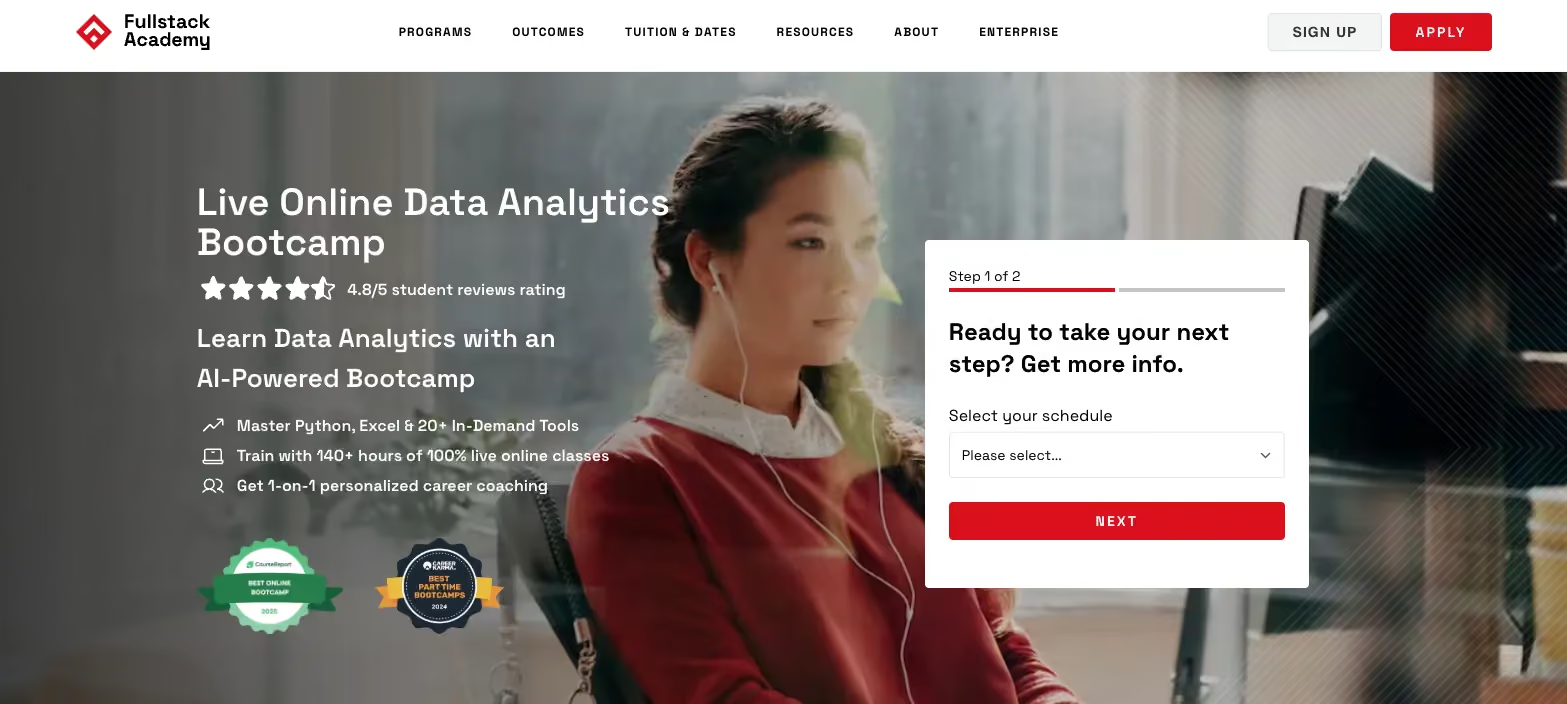
- Duration: Typically 26 weeks part-time, with accelerated cohort availability varying
- Tuition: $9,995 standard tuition
- Rating: 4.8/5 on Course Report.
Fullstack Academy highlights
- Live instructor-led classes
- Tuesday and Thursday evening schedule
- Covers Excel, SQL, Python, Tableau, ETL workflows, and generative AI tools
- Guided practice, workshops, team projects, and a capstone
- Tableau certification preparation
- Career coaching after graduation.
Why Fullstack Academy stands out
Fullstack Academy is best for people who want more structure than a self-paced course.
You get scheduled live classes, instructor guidance, workshops, and group work. That can help if you know you are more likely to stay consistent when classes are already on your calendar.
The 26-week timeline is also useful. It gives you more time to practice than a short intensive bootcamp, while still keeping the program focused.
The main trade-off is flexibility. Classes are fixed, so this works best if your evenings are predictable.
Cost and guarantee
Fullstack Academy’s standard tuition is $9,995, but promotions are sometimes available. There is no money-back job guarantee.
What students are saying
4. General Assembly: Best for structured cohort learning
- Format: Live online or in person
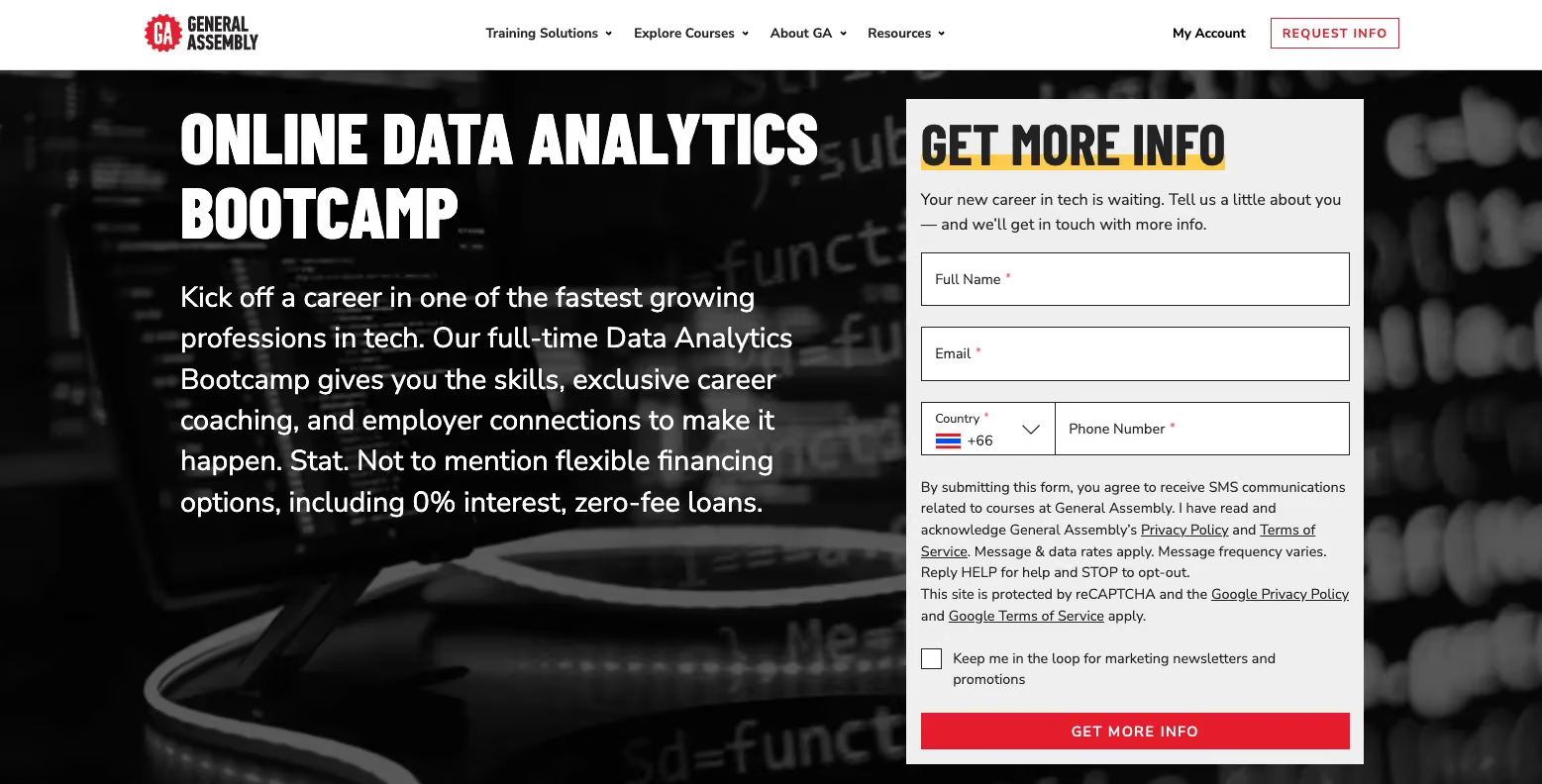
- Duration: 12 weeks full-time or 32 weeks part-time
- Tuition: Around $16,450 standard tuition
- Rating: 4.5/5 on Course Report.
General Assembly highlights
- Well-known bootcamp brand
- Live online and in-person options, depending on location
- Full-time and part-time schedules
- Covers Excel, SQL, Tableau, Power BI, Python, and data visualization
- Portfolio projects with real datasets
- Career coaching and alumni network.
Why General Assembly stands out
General Assembly is one of the more established names in bootcamps.
That is a big part of the appeal. You study in a structured cohort with live instruction, deadlines, career services, and access to a large alumni network.
The setup can work well if you learn better with external structure. You have a schedule to follow, people to learn with, and instructors to ask when you get stuck.
The main question is whether that structure is worth the price.
General Assembly is one of the more expensive options on the list and it does not offer a money-back job guarantee.
Before enrolling, ask about the exact data analytics cohort you are considering. Recent outcomes, class size, instructor background, project feedback, and career coaching can all affect the experience.
Cost and guarantee
General Assembly’s standard tuition is around $16,450. They do also offer financing options and discounts for eligible students.
There is no money-back job guarantee.
What students are saying
5. Turing College: Best for peer-reviewed project learning
- Format: Online, flexible
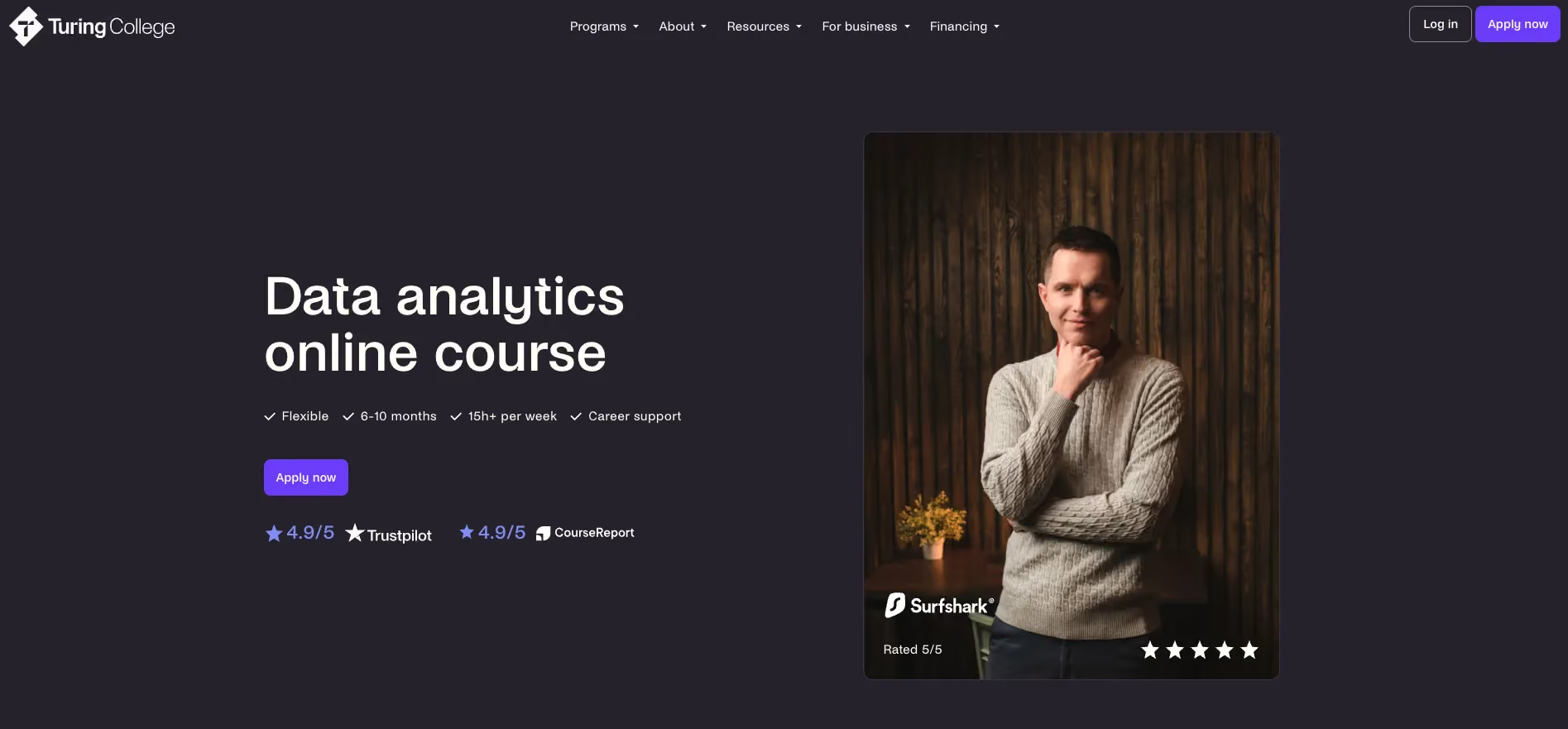
- Duration: 6–10 months
- Tuition: €5,400 upfront; installment and scholarship options available
- Rating: 5/5 on Course Report
Turing College highlights
- Up to 20 practical data analytics projects
- Personalized project reviews from experienced data analysts
- Peer and senior review learning model
- Optional capstone presented one-to-one to a senior team lead
- Product analytics and marketing analytics specializations
- Covers spreadsheets, SQL, Python, Tableau or Power BI, presentations, and Git
- CV support, LinkedIn guidance, career sessions, and mock interviews.
Why Turing College stands out
Turing College puts the review process at the center of the learning experience.
Student projects are reviewed by experienced data analysts, giving you an opportunity to explain your approach, receive personalized feedback, and improve the work.
That is particularly useful in data analytics.
Employers want analysts who can explain why they chose a particular method, what the results mean, and what the business should do next.
Turing College’s review model gives you regular practice doing exactly that.
It also leans into a peer-learning approach. Reviewing another learner’s work can expose you to different ways of solving the same problem. It also tests whether you understand a concept well enough to explain it clearly.
The program includes up to 20 practical projects, followed by an optional capstone. For the capstone, you choose a dataset, complete an end-to-end analysis, turn your findings into a presentation, and discuss the work one-to-one with a senior team lead.
You can also specialize in product analytics or marketing analytics. This allows you to build portfolio examples that better match the roles you want to apply for.
Cost and guarantee
Turing College costs €5,400 when paid upfront. It also includes a 30-day money-back guarantee. This is an initial refund period rather than a promise that you will find a job after graduating.
What students are saying
Choosing the right data analytics bootcamp
A data analytics bootcamp is worth it when it fits how you learn and where you want to land. The things that matter most sit around the curriculum: projects you can put in a portfolio, feedback on your work, and support once you start applying.
You'll also need to be ready to put in the work. A bootcamp gives you structure, deadlines, and people to ask, though the practice, the projects, the applications, and explaining your work in interviews are still yours to do. The right program makes that load manageable.
If you want a beginner-friendly route into data analytics, TripleTen's Data Analytics program is built for career changers. You'll study part-time over four months, take on business projects for client companies alongside your coursework, and work with a career coach on your resume, interview practice, and job search after you graduate.
Frequently asked questions
What is the best data analytics bootcamp for me?
The best data analytics bootcamp depends on your budget and career goals. If you're changing careers, think about what surrounds the curriculum: portfolio projects you can show employers, mentor feedback, career coaching, and interview preparation.
TripleTen is a strong fit if you want a part-time program built around career change. Springboard may suit you better if regular 1:1 mentor calls would help you stay on track.
How long does a data analytics bootcamp take?
Data analytics bootcamps run from about 10 weeks to 10 months. Part-time programs take longer, and they tend to be more realistic if you're working or have family commitments. A longer schedule also gives you time to get comfortable with spreadsheets, SQL, dashboards, and explaining what the data means, which is the part that takes practice.
How much does a data analytics bootcamp cost?
Data analytics bootcamps usually run from a few thousand dollars to more than $16,000. Subscription platforms start around $49 a month, though at that price you're mostly working alone, with limited feedback and no one to help turn exercises into a portfolio. Compare the support each option includes alongside the price.
Is a data analytics bootcamp worth it?
A data analytics bootcamp can be worth it if it helps you build skills you can show employers. The value sits in the structure: deadlines, feedback on your work, portfolio projects, and job search support. That combination is hard to reproduce alone when you're moving into a new field. If a course is mostly video lessons with little feedback or career support, self-study may get you to a similar place for less money.