



Cybersecurity is one of the clearest paths into higher-paying tech work.
Information security analysts earned a median salary of $124,910 as of May 2024, according to the U.S. Bureau of Labor Statistics.
That does not mean a bootcamp guarantees you that salary. But it does show why so many career changers are looking at cybersecurity.
Companies need people who can spot suspicious activity, investigate alerts, protect systems, and explain what is happening clearly.
A good cybersecurity bootcamp helps you build those skills step by step.
You learn the basics, practice with real tools, prepare for certifications, and get a clearer route toward entry-level roles.
This guide compares five online cybersecurity bootcamps by cost, schedule, curriculum, certification prep, practical training, and job-search support.
How we evaluated the best cybersecurity bootcamps
We evaluated each program using the following criteria.
- Starting level: We looked at whether each program is realistic for beginners, career changers, or learners without an IT background.
- Cybersecurity curriculum: We checked for core entry-level skills, including networking, operating systems, security principles, vulnerabilities, cloud security, incident response, threat detection, and risk management.
- Hands-on training: We prioritized programs with labs, simulations, projects, and tool-based practice. Cybersecurity is practical work, so students need more than theory.
- Certification prep: We looked at whether each bootcamp prepares students for recognized certifications such as CompTIA Security+, and whether an exam voucher is included.
- Schedule and flexibility: We compared online, part-time, full-time, live, and self-paced formats to see how realistic each program is for people studying around work or other commitments.
- Support: We looked for tutor help, instructor access, mentor support, project feedback, career coaching, resume help, interview prep, and job-search guidance.
- Cost and terms: We compared tuition, payment options, financing, scholarships, discounts, exam vouchers, and refund or money-back guarantee terms.
The 5 best cybersecurity bootcamps in 2026
1. TripleTen: Best for beginners who want Security+ prep and job support
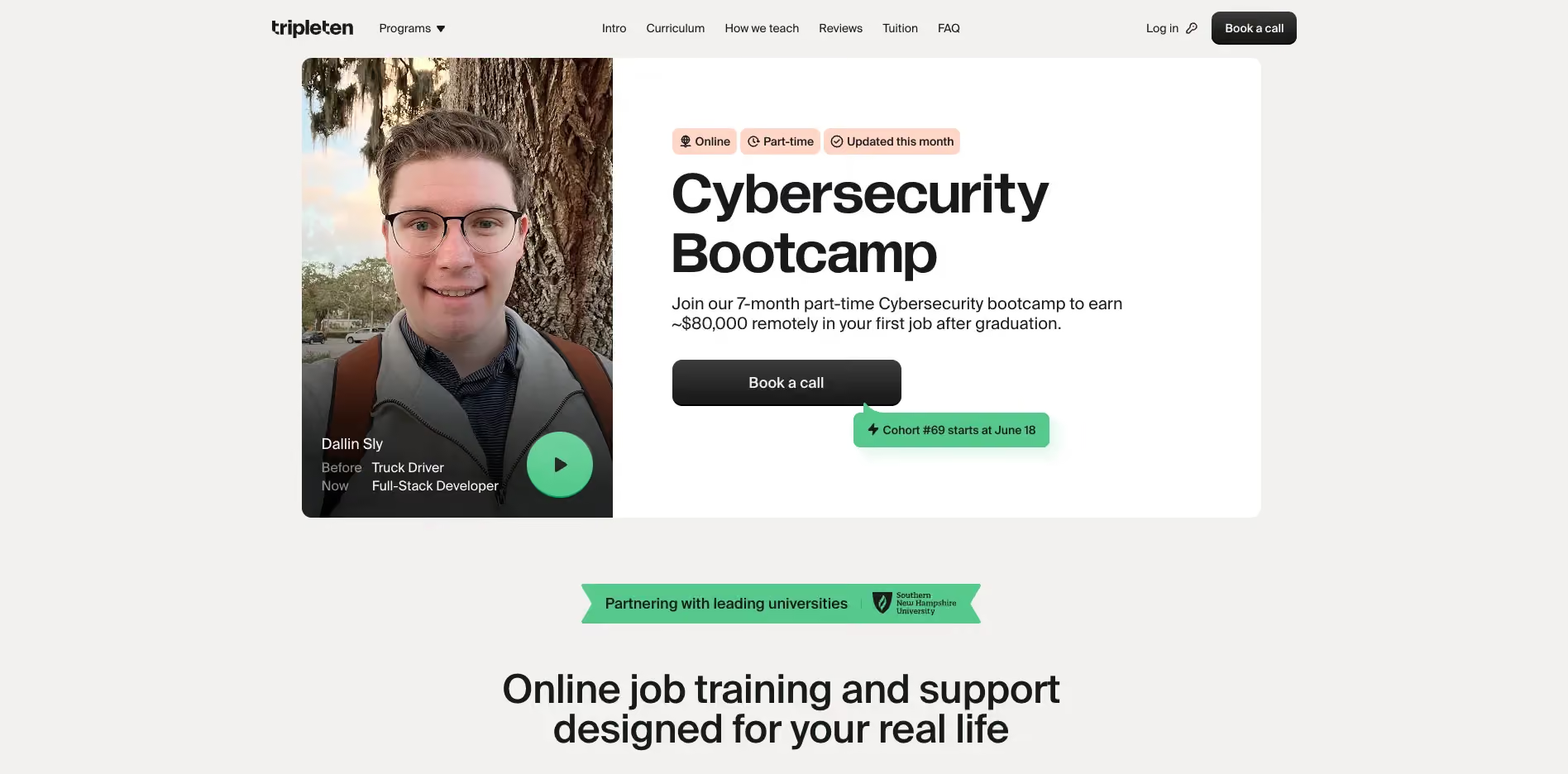
- Format: Online, part-time
- Duration: 7 months
- Tuition: $9,800 upfront; installment and financing plans available
- Rating: 4.8/5 on Course Report.
TripleTen highlights:
- Built for beginners and career changers, with no IT or STEM background required. 80% of TripleTen students come from non-STEM backgrounds.
- Part-time online format
- CompTIA Security+ certification: you take and pass the exam as part of the program, with the voucher included
- Hands-on projects using tools like Splunk, Nessus, Nmap, NIST CSF, and the MITRE ATT&CK matrix
- Tutor feedback, practical exercises, and career coaching
- AI cybersecurity content focused on risks like prompt injection and data leaks
- Money-back guarantee: eligible graduates get their tuition back if they're not hired within 10 months.
Why TripleTen stands out
TripleTen connects the dots for beginners. You get a clear path from “I’m new to this” to “I understand the tools, the certification, and the job search.”
The program starts with the foundations, then moves into practical work like vulnerability management, SIEM log analysis, incident response, threat detection, and asset discovery. You also practice with tools like Splunk, Nessus, and Nmap, so the learning does not stay theoretical.
The CompTIA Security+ certification is built in too. You don't just prepare for the exam — you take and pass it as part of the program.
That matters because many beginners finish a course and then realize they still need to pursue a certification separately. With TripleTen, the certification and exam voucher are part of the program.
You also get help with resumes, interview prep, applications, and explaining your previous experience in a way that makes sense for cybersecurity roles.
TripleTen gives you the training, the certification path, the practical projects, and the job-search support in one place.
Cost and guarantee
TripleTen’s Cybersecurity Bootcamp costs $9,800 if you pay upfront. Installment and financing options are available, though financing may increase the total cost.
There is also a money-back guarantee. Eligible graduates receive a tuition refund if they do not land a qualifying tech job within 10 months of graduation.
What students are saying
2. Springboard: Best for 1:1 mentorship
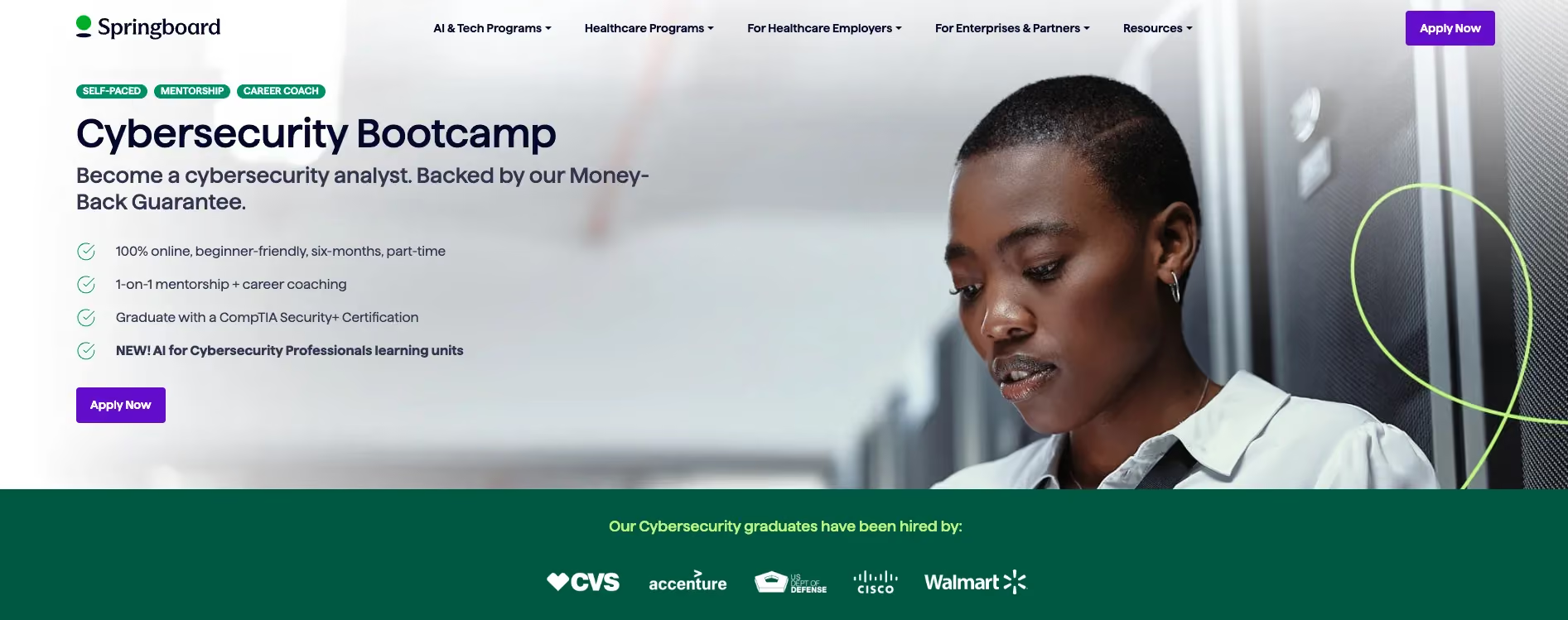
- Format: Online, self-paced with mentorship
- Duration: Around 6 months
- Tuition: Around $9,900, with other payment options available
- Rating: 4.8/5 on Course Report.
Springboard highlights:
- 100% online and self-paced
- Weekly 1:1 mentor support
- Hands-on labs and mini-projects
- Covers network security, identity and access management, risk management, and security intelligence
- CompTIA Security+ preparation, with exam voucher included
- Career coaching, resume support, and mock interviews
- Tuition refund guarantee if eligible graduates do not land a qualifying cybersecurity job within 6 months.
Why Springboard stands out
Springboard is a guided self-study program.
You are not paying for daily classes or a strict bootcamp timetable. You are paying for a flexible curriculum with weekly access to a mentor who can help you stay focused, answer questions, and talk through the parts that are not clicking yet.
A lot of beginners get stuck because cybersecurity concepts connect to each other. Networking affects security. Access management affects risk. Logs affect incident response. If you are learning alone, it is easy to understand each topic separately but struggle to see how they fit together.
Springboard’s mentor model helps with that.
It works best if you already have some momentum. Maybe you have worked in IT support. Maybe you have a technical or analytical background and want a clearer route into cybersecurity.
If you are starting completely cold, this may be a tougher first step. Springboard can give you flexibility and guidance, but it will not create the same daily structure as a live cohort program.
Cost and guarantee
Springboard’s cybersecurity track costs around $9,900. Other payment options may be available, including monthly payments, loans, and deferred tuition. Prices can change, so check Springboard’s latest tuition before making a final decision.
There is also a conditional money-back guarantee.
What students are saying
3. Fullstack Academy: Best for live online classes

- Format: Live online
- Duration: 13 weeks full-time or 26 weeks part-time
- Tuition: $11,995 part-time or $12,995 full-time standard tuition
- Rating: 4.8/5 on Course Report.
Fullstack Academy highlights
- Live online instruction
- Full-time and part-time options
- Scheduled classes with instructors and peers
- Cybersecurity analytics focus
- Hands-on labs and group exercises
- SIEM analysis, system defense, and vulnerability work
- Career support, resume help, and mock interviews.
Why Fullstack Academy stands out
Fullstack Academy gives online cybersecurity training a proper classroom feel. You have live sessions, instructors, classmates, assignments, and a schedule you need to follow.
For some learners, that structure is worth paying for.
Cybersecurity can get confusing fast when you are jumping between networking, logs, vulnerabilities, system defense, and incident response. Live classes give you a place to ask questions, hear how instructors explain the problem, and see how other students work through the same material.
The cybersecurity analytics focus is another reason Fullstack belongs on the list.
The program leans toward skills that connect with SOC analyst and junior security analyst work. That includes reading logs, monitoring systems, spotting suspicious activity, and thinking through how to respond.
Fullstack Academy is a strong option if you want a structured online bootcamp that feels closer to a live training program than a self-paced course.
The biggest drawback is the schedule.
Live classes only work if you can keep up with them. If your work hours change, or you need more time to revisit technical topics, the fixed pace may feel hard to manage.
Cost and guarantee
Fullstack Academy’s cybersecurity bootcamp pricing varies by format: standard tuition is $11,995 for part-time and $12,995 for full-time.
Fullstack Academy does not offer a money-back guarantee.
What students are saying
4. Flatiron School: Best for an intensive bootcamp experience

- Format: Live Online full-time or Flexible Online part-time
- Duration: 15 weeks full-time or 45 weeks part-time
- Tuition: $17,500 standard tuition; financing plans and partial scholarships available
- Rating: 4.5/5 on Course Report.
Flatiron School highlights
- Recognized tech bootcamp brand
- Longer part-time cybersecurity program
- Structured online learning path
- Covers cybersecurity foundations, tools, labs, and technical projects
- Portfolio-focused project work
- Career coaching and alumni support
- No money-back guarantee.
Why Flatiron School stands out
Flatiron School gives cybersecurity learners more time and more structure than a short certificate.
That is useful if you do not want to rush straight from beginner lessons into job applications.
The program gives you a longer runway to build technical confidence, work through security concepts, complete projects, and understand how different parts of cybersecurity connect. That can matter if you are changing careers and need the material to sink in properly.
Flatiron also offers the reassurance of a recognized bootcamp brand. You get a more formal learning path, career support, and portfolio-focused work instead of trying to build your own plan from cheaper courses.
The main downside is speed.
Flatiron is not the fastest or cheapest way to start cybersecurity. It makes more sense if you want a guided, steady route and are comfortable taking longer before moving into the job search.
Cost and guarantee
Flatiron School’s cybersecurity certificate costs $17,500. Payment plans, loans, and scholarships may be available.
There is no money-back guarantee for the cybersecurity program.
What students are saying
5. Evolve Security Academy: Best for hands-on cybersecurity labs

- Format: Live online, part-time
- Duration: 20 weeks
- Tuition: $14,950 with installments or deferred payment options
- Rating: 4.7/5 on Course Report.
Evolve Security Academy highlights
- Cybersecurity-specific training provider
- Live online cohorts
- Part-time schedule
- Hands-on labs and security exercises
- Practical security projects
- CompTIA Security+ preparation
- Career support
- Job offer commitment for eligible graduates, terms apply.
Why Evolve Security Academy stands out
Evolve Security Academy is built around cybersecurity practice, not just cybersecurity lessons.
A lot of beginner training explains what threats, vulnerabilities, and security tools are. Evolve is more focused on getting you to use that knowledge in labs and exercises.
That matters because cybersecurity is practical work.
You need to know how to investigate issues, spot risks, use security tools, follow a process, and think like a defender. Reading about those skills is not the same as practicing them.
Evolve also has a narrower focus than many larger bootcamp providers. It is not trying to cover every tech career path. The program is centered on cybersecurity, which may appeal if you already know this is the field you want to enter.
The live format adds structure too. You get scheduled sessions and instructor support.
The main caveat is the investment.
Evolve is much more expensive than self-paced cybersecurity courses. The labs also require steady effort across the 20-week schedule. It makes the most sense if you are already serious about cybersecurity and want a practical, security-focused program.
Cost and guarantee
Evolve’s standard tuition is $14,950. Installment, financing, and deferred payment options may also be available.
Evolve offers a job offer commitment for eligible graduates who do not receive a qualifying job offer within 6 months.
What students are saying
Quick comparison: Online cybersecurity bootcamps
How to choose a cybersecurity bootcamp
Choosing a cybersecurity bootcamp is really about choosing your next step.
You do not need to know everything before you start. You just need a program that helps you build momentum.
The right bootcamp should make cybersecurity feel less overwhelming and more achievable. It should help you practice real skills, prepare for recognized certifications, and understand how your training connects to real entry-level roles.
Flexibility matters too. If you are working or managing other commitments, an online part-time program can make it easier to keep moving without putting the rest of your life on hold.
TripleTen’s Cybersecurity Bootcamp is built for that kind of progress. You can learn online, study part-time, complete practical projects, prepare for CompTIA Security+, and get career support as you work toward your first tech role.
Frequently asked questions
Can I switch to cybersecurity without an IT background?
Yes. Plenty of people start cybersecurity without a degree or a previous IT job.
But you still need the basics first. Before you can investigate threats or respond to incidents, you need to understand networks, operating systems, security principles, and common tools.
That is where a bootcamp can help. Instead of guessing what to learn next, you get a path to follow and practice that builds toward entry-level work.
Can you get a cybersecurity job with just a bootcamp?
A bootcamp can help you prepare for entry-level cybersecurity jobs.
But employers still want proof.
They want to see labs, projects, tool practice, and a clear explanation of how your previous experience connects to cybersecurity.
A good bootcamp should help you build that evidence. It should also help you prepare for interviews and apply for roles that actually match your level.
What cybersecurity jobs can career changers apply for?
Most career changers should start with roles built around monitoring, investigation, support, or basic security operations.
Think SOC analyst, junior cybersecurity analyst, security operations analyst, or IT support roles with security responsibilities.
Your first job does not need to be your ideal security role.
It just needs to get you closer to the work.
Are online cybersecurity bootcamps worth it?
An online cybersecurity bootcamp can be worth it if it helps you move closer to an entry-level job.
That means more than video lessons.
Look for hands-on labs, Security+ prep, portfolio projects, resume support, interview practice, and guidance on which roles to apply for first.
Ideally, you want to finish the course with proof that you can use security tools, explain your process, and talk about the work in an interview.

.avif)