






Key takeaways
- TripleTen is the best overall learning provider for building an AI career. It runs two AI programs at different levels: AI Automation is the beginner track with no prerequisites, while AI & Machine Learning is an accelerator for engineers who already have two or more years in production.
- The spread is far wider than the category name suggests: four weeks to nineteen months, and €810 to $29,900. Two programs are sold as subscriptions and two offset tuition against paid apprenticeship work, so work out what you'd actually pay before comparing headline prices.
- The 13 AI programs below come from eight providers and split into three groups: no-code programs for business users, technical programs for people already in tech, and executive programs built around strategy rather than building.
AI skills stopped being a differentiator on a resume and started being an expectation. PwC's 2026 Global AI Jobs Barometer, which analyzed more than a billion job ads, found that jobs requiring specific AI skills grew 69% while the total jobs market grew 9%, and that AI skills now carry a 62% average wage premium. A 2024 Microsoft and LinkedIn survey of 31,000 knowledge workers found something sharper still: 71% of leaders said they'd rather hire a less experienced candidate who has AI skills than a more experienced one who doesn't.
A short course will give you the theory. An artificial intelligence bootcamp is built for the other problem, which is turning that theory into work you can show an employer. Below are 13 online AI programs from the eight providers worth considering in 2026 — what each one costs, and who each one actually suits. Several providers now run two or three programs at different levels rather than one, so the choice within a provider matters as much as the choice between them.
The top 8 AI bootcamp providers in 2026
- TripleTen — best for building an AI career at any level
- Berkeley — best for busy executives
- Turing College — best for the AI-curious analyst
- 9x — best for flexibility
- 4Geeks — best for picking your depth
- Flatiron School — best for earning while you training
- Code Institute — best for building an AI business case
- Institute of Data — Best for data professionals
| Program | Audience | Focus | Length | Price |
| TripleTen AI Automation | Beginners and people upskilling in their current role | Using AI to automate operations, no code | 4 months | From $5,950 |
| TripleTen AI & Machine Learning | Engineers with 2+ years in production | Applied ML, RAG, agents, evaluation, MLOps | 20 weeks | From $12,600 |
| Berkeley Executive Education | Business leaders | AI strategy and business literacy | 2 months | $3,050 |
| Turing College AI for Business | Analysts and working professionals | Using AI in analytical work | 2–4 months | €3,500 |
| 9x AI Builder | Marketers and ops managers | AI workflows, agents, MCP | 6–8 weeks | €99/mo or €999/yr |
| 4Geeks AI Fluency | Professionals automating their current job | AI workflows around your own work, no coding | 4 weeks | €810 |
| 4Geeks AI Flex | Anyone who can’t commit to fixed dates | Four self-paced paths, agents to automation | Self-paced | $129/mo or $900/yr |
| 4Geeks AI Engineering | A full technical move into AI | Agents, multi-agent systems, AI-native build | 22 weeks | €6,250 |
| Flatiron AI Engineering Immersive | Career changers needing income while training | ML, neural networks, NLP, plus paid apprenticeship | 19 months | $29,900 sticker, $0 net |
| Flatiron Accelerated AI Engineering | Engineers wanting the AI layer plus paid work | Same curriculum, apprenticeship from month 2 | 16 months | $14,900 sticker, ~$14,100 ahead |
| Flatiron AI & Data Science Certificate | Anyone wanting a part-time route | AI and data science, no apprenticeship | Part-time | $14,900 |
| Code Institute AI for Business Leaders | Owner-managers and senior leaders | Business case, governance, 90-day plan | 6 weeks, 18 contact hrs | €2,000 |
| Institute of Data | Data professionals | The technical foundation of AI | 24 weeks PT / 12 FT | $12,500 |
1. TripleTen — best for building an AI career at any level
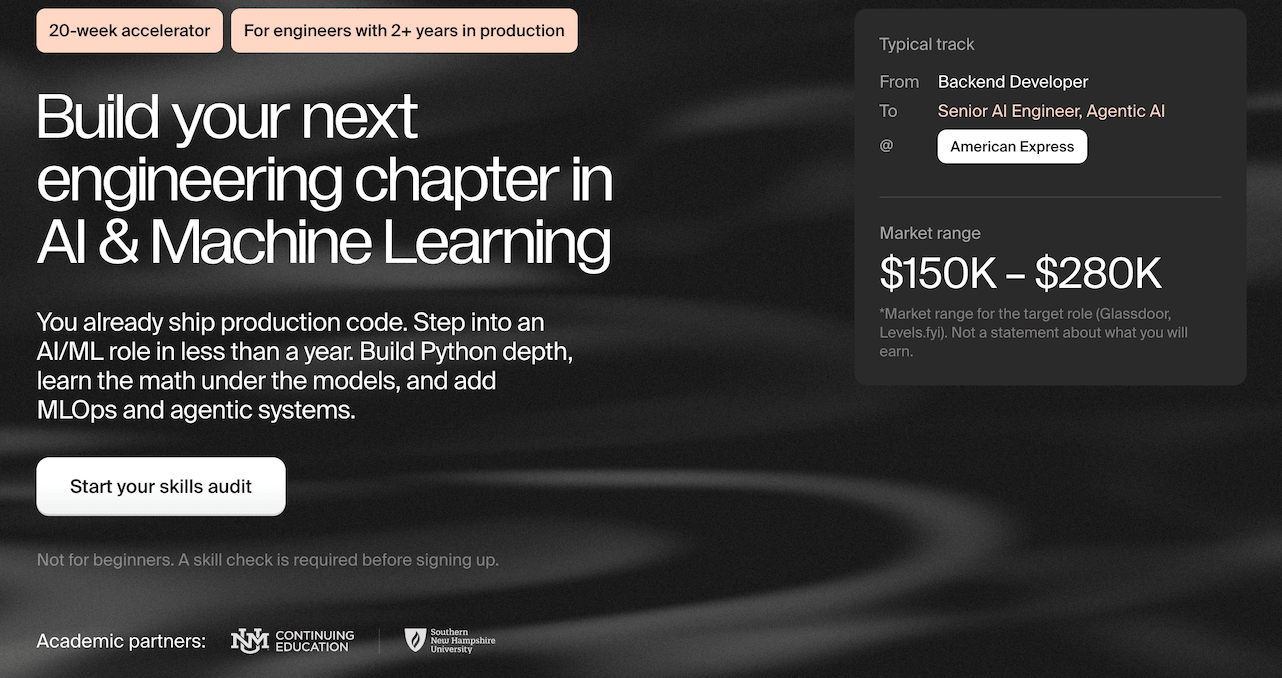
TripleTen moved past the bootcamp model in 2026 and now operates as a career learning platform. TripleTen runs two AI programs at different levels, and the split is by experience. One is a beginner program with no prerequisites. The other is an accelerator that screens for existing engineering experience and won't admit you without it. Here's which is which.
| AI Automation | AI & Machine Learning | |
| Who it's for | Beginners, and anyone adding AI to their current role | Engineers adding the modeling layer |
| Entry requirement | None | 2+ years in production, plus a skill check |
| Length | 4 months, part-time | 20 weeks |
| Coding | No code | Python-heavy |
| You'll build | Automated workflows, chatbots, RPA | Five projects stacking into one production ML system |
| Price upfront | $5,950 | $12,600 |
| Money-back guarantee | Yes | No |
AI Automation — if you're starting from zero, or improving in the role you already have
The AI Automation program runs four months part-time and starts from the basics, so it works whether you've never opened a prompt window or you've been using ChatGPT ad hoc and want to do it properly. It's a no-code program: instead of teaching you to build AI systems, it teaches you to use AI to automate business operations, which is what most roles are hiring for right now.
The curriculum runs in two-week blocks through prompt engineering, LLMs and AI applications, AI-driven automation, advanced applications, technical integrations via data and webhooks and APIs, robotic process automation, and a capstone. Students work in ChatGPT, the OpenAI API, Perplexity, Zapier, n8n, Nebius Token Factory, Jira, and Miro. No IT or STEM background is needed, and there are no entrance exams or prerequisites. Graduates get lifelong access to program updates and coaching.
- Length: 4 months, part-time, with flexible deadlines
- Price: $5,950 upfront (splittable into 2 or 4 payments), financing from $350/month ($10,900 total), or installments with a $700 deposit at 0% interest ($8,175 total)
- Best for: beginners, and anyone bringing AI into the job they already have
AI & Machine Learning — if you already ship production code and want the ML layer
The AI & Machine Learning accelerator runs 20 weeks and is explicitly not a beginner program: it's built for engineers with at least two years of production experience, and a skill check is required before you can sign up. You don't need prior ML experience, since that's the layer it adds, but you do need the engineering or data years underneath it.
The structure is five projects of rising difficulty that stack into one production system: modeling on messy data, shipping a model behind a containerized and monitored API, a RAG pipeline wrapped in an agent with guardrails, an evaluation harness that blocks a merge when quality drops, and a final end-to-end system reviewed by a staff-level engineer. Tools include Python, pandas, scikit-learn, FastAPI, Docker, MLflow, LangChain, and vector databases. The split is 35% theory to 65% hands-on, with 250 hours of theory available as support rather than required reading. It's aimed at software, backend, and data engineers new to ML, at DevOps, SRE, QE, and analytics engineers, and at senior engineers adding AI/ML without changing jobs.
- Length: 20 weeks, built around a full-time working week
- Price: $12,600 upfront, financing from $350/month ($17,950 total), or installments with a $1,000 deposit ($20,000 total)
- Best for: working engineers moving into ML and AI engineering roles
- Entry: 2+ years production experience, plus a skill check
Career support: both include one-on-one mentorship and coaching, resume and LinkedIn work, mock technical and HR interviews, and access to a job board carrying 300+ daily openings from partner companies.
The money-back guarantee applies to AI Automation only. The AI & ML accelerator doesn't carry it, since it's built for engineers making a lateral move rather than entering tech; it has a two-week window to withdraw with a full refund instead.
2. Berkeley — best for busy executives

Artificial Intelligence: Business Strategies and Applications, from UC Berkeley Executive Education, is aimed squarely at business leaders. Like TripleTen's AI Automation program, it stays out of the code: it covers machine learning, neural networks, and deep learning at a literacy level so you understand what you're deploying, without training you to build it.
You finish with a certificate and a path toward Berkeley's Certificate of Business Excellence, plus access to a networking community. Translating that into career movement is on you — this program assumes its students already have the seniority to do that themselves, so there's no career coaching and no employment guarantee.
- What you'll learn: merging AI into business workflows, how the technology works, applying AI strategically, rolling AI out across a team
- Requirements: none, though business experience helps
- Length: 2 months, online, 4–6 hours per week
- Price: $3,050. Berkeley runs a referral offer that takes $250 off when you enroll alongside a colleague, and financing options are listed on the program page. Enrollment closes on a set date each cohort, so check the current deadline before planning around it.
3. Turing College — best for the AI-curious analyst
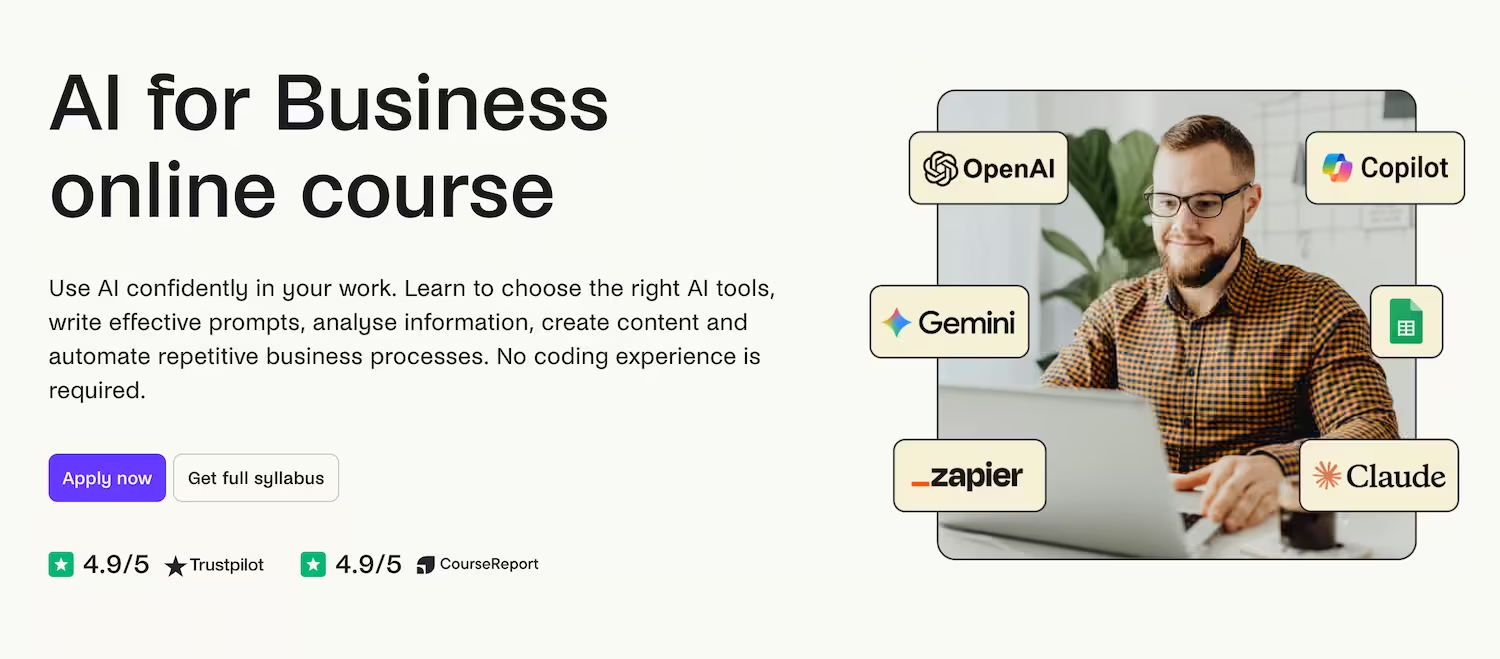
AI for Business, from Turing College, was called AI for Business Analytics until recently, and the newer name describes it better. It runs as two core modules across six sprints, moving from AI fundamentals and prompting through content creation, productivity and spreadsheet work, no-code automation, and finishing with AI-assisted Python. No coding background is needed: the final sprint uses coding assistants to help you write and adapt simple scripts rather than teaching you to program.
Students work in ChatGPT, Gemini, Claude, Perplexity, Fireflies.ai, Notta.ai, Grammarly, n8n, Zapier, Lovable, GitHub Copilot, and Claude Code, and build reusable prompt templates, a prototype automation, and a Python script for data cleaning or file processing.
It's also the one program here with real admissions friction. You submit a written application, reviewed within a working day, and selected applicants go to a 20–30 minute consultation. You need B2-level English. That screening means you can be turned down, which is worth factoring into your timeline. There's a 14-day money-back window.
Worth knowing if you're more technical than this program assumes: Turing College also runs Building with AI Agents, and an AI Engineering track that expects at least a year of Python or JavaScript and covers LangChain, LangGraph, RAG, and MCP.
- What you'll learn: AI fundamentals and limitations, prompt and context engineering, AI-assisted media and presentations, meeting notes and spreadsheet work, no-code automation, AI-assisted Python
- Requirements: no prior AI knowledge, B2 English, and you have to apply and be accepted
- Length: 2–4 months, typically around 3.5, at roughly 9 focused hours a week (120+ hours total)
- Price: €3,500 upfront, or €1,055 a month over four months at 0% interest. German residents may qualify for Bildungsgutschein funding, potentially covering the full cost.
4. 9x — best for flexibility
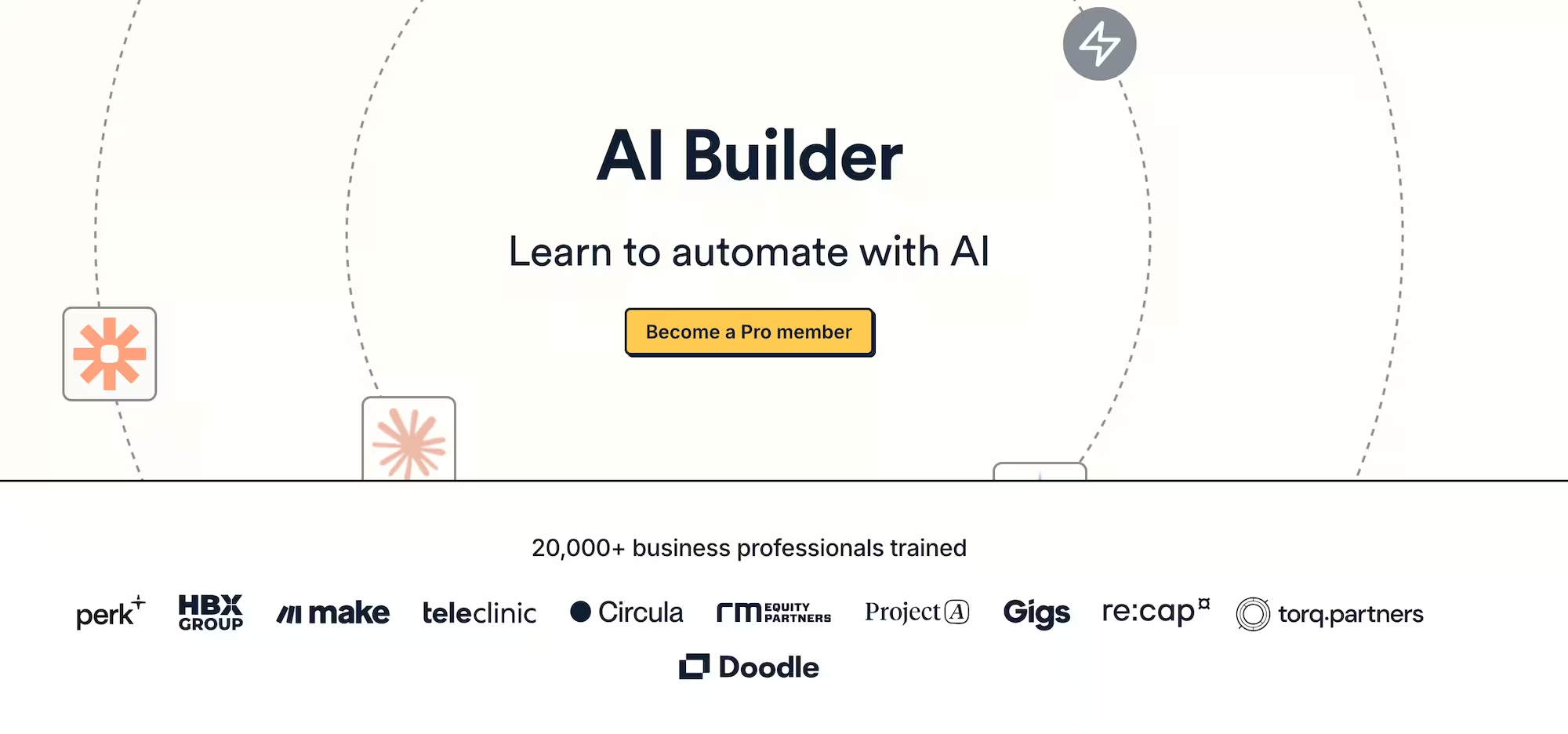
9x's AI Builder is 25+ lessons and over 100 hours of content across six to eight weeks of study, and it goes further into the mechanics than most no-code programs here. The curriculum works up from how the web works and how to spot an automation opportunity, through databases and schema design, then APIs, JSON and webhooks, and finishes on building AI workflows, configuring agents and assistants, and setting up MCP servers. Students work in Airtable, Notion, Make, n8n, Zapier, Lindy.ai, Relevance, ChatGPT, Claude, and Gemini. New lessons land monthly, and weekly live sessions run alongside the course.
Two things to weigh. 9x labels AI Builder as being for advanced users, and while the curriculum genuinely starts from first principles, the depth on APIs and databases is more than a purely non-technical learner may expect. And graduates finish with a certificate but no career coaching or job-search support.
- Requirements: time for 100+ hours of content across six to eight weeks; some business or data familiarity helps
- Who it's for: operations managers, marketers, and technically curious non-engineers who want to build rather than just prompt
- Price: AI Builder is unlocked through a 9x Pro membership, which also covers the weekly workshops, office hours, and the rest of the content library. €99 a month, €269 a quarter, or €999 a year. It sold standalone for €699 in 2025, so if you can finish inside the six to eight weeks the course suggests, the quarterly option works out lower than the old one-off price.
5. 4Geeks — best for picking your depth
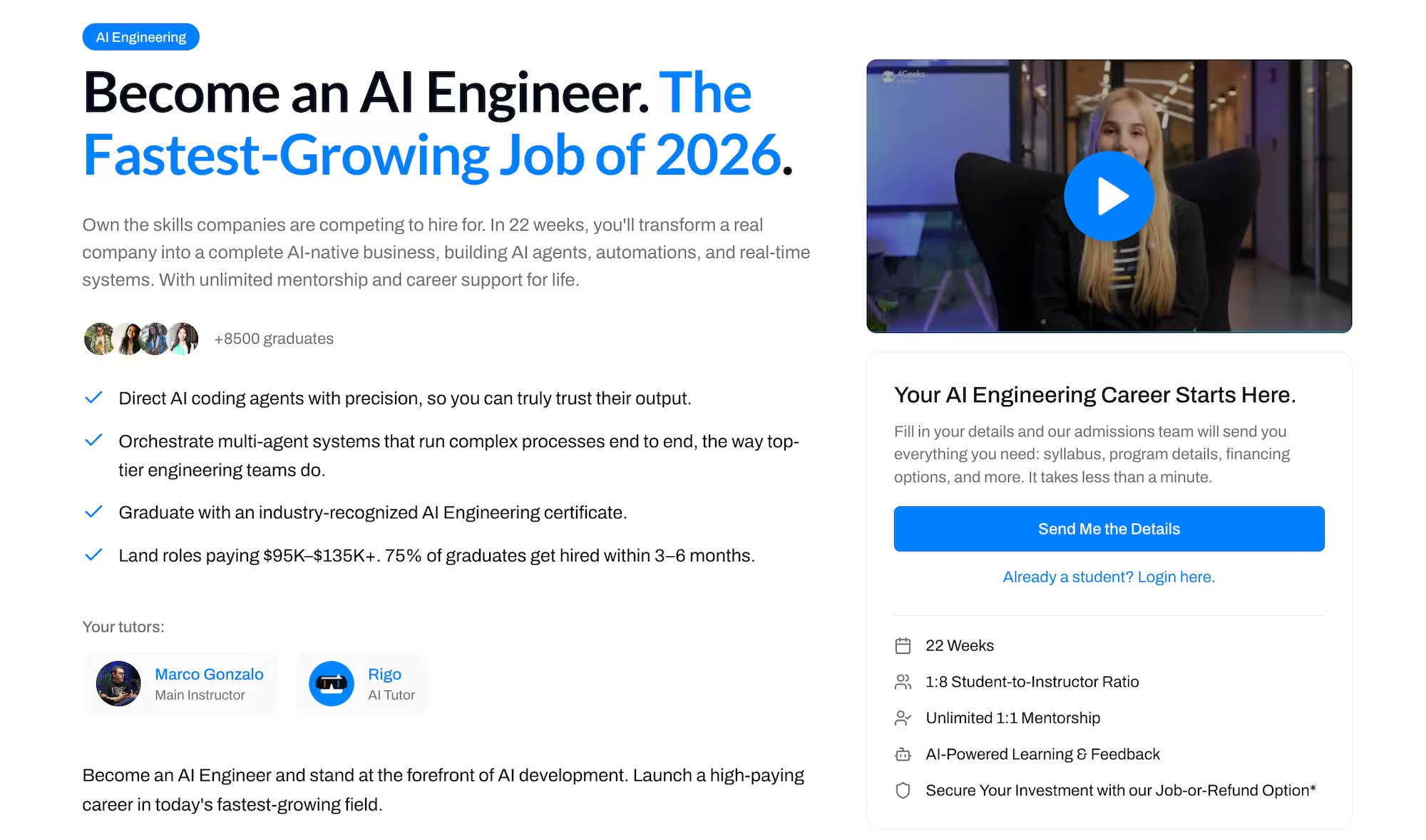
4Geeks (the company rebranded from 4Geeks Academy and now calls itself an AI reskilling platform) splits its AI offering into three programs at very different commitment levels. That's genuinely useful if you don't yet know how deep you want to go, and it's the clearest laddering of any provider here.
| Program | Length | What it's for | Price |
| AI Fluency | 4 weeks | Automating the job you already have, no coding | €810 |
| AI Flex | Self-paced | Choosing your own path with no fixed cohort | $129/mo or $900/yr |
| AI Engineering | 22 weeks | A full technical move into AI engineering | €6,250 |
AI Fluency is the shortest program in this entire review at four weeks, against a field where the next lightest is six. It's built around your own job rather than generic exercises: one live class a week with an instructor, one included 1:1 mentorship session, a 24/7 AI tutor, and you finish with a working automation and a prompt library made for your actual work. No coding required. It's a sensible way to find out whether this kind of training suits you before spending real money.
AI Flex drops the cohort schedule entirely, and it’s priced as a subscription — $129 a month or $900 a year rather than a one-off fee, which changes the calculation if you want to dip in and out rather than finish by a date. You pick from four ready-made paths — building agents, producing content with AI, or automating with n8n among them — and work through exercises rather than recorded lectures, with material updated monthly, a monthly 1:1 with an expert, and the same round-the-clock AI tutor. The trade-off is the familiar one: without deadlines, you supply the discipline.
AI Engineering is the serious track, and at 22 weeks the longest program 4Geeks runs. Across 55+ hands-on projects split into two streams, Core AI and Agents plus Infrastructure for AI, you work toward a capstone that takes one real company to an AI-native operation end to end. The student-to-instructor ratio is 1:8, mentorship is unlimited and continues after you finish, and there's career support plus a job-or-refund option — asterisked on their page, so read the conditions before you count on it.
It runs 22 weeks on a part-time evening schedule, with a 15-week accelerated morning track for anyone who wants to move faster.
- Requirements: none stated for all programs
- Price: AI Fluency is €810 upfront, or two interest-free installments of €450 (€900 total). AI Flex is a subscription at $129 a month or $900 a year, with extra mentorship sessions at $25 each. AI Engineering is €6,250 at its current launch price — payable upfront with 10% off for paying early, in six interest-free installments, or as a €500 deposit plus around €140 a month financing €5,750 over 48 months at 7.75% APR. Two to three merit scholarships are available per cohort.
6. Flatiron School — best for earning while you train
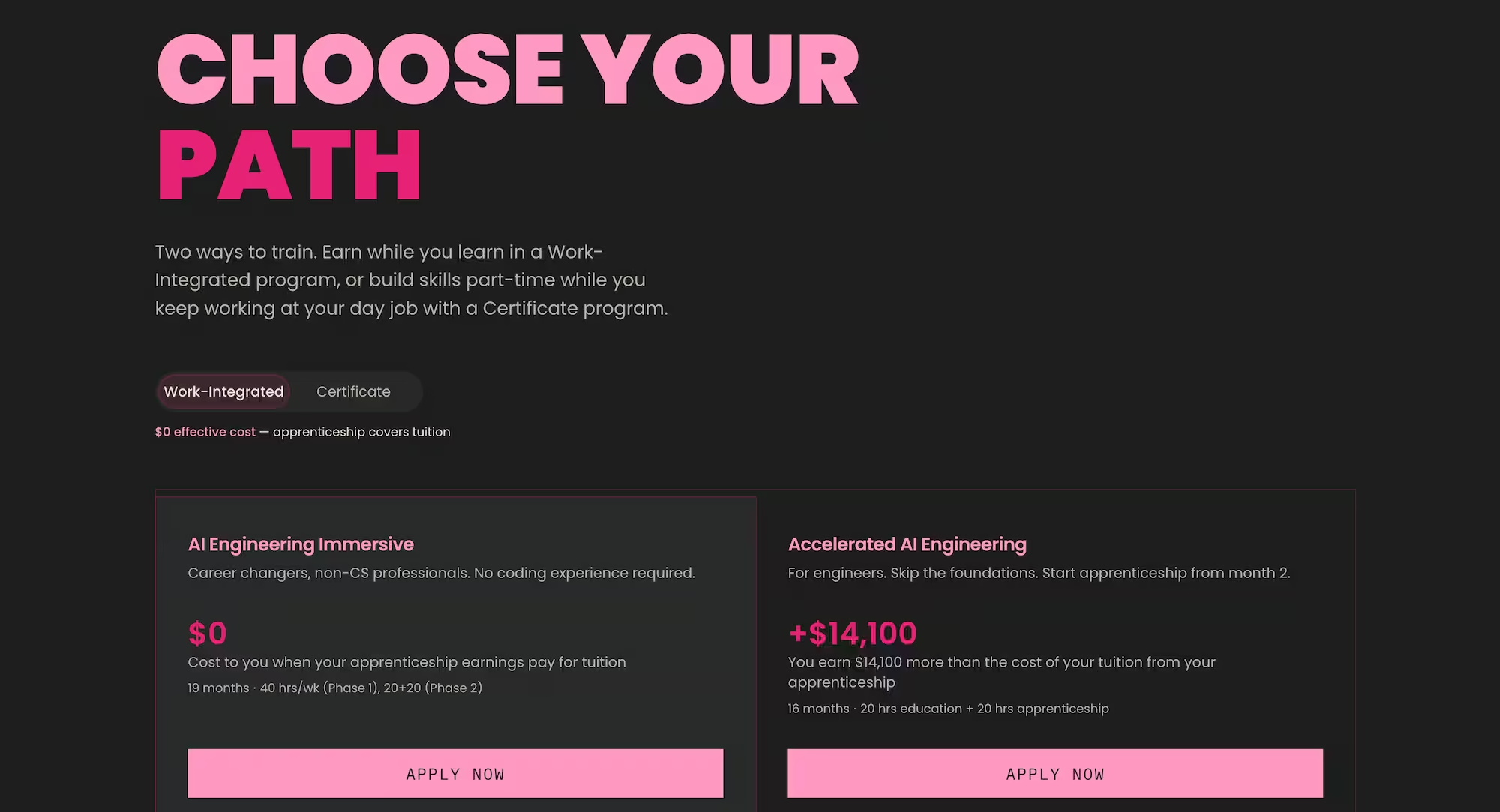
Flatiron School restructured, and the standalone AI bootcamp it used to run is gone. In its place are three routes into AI, and the interesting ones are the work-integrated tracks, because they're the only programs on this list where you get paid during the training.
The curriculum is shared across all three: machine learning with Scikit-Learn, neural networks including CNNs, RNNs and transformers, NLP and LLMs including fine-tuning, and data analysis with pandas, SQL, and cloud tools. Every course follows the same format — self-paced modules, hands-on labs, live weekly facilitation, and weekly one-on-one mentorship.
| AI Engineering Immersive | Accelerated AI Engineering | AI & Data Science Certificate | |
| Who it's for | Career changers and non-CS professionals | Engineers skipping the foundations | Anyone wanting a part-time route |
| Coding experience | Not required | Expected | Not required |
| Length | 19 months | 16 months | Part-time |
| Weekly hours | 40 (phase 1), then 20 + 20 | 20 study + 20 apprenticeship | Part-time |
| Apprenticeship | Paid, from month 5 | Paid, from month 2 | None |
| Courses | 22 | 11 | — |
| Sticker tuition | $29,900 | $14,900 | $14,900 |
| Net cost | $0 after scholarship and earnings | You finish ahead by ~$14,100 | $14,900 |
Read those as projections rather than guarantees: the earnings figures are estimates, and they depend on being placed in an apprenticeship and completing it. That's a different kind of risk from a tuition-back guarantee, and worth asking about directly on a call.
The trade-off is time. Sixteen to nineteen months is far longer than anything else on this list, where the range otherwise runs six weeks to 24 weeks. The Immersive also asks 40 hours a week in its first phase, which effectively rules out keeping a full-time job through that stretch.
- Who it's for: career changers who need income during training (Immersive), working engineers who want the AI layer plus paid experience (Accelerated), and anyone who'd rather pay tuition and study part-time (Certificate)
- Requirements: no coding experience for the Immersive or the Certificate; an existing engineering foundation for the Accelerated track
- Price: On the Immersive, tuition is $29,900, a $10,400 scholarship brings your commitment to $19,500, and apprenticeship earnings of roughly $19,500 cover it — so Flatiron quotes the net cost as zero. On the Accelerated track, tuition is $14,900, a $3,000 scholarship brings the commitment to $11,900, and roughly $26,000 in earnings leaves you about $14,100 up.
7. Code Institute — best for building an AI business case
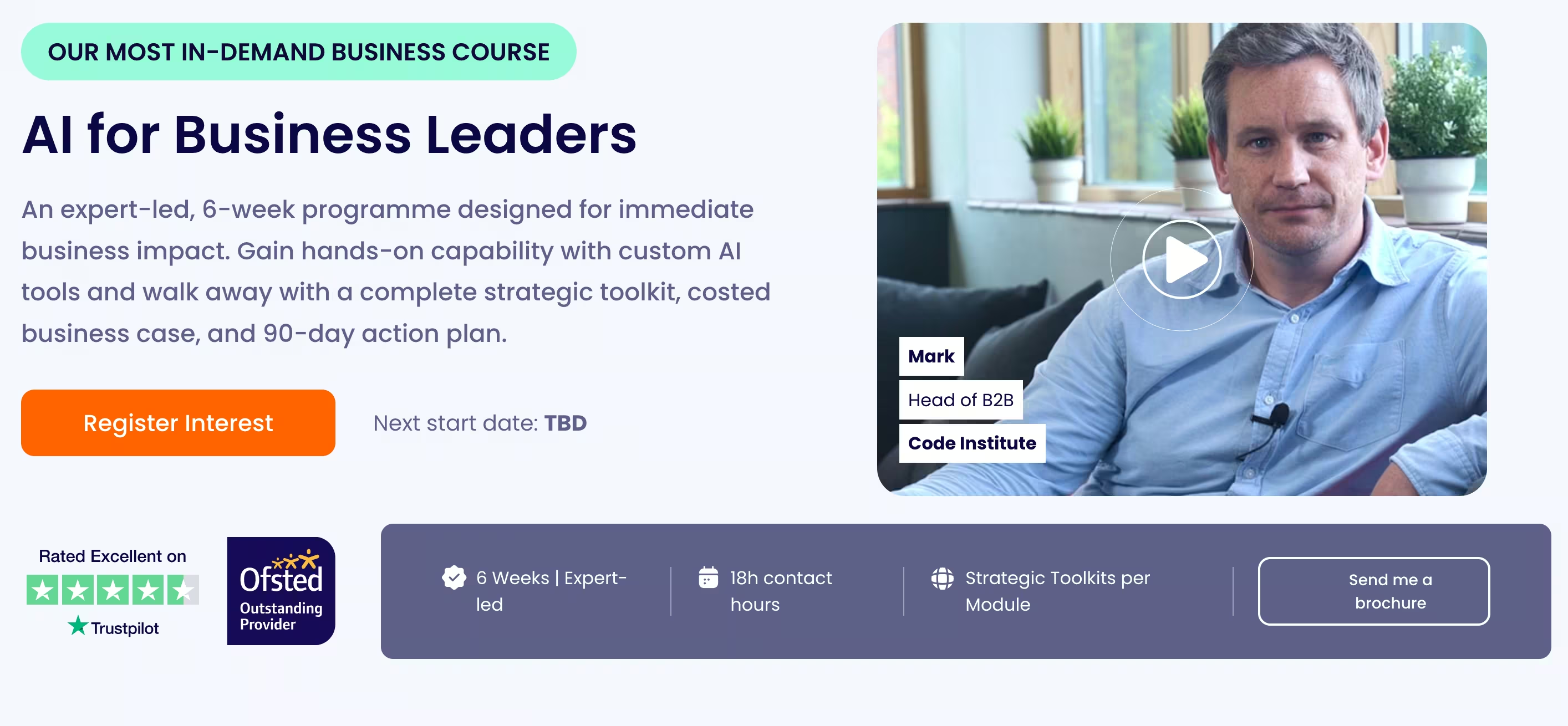
Code Institute's AI for Business Leaders is built to produce decision documents rather than general AI literacy. Every session generates an output you take back to your organization.
By the end of six weeks you're meant to leave with a prioritized portfolio of AI opportunities ranked by strategic value, a working AI tool you built during the program, a data readiness assessment, a governance framework including an EU AI Act compliance review, and a quantified business case with ROI projections, a stakeholder map, and a 90-day action plan with named owners. Every output is built on your own organization's data rather than a case study. It's designed and advised by practitioners, including a data and AI transformation executive at AXA Ireland.
The time commitment is the lightest here: 18 contact hours total, delivered as two half-day sessions and four evening sessions across the six weeks. One thing to plan around: cohort dates are only confirmed once a minimum group size is reached, so there may not be a start date available when you enquire.
- What you'll learn: where AI creates value, building an AI tool, data readiness, governance and EU AI Act compliance, augmented workforce design, business cases with ROI
- Requirements: no prior experience; a laptop with at least 4GB RAM
- Who it's for: owner-managers and MDs, senior leaders asked to build an AI business case, and managers who need stakeholder alignment or budget approval
- Price: €2,000, with a 20% deposit (€500) to secure your place and the balance due before the program starts
8. Institute of Data — Best for data professionals
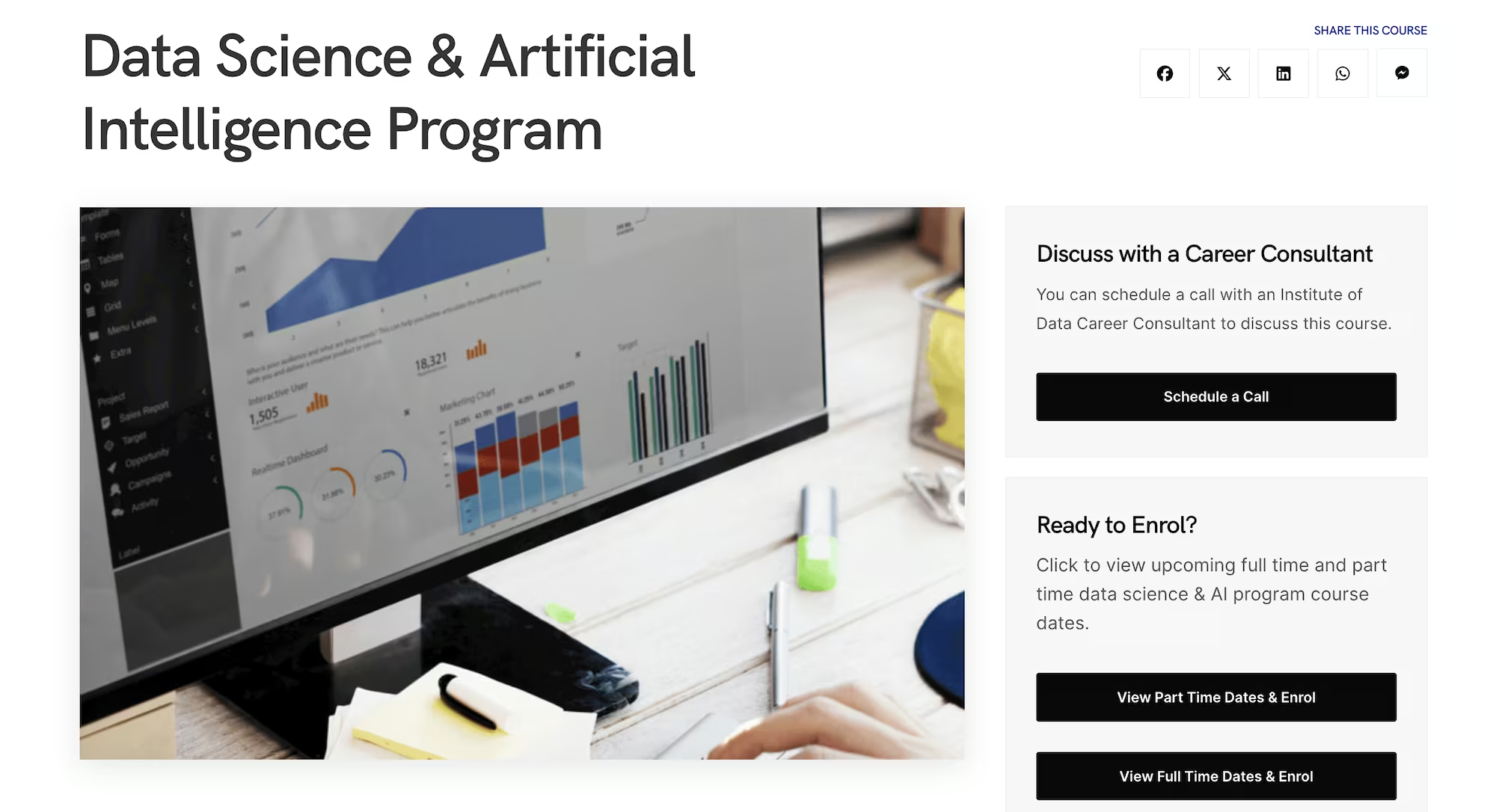
The Institute of Data's Data Science & AI Program goes deep into the technology underneath AI, with a substantial stretch on machine learning. If you're searching for an AI coding bootcamp rather than a tools-and-prompts course, this is one of the few here that qualifies.
The curriculum runs from programming, math and statistics fundamentals through exploratory data analysis, databases and APIs, supervised learning across regression and classification, unsupervised learning, decision trees and ensemble methods, NLP, deep learning, and finally machine learning deployment and cloud computing. The program includes pre-work before you start, an industry certification, and a job outcomes program run with university partners, which makes it one of only two options here with structured career support.
The part-time format runs 24 weeks and the full-time format compresses the same material into 12, with remote delivery available for both. It's the most expensive program on this list, and enrollment works differently from the rest: you pay a deposit to secure a place rather than paying tuition upfront or signing a financing agreement at the point of enrollment.
- What you'll learn: machine learning in depth, math and programming for data science, databases and APIs, natural language processing, deep learning, model deployment and cloud
- Requirements: pre-work before the program starts; check current entry requirements directly
- Who it's for: people already fluent in data who want to specialize, and mid-career tech-adjacent professionals
- Price: $12,500 total tuition, with a $300 pre-payment deposit required upfront to secure enrollment
How to pick the best AI program for your career goals
The right program depends less on which is strongest overall and more on where you're starting and what you want to be doing afterward.
The best AI program for beginners
- TripleTen's AI Automation program is built for people starting at zero, keeps the focus on applied work over heavy coding, and comes with career coaching attached.
- 4Geeks' AI Fluency is the lighter alternative if you want a four-week introduction built around your current job rather than a career move over four months — and at €810 it's the lowest-priced program in this review by a wide margin. Neither needs coding skills going in.
Best AI program for marketers
- 9x's AI Builder suits marketers well, because it teaches AI tools for audience targeting, content production, and results tracking without assuming technical depth.
Best AI program for developers
- If you already ship production code, TripleTen's AI & Machine Learning accelerator adds the modeling layer in 20 weeks — training, evaluating, and deploying models, plus RAG, agents, and the evaluation harnesses that prove any of it works. It screens for two years of production experience.
- Flatiron's Accelerated AI Engineering track covers similar technical ground on a longer timeline and pays you through an apprenticeship from month two, which makes it the better option if income during training matters more than finishing quickly.
- Institute of Data goes deepest on the classical data science foundation if that's the gap you're filling.
Best AI program for managers
- Berkeley Executive Education gives you strategy and board-level literacy behind a recognizable university name.
- Code Institute's AI for Business Leaders is the one that sends you home with artifacts — a business case with ROI, a governance framework, a 90-day plan — so it's the pick if you need to win an internal argument rather than understand the field.
- TripleTen's AI Automation suits managers who want to build the workflows themselves rather than commission them.
Best AI program for job support and mentorship
This is where the programs differ most sharply, and it's the easiest thing to overlook while comparing curricula.
- TripleTen includes career coaching and mentorship on both of its programs plus the tuition-back guarantee described above on AI Automation.
- Flatiron builds a paid apprenticeship into both work-integrated tracks.
- Institute of Data runs a job outcomes program with university partners.
- 4Geeks attaches career support and a job-or-refund option to AI Engineering, though not to its two shorter programs.
- Berkeley, 9x, and Code Institute include no career coaching — reasonably enough, since all three are aimed at people staying in their current jobs.
If moving into a new role is the goal, weight that heavily, and read the conditions on any refund promise before you rely on it.
Start your AI career in 2026
The 13 programs above range from a four-week introduction to a nineteen-month apprenticeship, and the gap between them is mostly about how far you want to go.
Book a free career consultation with TripleTen to talk through your background and which of the two AI programs lines up with what you're aiming at.

.avif)

