



- Only 1 in 3 tech workers is a woman. But tech jobs for women, on average, come with better pay, greater flexibility, and clearer advancement paths than other female-dominated fields.
- At TripleTen, our female graduates completed our bootcamps and moved into tech roles from burnout-heavy professions like education and healthcare.
- Tech isn’t perfect, but it’s evolving. Structured training, inclusive teams, and visible role models are empowering women to forge well-paid careers on their own terms.
When talking about careers for women, it’s too easy to fall back on cultural preconceptions that lead to circular logic. Throughout recent history, jobs such as nurse, teacher, or secretary have been among the few options open to women.
Because women’s options were restricted, they took these jobs. Then, we used their high concentration in these roles as proof that they are predisposed to them.
Yeah, we don’t buy that. We’ve talked to women in our bootcamp, looked at the data, and we’re confident: great careers for women are now in tech. However, the job stats for wormen working in tech show that a lot more work needs to be done to spread this message.
2026 Women in tech statistics
But now we do have to address a reality that’s probably buzzing in the back of your mind. Yes, tech has a reputation for being a boys’ club. It’s not unfounded.
According to WomenTech Network’s Women in Tech Stats 2026 report:
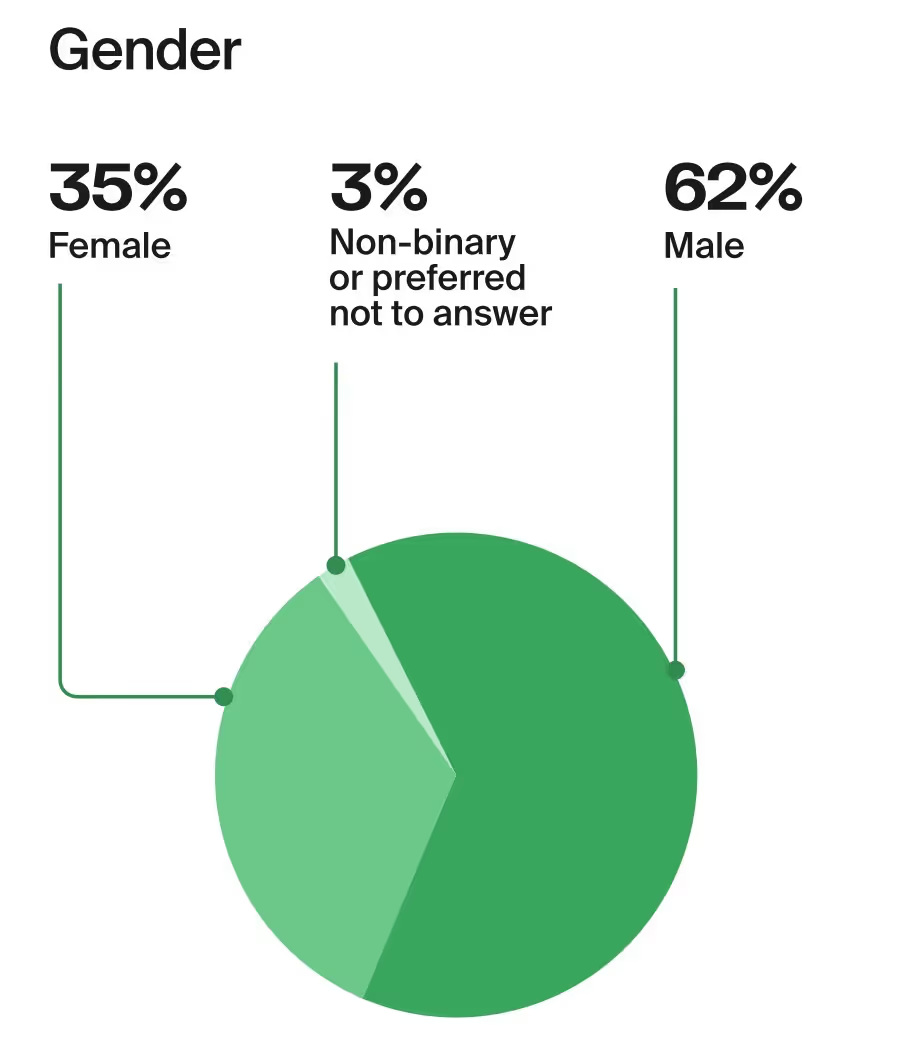
- Women make up roughly a third (35%) of tech jobs in the United States.
- Women are underrepresented in tech leadership roles. In companies like Amazon, Meta, Apple, Google, and Microsoft, female leadership ranges from 26% to 37%.
- Women are disproportionately affected by layoffs. Over half of women in tech are looking to leave their jobs within the next two years because of poor work-life balance and limited advancement. They’re also 1.6 times more likely to be laid off than men.
- Women are a minority in emerging tech fields, making up only about 22%–30% of AI and data professionals.

TripleTen’s own research also reflects the broader state of tech industry representation. Of the 1,100 TripleTen graduates and counting, women make up roughly one-third of alumni.
TripleTen grad spotlight: Cara Cross
We know for a fact that when women are given practical training, mentorship, and access to real opportunities, they succeed. Our student success stories feature multiple women who completed our bootcamps and broke into tech.
One example is TripleTen graduate Cara Cross. Her successful transition from landscaping to quality assurance was enabled by structured learning resources and consistent support throughout the program.
Learn how Cara worked with TripleTen to power a late-career switch into quality assurance (QA).

A Career Change at 40: Cara Cross’s TripleTen Story
Read full storyWhy the best jobs for women are in tech
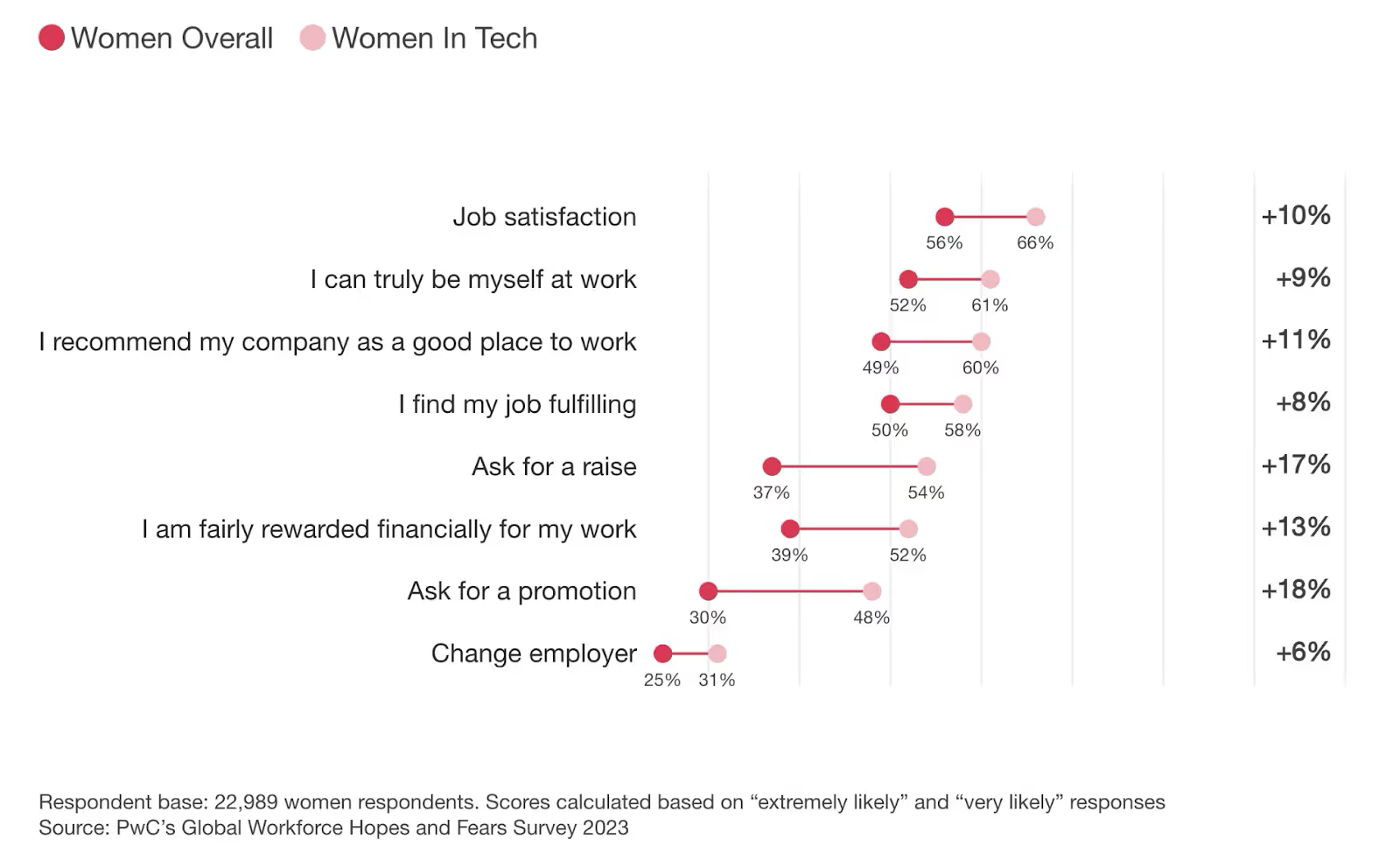
Research by PwC shows that women join the global tech sector due to these often-cited reasons:
- The promise of a high-paying career
- Career fulfillment and inclusion
- Access to opportunities to learn and develop new skills (61% in tech vs 57% in other industries).
Meanwhile, WomenTech Network notes women are drawn to tech because of:
- A desire to break gender stereotypes and be a role model for other women
- Access to flexible roles (remote/hybrid work).
Whatever your reasons are, a career in tech has never been more accessible or lucrative.
1. Tech jobs are more likely to offer more autonomy and flexibility
While most tech roles remain fully on site, Robert Half notes that tech (42%) ranks second only to the marketing and creative sector (44%) for offering hybrid and fully remote positions.
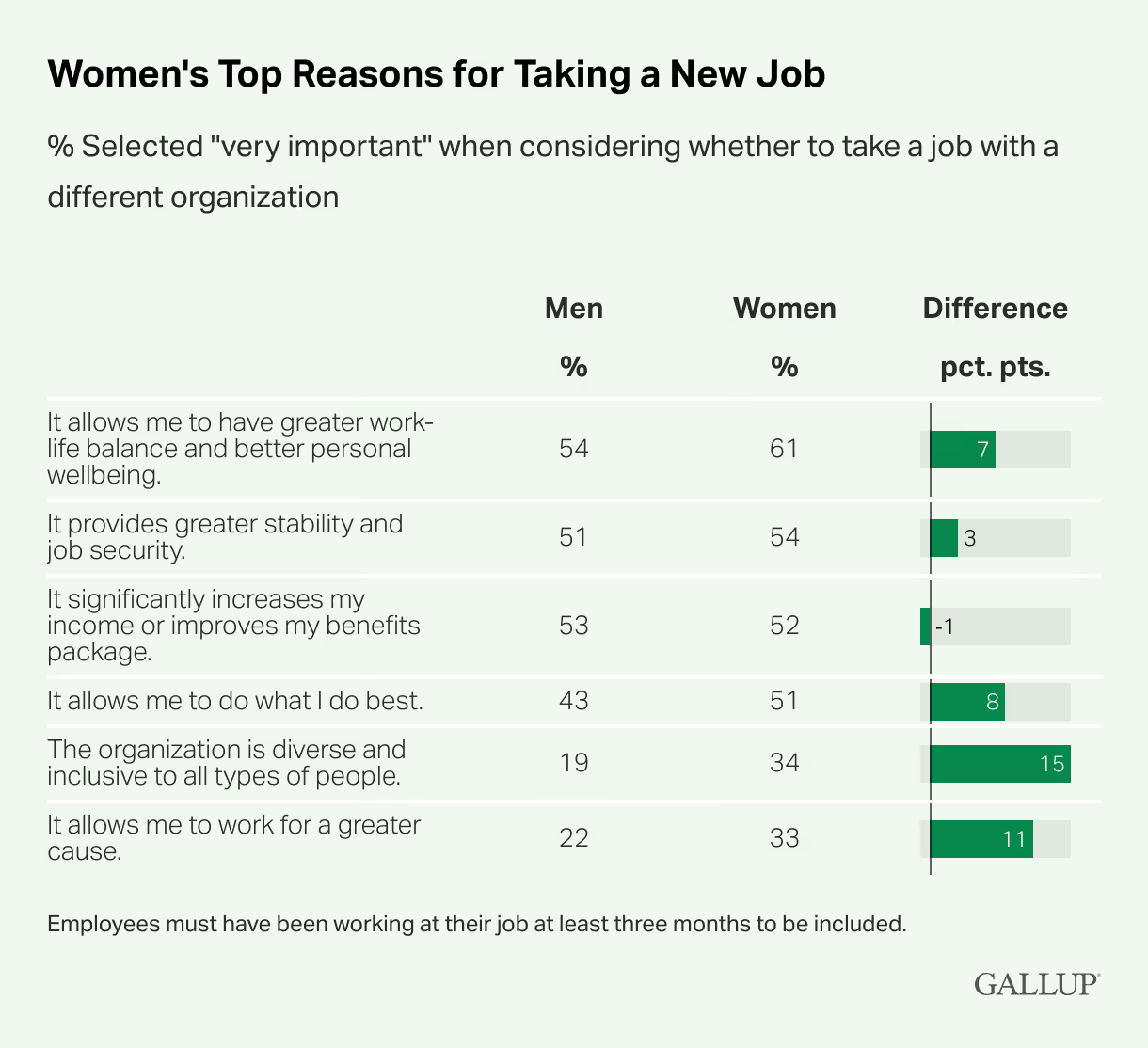
That’s a clincher for women, 61% of whom, according to a 2025 Gallup poll, consider greater work-life balance as well as better well-being as the most important factor when choosing a new job.
Further investigations give this more context. In the first line of a National Institutes of Health study, it states that “[women] are more likely than men to report physical and emotional exhaustion related to paid work.” And why is that?
The study has an answer: “[We] find that workers’ perspectives regarding women’s role in society drive a large gender gap in job burnout.”
Let’s get into that.
Women desire flexible roles in tech due to their lives at home
Despite women becoming more and more present in the workforce, they still consistently perform more daily housework and care (2.34 hours per day compared to 1.67 hours for men, according to BLS data).
And even at work, more is expected of women, especially in terms of emotional labor or additional role-irrelevant tasks such as organizing gifts for colleagues. So it makes sense that women are burnt out.
In female-coded professions, this invisible labor is crucial to the job. Just take the two most common occupations for women according to the U.S. Department of Labor: nurses and teachers.
Not only do they have work duties (i.e., imparting knowledge and providing medical treatment, respectively), but culturally we also assume women will engage in exhausting, surplus emotional labor as a matter of course.
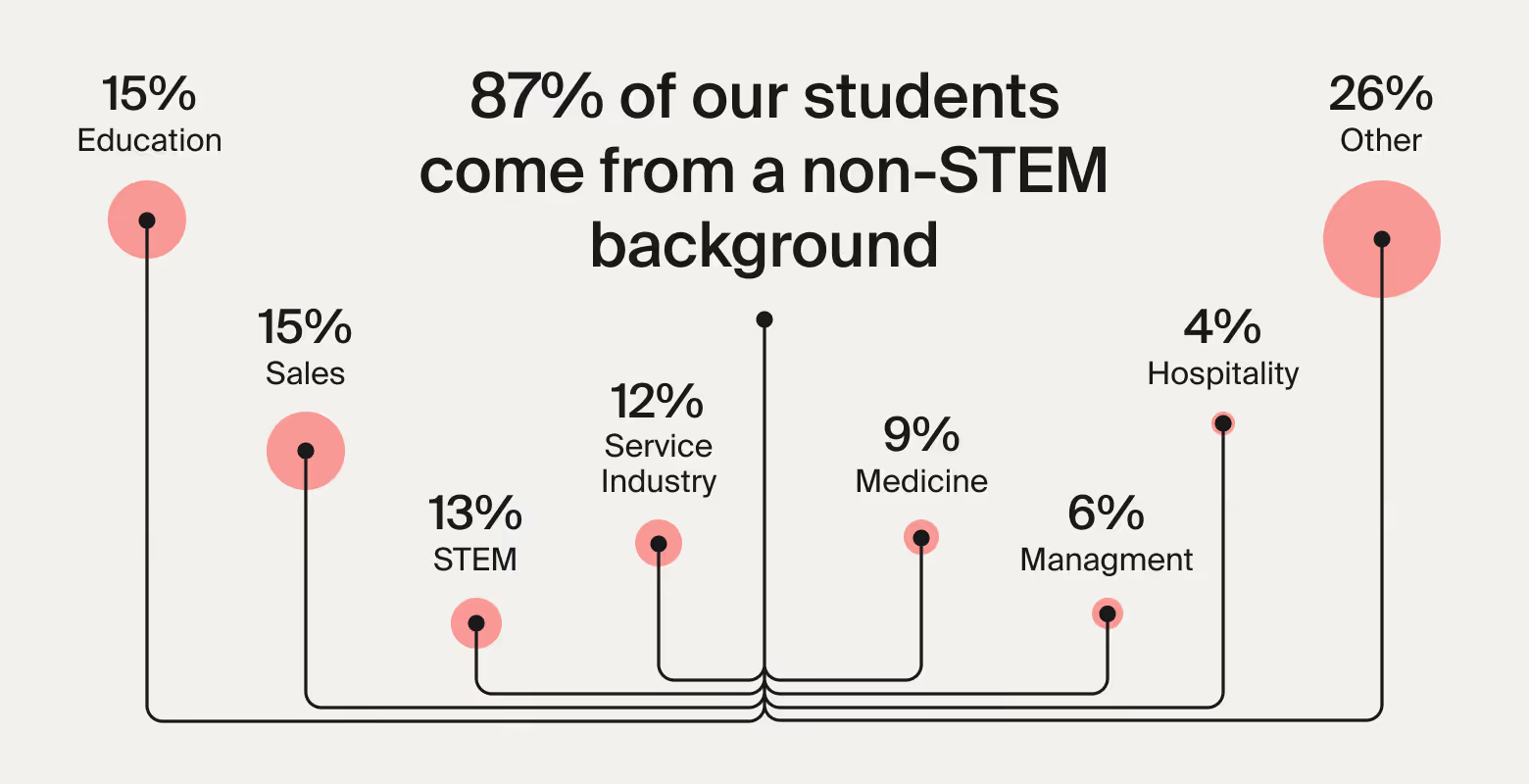
As a tech bootcamp provider, we also see this trend reflected in our student data. Nearly a quarter of our students come from education and medicine (15% and 9%, respectively).
TripleTen grad spotlight: Jenny Doctor
Jenny Doctor used to be a music teacher. But, as she shared with us, “I started to get a bit burnt out with teaching.” And not only that, she also started losing her passion for music. “When I was teaching, I really didn't make music for myself. I was focused on my students.” So she decided to switch to tech.

She took our bootcamp, landed a job as a software engineer, and rekindled her love of teaching and music, now as a side project for fun. “I'm looking forward to hopefully continuing to share my love of teaching music with students, but just on my own terms,” she said.
Learn how Jenny translated her creativity in music into a new career in software engineering.

I chose software engineering because I'm a fairly creative person
Read full storySo why are we so confident that tech is full of the top careers for women? Because jobs in tech know the value of work-life balance.
But there’s another reason, too.
2. Tech jobs offer better-paying roles for women
Going back to the Gallup poll mentioned above, the second and third-most-important factors for women considering a new job were better job security and increased income.
Again, this makes a lot of sense.
If we continue with Jenny’s example, the median salary for public school teachers is $53,550 as of February 1, 2026. And even in this female-coded profession, women still make less than men on average.
According to EducationWeek, female teachers make up 77% of the profession but still make less than male teachers on average. This disparity persists even when adjusting for work experience.
Women in tech roles experience narrower gender pay gaps than other industries
Data from the American Association of University Women (AAUW) notes that even in computer programming roles, women, on average, get paid 92% of what their male counterparts earn.
But, as the Pew Research Center discovered, the gender pay gap in education is worse: in 2022, women earned 82 cents compared to each dollar that men did.
And while we absolutely need to discuss the relative disparity, we should also talk about the absolute numbers.
That means that, based on the gender pay gap figures, women in education face a pay gap that is $10,000 larger per $100,000 in salary than women in programming. So while we should fight for gender parity in remuneration across the board, we should also talk about the real here-and-now: it’s better to earn slightly less of a higher salary than much less of a lower salary.
TripleTen grad spotlight: Desiree Bradish

Take the example of Desiree Bradish, a former graphic designer who realized she was in a grueling position that wasn’t cutting it in terms of salary. As she said, “You work long hours for bad pay.” So she switched to tech, and after studying at TripleTen, she landed a job as a full stack engineer. As a woman in tech, she’s now earning enough to support her large family.
Learn how Jenny translated her creativity in music into a new career in software engineering.

I felt prepared for all of the questions
Read full storyIn fact, it’s not unrealistic to aspire to earn $250,000 in tech. Top engineers at these companies earn between $239,000 and $270,000. High-paying careers for women are out there. And they’re in tech.
3. Tech jobs are building more inclusive pathways for women
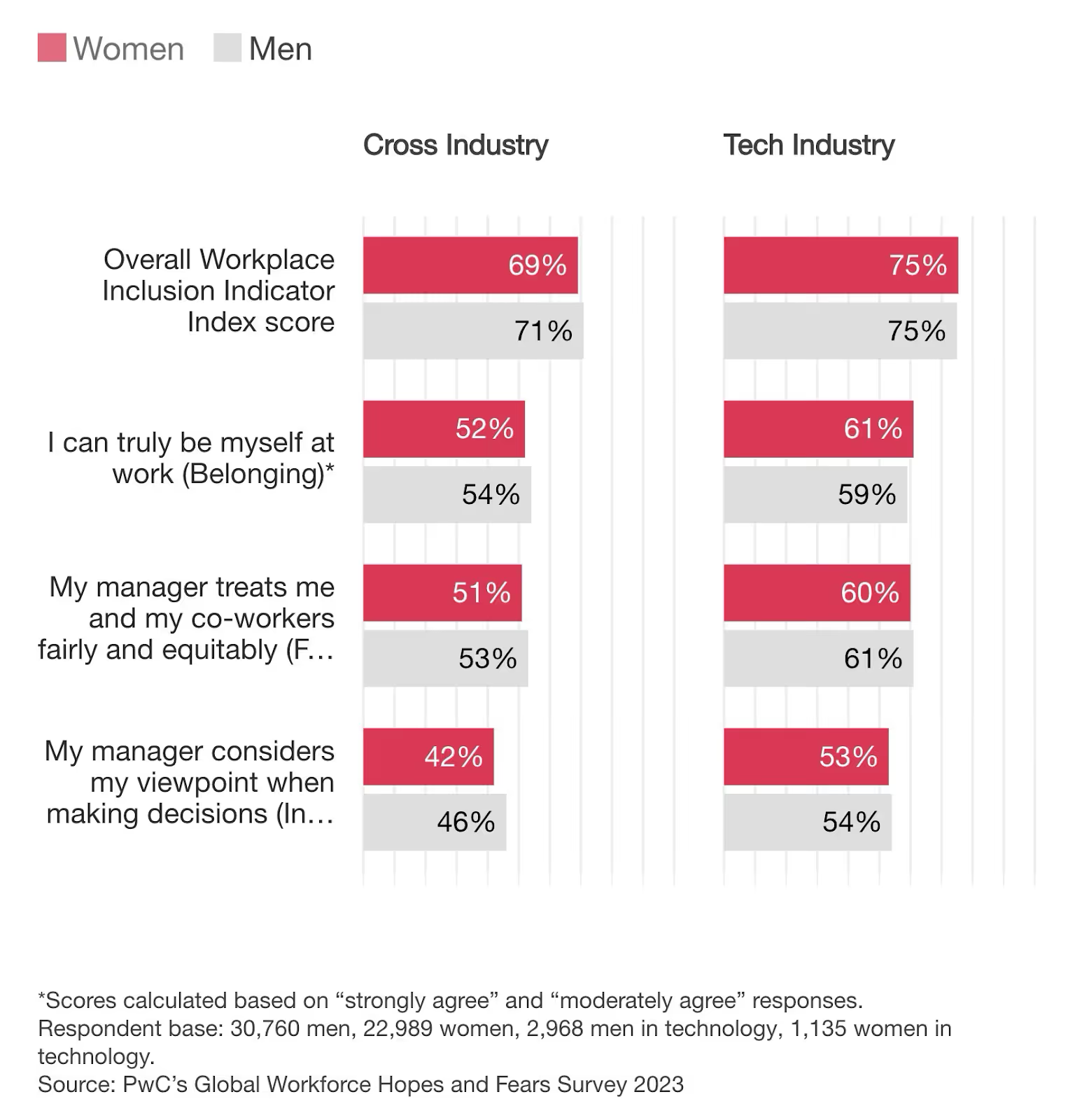
For many women, inclusion matters just as much as pay and flexibility. PwC reports that across multiple tech roles, women report higher levels of inclusion, belongingness, and fair, equitable treatment compared to other industries.
Inclusion and culture are also at the heart of why women choose to stay or leave their companies. The 2025 Women in the Workplace annual report found that:
- Only half of employers said women’s career advancement was a high priority, with 21% saying they give little to no priority to promoting women — a number that rises to 29% for women of color.
- These developments have led to waning interest among women in career advancement, with 80% saying they want to be promoted compared to 86% of men.
Tech jobs are more likely to be inclusive
Tech is by no means immune to these challenges. However, it is one of the few industries actively investing in structured inclusion efforts. Despite government pushback against DEI initiatives, a Harvard study identified 182 software companies creating products specifically designed to help tech firms find and hire candidates from underrepresented groups of society.
When women see other women in engineering, product, cybersecurity, or leadership roles, it shifts what feels possible. Representation influences confidence, ambition, and long-term retention.
TripleTen grad spotlight: Sheena Irvin
Sheena Irvin spent 16 years in sales before the pandemic forced her to reassess her career. She wasn’t just after a job—she wanted a career where she could create, solve problems, and feel that she belonged.
Within my department, the integrations department, I would say maybe 40% of that department is women.
With support from TripleTen’s Career Acceleration Program, Sheena would go on to work as an Integrations Specialist at ePay Policy, where she enjoys an inclusive culture, creative problem-solving, and a team where nearly half of her department are women.
Learn how Sheena landed a more inclusive job in tech as a software engineer.

Finding Stability, Creativity, and Inclusivity: Sheena Irvin’s TripleTen Story
Read full storyHow to advance your career as a woman in tech
Launching your career in tech as a woman requires more than learning technical skills. In our tech bootcamps, our career coaches have shared transition tips for a career in tech, helping women grow their visibility and confidence through:
- Building real relationships. Connect with peers and experienced professionals, and look for mentors who can offer practical advice. A sponsor who advocates for you can open doors.
- Developing the right skills. Tech is a massive industry, so you need to be selective when upskilling. Consider emerging areas like AI, data, cybersecurity, and cloud technologies to remain competitive.
- Making your work visible. Share projects, highlight results, and maintain a strong portfolio so others clearly understand your impact.
- Taking initiative. Volunteer for challenging work, lead parts of projects, and step into responsibility before you’re formally given the title.
- Advocating for yourself. Be clear about your goals, ask for feedback, negotiate compensation, and pursue promotions when you’re ready.
- Finding supportive communities. Engage with professional groups for women in tech to gain guidance, perspective, and encouragement. Look into places like Women in Tech, WiCyS (Women in Cybersecurity), and SheCanCode.
Tech jobs for women offer the promise of something better
We’re not going to claim that tech is perfect. Gender pay gaps are still an issue in tech, and true representation is still a work in progress, especially when it comes to women of color, who make up an even smaller percentage of the workforce.
Large-scale efforts, such as laws requiring pay transparency, help everyone negotiate better pay. Smaller, more focused efforts are also helping. Women-specific communities and knowledge resources, such as podcasts for women starting careers in IT, are cropping up daily. Beyond that, there are scholarships for women in tech that lower the barrier to entry for women interested in pursuing careers in software engineering or data science.
But what truly makes us confident in our assertion that tech has the best careers for women is the fact that the industry is, at its core, eminently accessible, and only getting more so.
Whereas some professions demand proof of related college education, you don’t need a computer science degree to land a job in tech. That makes it more open—it’s not just one of the best careers for women; it’s also one of the best careers for women without a degree. The nature of tech makes it more than the right choice for some women. It’s the right choice for women.
And to land a rewarding, flexible, and well-paid job in tech, all you need is know-how and proof that you’re good at applying it. Discover more stories of thriving women in tech in our Student Success Stories or find career tips in our blog’s Career Advice section.
Frequently asked questions about women in tech
What percentage of the tech industry is female?
According to WomenTech Network’s Women in Tech Stats 2026 report, women account for a third (35%) of tech jobs in the U.S. However, representation is lower in tech leadership roles and in growing tech fields such as AI and cybersecurity.
What does ‘women in tech’ mean?
“Women in tech” refers to women in tech-related roles such as software engineering, data science, cybersecurity, product management, UX design, and information technology. The term is also often used in discussions about representation, pay gaps, and career advancement between genders in the wider tech industry.
Is a technical career good for women?
Yes! Technical careers are often associated with higher pay, flexible work arrangements, and better job security compared to traditionally female-dominated industries. While challenges remain, the combination of salary growth and remote work options makes tech an attractive career path for women.
Do women earn more in technical careers compared to other industries?
Although a gender pay gap still exists in tech, it’s often narrower than in fields like education, finance, or real estate. Because tech salaries are generally higher overall, even a smaller gap can result in significantly higher take-home earnings.
Can women build a tech career without a computer science degree?
Absolutely. Many tech roles prioritize skills and portfolio experience over degrees. At TripleTen, 80% of our bootcamp graduates have no background in technology.