




If you're weighing whether a cybersecurity degree is worth the investment, here's the short answer: it depends on your starting point, timeline, and career goals. A four-year degree offers broad credentials and internship access, but it's not the only path. Certifications, bootcamps, and hands-on labs can deliver faster returns if you already have some IT experience. The field itself remains strong—median pay for Information Security Analysts hit $124,910 in 2024, and the Bureau of Labor Statistics projects sustained demand through the next decade. The catch? Entry-level hiring isn't automatic. Employers want proof of practical skills, not just credentials on paper.
This guide breaks down the real costs, timelines, and outcomes of each education path so you can make an informed choice.
How to decide if cybersecurity is the right career move
Before you commit time and money, assess whether the work itself aligns with your strengths and tolerance for uncertainty. Cybersecurity rewards people who enjoy continuous learning, technical troubleshooting, and managing risk under pressure. If you thrive on variety and can communicate complex threats to non-technical stakeholders, you'll find plenty of opportunities. If you prefer predictable routines and low-stress environments, this may not be the best fit.
👉 Pro Tip: Take the Career Quiz to match your personality and work style with specific tech roles. It's a two-minute exercise that can clarify whether cybersecurity or another specialization suits you better.
Key traits that predict success
Strong candidates typically share a few characteristics: curiosity about how systems fail, attention to detail when reviewing logs or configurations, and ethical judgment when handling sensitive data. You'll also need patience for repetitive tasks like patching and monitoring, plus the ability to stay calm when incidents escalate. Communication matters more than many people expect—security professionals spend significant time explaining vulnerabilities to developers, executives, and compliance teams.
Red flags that suggest a different path
If you dislike troubleshooting, avoid ongoing study, or expect immediate results without hands-on practice, cybersecurity will frustrate you. The field evolves constantly—NIST finalized the first post-quantum cryptography standards in 2024, and AI-driven threats are reshaping detection strategies in 2026. On-call rotations and weekend incident response can disrupt work-life balance, especially in SOC or incident response roles. Burnout is a documented risk, so consider whether you're prepared for that reality.
.avif)
Comparing education paths: degree vs. certificate vs. bootcamp
Each route has trade-offs in cost, time, and employer perception. Your choice should reflect your current experience level, financial flexibility, and how quickly you need to start earning.
Traditional degree programs
An associate degree typically takes two years, a bachelor's four years, and a master's one to two years beyond that. According to the College Board's 2025 data, average tuition and fees for a public four-year institution run $11,950 per year for in-state students and $31,880 for out-of-state. That doesn't include housing, books, or opportunity cost.
Degrees offer the broadest foundation—networking fundamentals, operating systems, programming, risk management, and compliance frameworks. Many programs include internships, which give you supervised experience and professional references. Employers with rigid HR requirements often filter candidates by degree status, so a bachelor's can open doors that certifications alone won't.
The downside: highest time and financial commitment, and no guarantee that coursework stays current with industry tools. A 2022 graduate might have learned legacy firewall configurations but missed container security or cloud-native threat modeling.
Certification-focused paths
Certifications like CompTIA Security+, AWS Certified Security – Specialty, CISSP, or OSCP cost between $300 and $1,749 per exam. Preparation time ranges from three to twelve months for your first one to three credentials, depending on your baseline knowledge. Many professionals stack certifications over years—Security+ for foundations, then CySA+ or GCIH for analysis, then CISSP or OSCP for advanced roles.
Certs prove you've mastered specific skills and passed a standardized test. They're faster and cheaper than degrees, and some employers value them equally—especially if you pair them with hands-on labs and a portfolio. The catch: certifications alone rarely substitute for practical experience. A CISSP on your resume won't help if you can't demonstrate how you've applied the concepts in real environments.
Pro Tip: Supplement every certification with lab work. Platforms like TryHackMe, Hack The Box, or cloud sandboxes let you practice incident response, vulnerability scanning, and penetration testing in safe environments.
Bootcamp programs
Cybersecurity bootcamps typically run three to nine months and cost between $10,000 and $15,000. Bootcamps offer structured curricula, career coaching, and sometimes job guarantees or income-share agreements.
They're best for people who need external accountability and want to compress learning into an intensive sprint. Outcomes vary widely—some graduates land SOC analyst roles within months, while others still need additional certifications and portfolio projects to compete. Before enrolling, verify completion rates, job placement metrics, and whether the curriculum includes hands-on labs or just video lectures. To explore one of the best beginner-friendly programs with career support and strong employment outcomes, check out the TripleTen Cybersecurity program.
If you're curious whether bootcamps deliver value across tech fields, this bootcamp ROI guide offers a detailed breakdown.
| Path | Time | Cost (USD) | Best For | Biggest Downside |
| Associate degree | 2 years | ~$24,000 (in-state) | Building IT fundamentals from scratch | Still requires certs or experience |
| Bachelor's degree | 4 years | ~$48,000 (in-state) | Internships, broad credentials, HR filters | Highest time and cost |
| Master's degree | 1–2 years | ~$24,000–$48,000 | Leadership roles, research, specialized expertise | Overkill for entry-level positions |
| Certifications | 3–12 months | $300–$1,749 per cert | IT professionals pivoting to security | Requires self-discipline and lab work |
| Bootcamp | 3–9 months | $10,000–$15,000 | Career changers needing structure and support | Variable outcomes; verify job placement |
Salary potential and job market realities
The Bureau of Labor Statistics reported a median annual wage of $124,910 for Information Security Analysts as of May 2024. That's well above the $105,990 median for all computer and IT occupations and more than double the $49,500 median for all U.S. workers. CyberSeek tracked 514,359 cybersecurity job postings over the twelve months ending June 2025, and NIST noted a 57,000 increase in open positions during the same period.
Pay ranges by role and experience
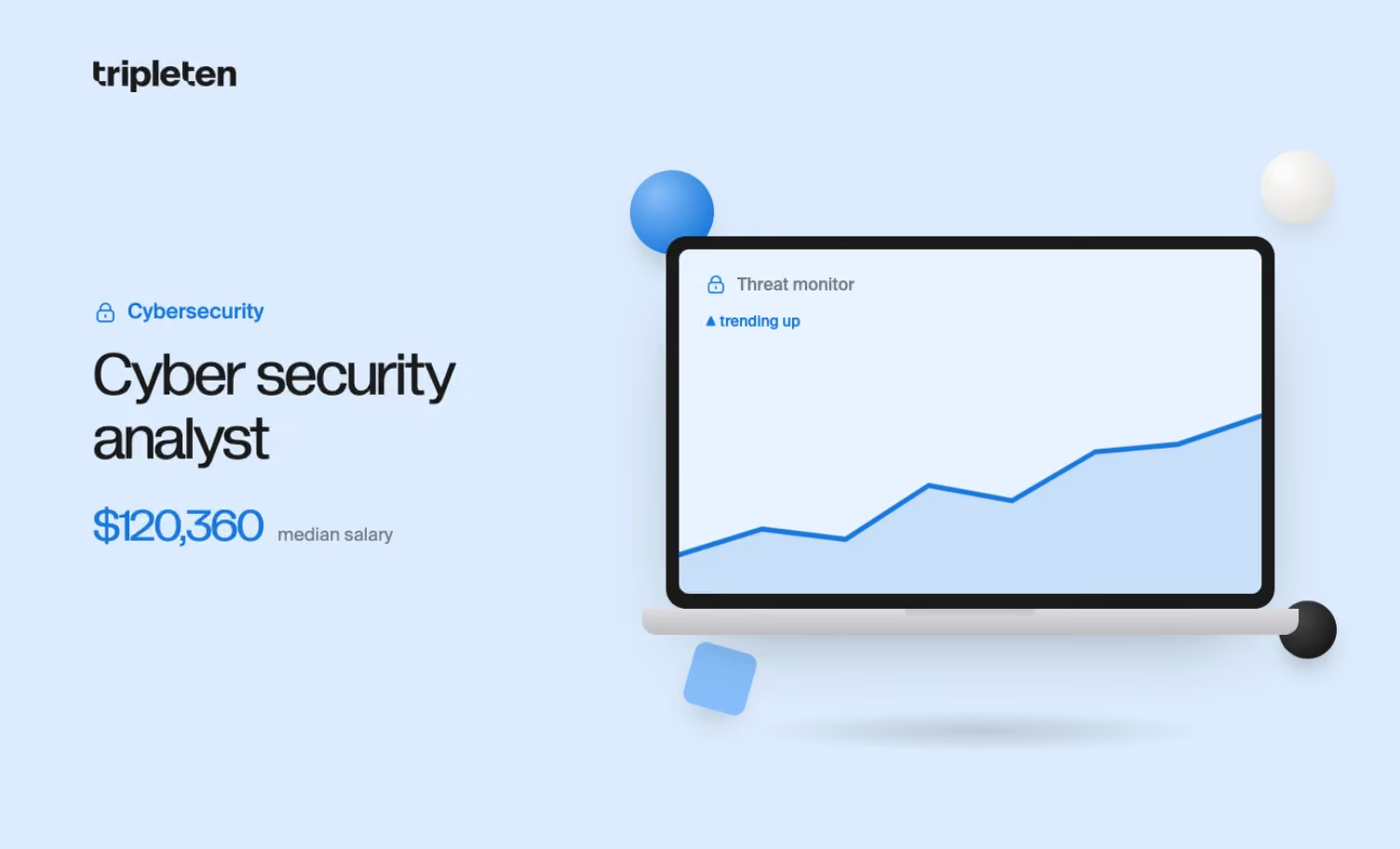
Entry-level SOC analysts typically earn between $75,000 and $100,353, depending on employer size, location, and shift differentials. Cloud security engineers average around $167,196, security engineers about $169,486, and penetration testers near $154,063. The BLS wage distribution for Information Security Analysts shows the 10th percentile at $69,210, the 25th percentile at $90,050, and the median at $120,360.
Geography matters. Salaries in San Francisco, New York, and Washington, D.C., often exceed national medians by 20 to 30 percent, but cost of living erodes some of that premium. Remote roles have expanded since 2020, though many employers still prefer candidates near a regional hub for incident response or compliance audits.
Demand drivers in 2026
Geopolitical tensions, AI-driven attacks, and regulatory volatility continue to fuel security hiring. Verizon's 2025 Data Breach Investigations Report found that third-party involvement in breaches doubled to 30 percent, vulnerability exploitation surged 34 percent, and ransomware incidents among small and medium businesses rose 37 percent year-over-year. ISC2's 2024 workforce study estimated the global cybersecurity workforce at 5.5 million, with persistent skills shortages across regions.
Post-quantum cryptography standards finalized by NIST in 2024 will create new demand for professionals who can implement and audit quantum-resistant algorithms. Cloud security, identity and access management, and DevSecOps remain high-growth specializations.
Realistic timelines to your first cybersecurity job
Expect nine to eighteen months if you're starting from scratch with no IT background. That includes foundational learning, earning one or two certifications, building a portfolio, and applying strategically. If you already work in IT—help desk, system administration, or network support—you can pivot in four to nine months by adding Security+, cloud security training, and hands-on labs.
What slows people down
Many beginners underestimate the importance of practical experience. Passing a certification exam proves you understand concepts, but employers want evidence that you've applied them. Build a GitHub portfolio with security scripts, document a home lab setup, or contribute to open-source security tools. Networking also accelerates timelines—attend local BSides conferences, join OWASP chapters, or participate in Capture the Flag competitions to meet hiring managers and mentors.
What speeds things up
Leverage any existing IT experience, even if it's not security-focused. Help desk work teaches you how users interact with systems and where they make mistakes. Network administration gives you visibility into traffic patterns and firewall rules. System administration builds scripting skills and familiarity with patch management. All of these translate directly to security operations.
If you're switching from a non-IT career, consider starting with a feeder role like junior system administrator or IT support specialist. Many professionals use these positions to gain access to internal security teams or to fund certification study while earning a paycheck.
For a detailed roadmap on transitioning into a security engineering role, this guide on how to become a cybersecurity engineer walks through each step.
Pros and cons of pursuing cybersecurity
Advantages
Strong salaries are the most obvious benefit—median pay exceeds six figures, and experienced professionals in cloud security or penetration testing can earn significantly more. Demand remains broad across industries. Every organization with digital assets needs security, from healthcare and finance to retail and government. Career branching is another plus. You can specialize in SOC operations, governance and compliance, incident response, penetration testing, cloud security, identity management, or security engineering. Lateral moves are common, and burnout in one area doesn't mean you have to leave the field entirely.
Multiple entry routes mean you're not locked into a single path. You can start with certifications, pivot from IT, or pursue a degree if that fits your situation. Remote work opportunities have expanded, and many roles offer flexibility once you've proven your skills.
Disadvantages
Stress and burnout are real. On-call rotations disrupt sleep and personal plans. Incident response can mean working weekends or holidays when breaches occur. The constant learning requirement isn't for everyone—new vulnerabilities, tools, and attack techniques emerge continuously, and falling behind can limit your career growth.
Entry-level competition has increased as more people recognize the field's earning potential. Employers often expect certifications, portfolio projects, and internships even for junior roles. Training costs add up quickly if you pursue multiple certifications or a bootcamp without employer sponsorship.
Who should pursue cybersecurity and who shouldn't
This career suits people who are curious, detail-oriented, and ethical. You need to stay calm under pressure and communicate technical risks clearly to non-technical audiences. If you enjoy troubleshooting, learning new tools, and thinking like an attacker, you'll find the work engaging.
It's a poor fit if you want low-pressure, predictable work with minimal learning curves. If you dislike troubleshooting or avoid ongoing study, you'll struggle to keep pace. People who expect fast results without hands-on practice often become frustrated when job offers don't materialize immediately after earning a certification.
If you're exploring tech careers but aren't sure cybersecurity is the right specialization, this article on entering tech without a computer science degree outlines alternative paths.
Frequently asked questions
Is a cybersecurity certificate worth it if I already have a degree?
Yes, if your degree isn't in a technical field. Certifications like Security+ or AWS Certified Security – Specialty prove you've mastered specific skills employers need. Pair them with hands-on labs to demonstrate practical application, and they'll strengthen your resume significantly.
Is a master's in cybersecurity worth it for career advancement?
It depends on your goals. A master's can help if you're targeting leadership roles, research positions, or specialized areas like cryptography. For most practitioners, certifications like CISSP or OSCP deliver better ROI. Employers value demonstrated skills over advanced degrees in technical roles.
How does a cybersecurity bootcamp compare to a traditional degree?
Bootcamps are faster and cheaper but vary widely in quality. They work best if you need structure and career support. Degrees offer broader foundations, internships, and stronger HR credibility. Verify bootcamp outcomes before enrolling, and expect to supplement with certifications and portfolio work.
Is cybersecurity a good career for someone without IT experience?
Yes, but expect a longer timeline. Start with foundational IT skills—networking, operating systems, scripting—then add security-specific training. Consider a feeder role like help desk or system administration to build experience while you study. Absolute beginners typically need nine to eighteen months.
What's the best ROI path for entering cybersecurity?
For most people, certifications plus hands-on labs plus portfolio projects deliver the fastest return. If you already work in IT, this approach lets you pivot in four to nine months. If you're starting from scratch, a bootcamp or associate degree can provide structure, but you'll still need certs and practical proof to compete.




.avif)
.avif)