



Key Takeaways
- Contrary to popular belief, you don't need a computer science degree to learn AI. Most job-ready skills start with using AI tools well, not writing algorithms from scratch.
- The fastest path to an AI job typically follows three stages: become a confident AI user, build a technical foundation in Python and data, then specialize and build a portfolio.
- Our research shows that two-thirds of career changers who broke into tech prioritized AI skills when choosing their training, and their instinct paid off: their read on AI’s impact on jobs proved accurate.
If you've been putting off learning AI because you don't know where to start, you're not alone. Search "how to learn AI" and you'll get a wall of bootcamps, YouTube playlists, and 40-hour Udemy courses that all claim to be the one true path.
Some are useful. Most overpromise but underdeliver.
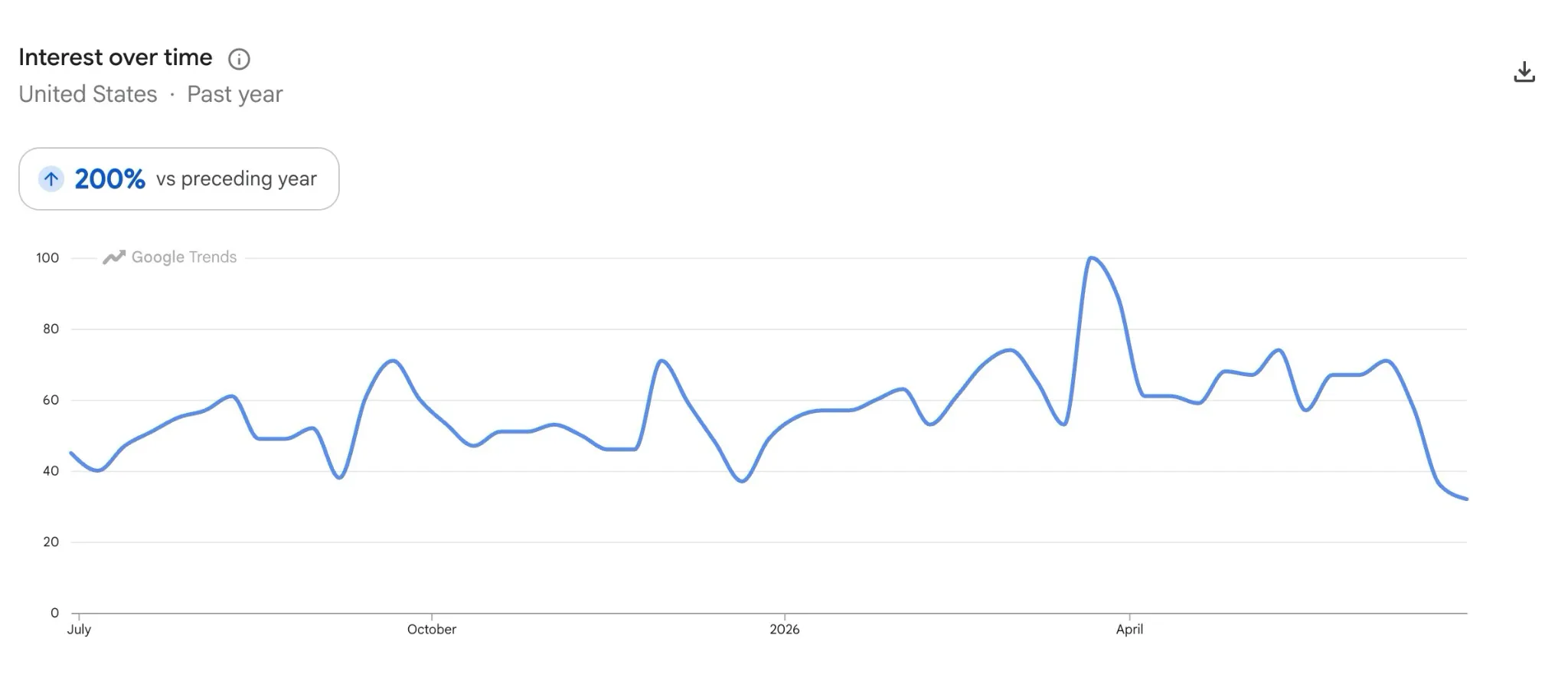
Whatever the case, today’s cohort of job seekers has recognized the need to upskill or reskill. Google Trends data shows that over the past 12 months, searches for “how to learn AI” have hit record highs.
The payoff for getting started ASAP is real. Lightcast research analyzing more than 1.3 billion job postings shows that roles listing AI skills advertise salaries around 28% higher (roughly $18,000 more a year) than comparable roles without them. And more than half of those AI-skill postings now sit outside IT and computer science — so this isn't only a story about becoming a web developer.
In this guide, we cut through the noise and offer a step-by-step roadmap for people starting from zero, whether your goal is to use AI tools more effectively at your current job or to land a role building the technology itself.
First, figure out what you mean by “learn AI”
Learning AI can mean different things depending on your career objectives, and mixing them up is arguably the top reason people quit halfway through a tech program or course that was never right for them in the first place.
Broadly speaking, there are two tracks to consider:
- AI user (functional skills). You want to learn AI tools like ChatGPT, Claude, and Zapier to work faster, automate tasks, and integrate AI into a non-technical job. No coding required.
- AI builder (technical skills). You want to build, fine-tune, or deploy AI systems. This means programming, data, and machine learning fundamentals.
Most people start on the AI user track and decide later whether they want to go deeper; think of it as moving from basic user to power user. This order means you'll waste less time and know a lot more about what "deeper" actually entails before you commit to it.
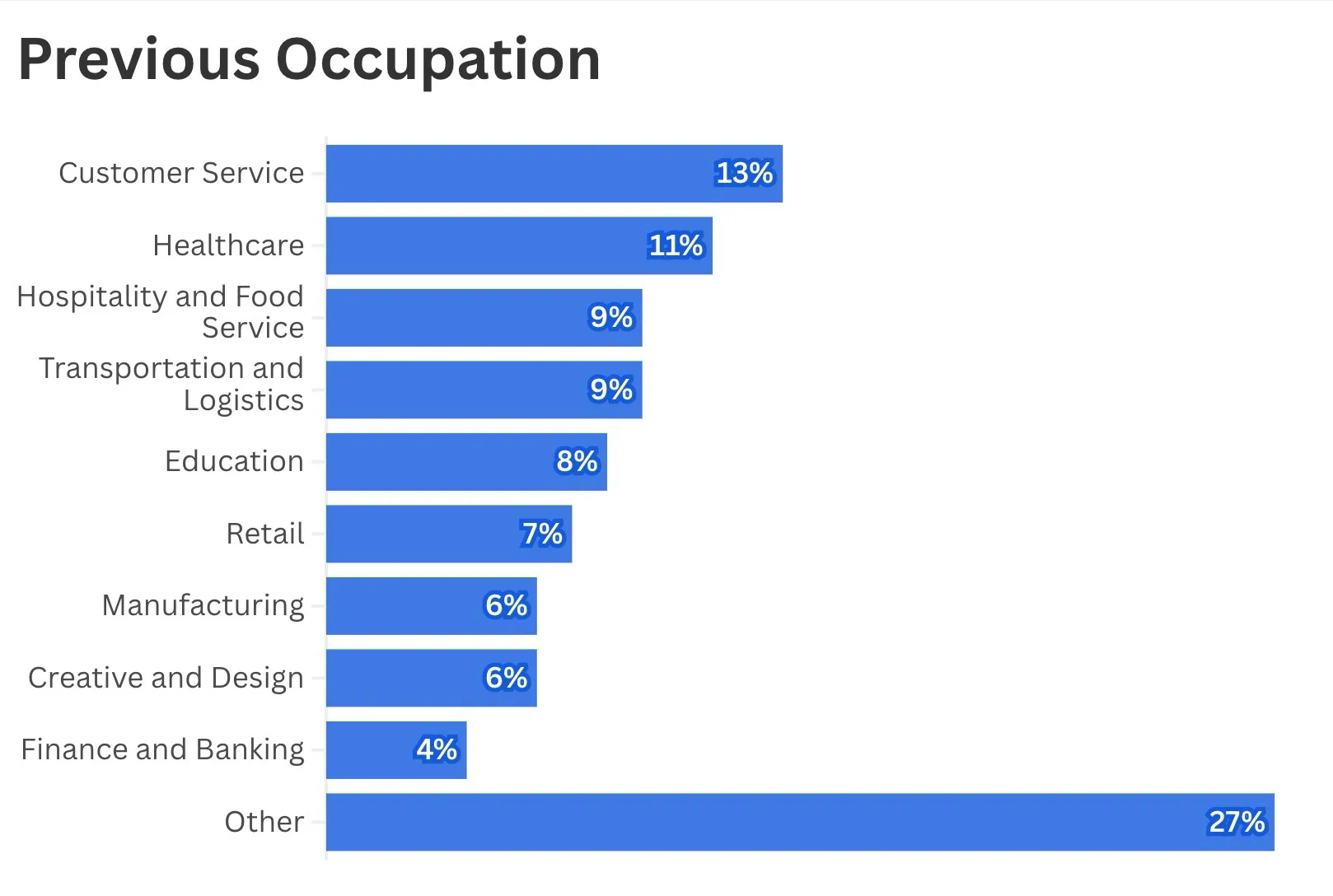
And if you're worried that a non-technical background rules you out, it doesn't. TripleTen's AI-Ready Report found that career changers came largely from in-person, non-technical roles like customer service and the trades, and nearly half (44%) had never used an AI tool in a professional capacity.
Step 1: Learn to use AI tools well (2 to 4 weeks)
Before you even think of touching a line of code, your priority should be becoming fluent with the AI tools everyone else is already using.
1. Complete one structured, no-code AI module
A good introductory module or course builds a working mental model of what AI can and can't do, without requiring any math or programming. Look for resources that cover the basics, such as Microsoft’s Introduction to AI concepts or NVIDIA’s Generative AI Explained course.
2. Sign up for the big three AI platforms
Create free accounts on ChatGPT, Claude, and Gemini and use them for real work: drafting emails, summarizing documents, researching topics, or outlining projects.
Part of learning how to use AI well is getting a feel for what each tool excels at.
- For instance, ChatGPT is a versatile all-rounder with a host of tools, from image generation to file analysis.
- Claude lends itself to coding and writing, with drafts often reading the least “AI-generated.”
- Gemini, being a Google product, is strongest for research due to having live web access and integration with Google Workspace.
3. Learn AI prompt basics
Effective prompting comes down to giving clear context, a specific task, and a format for the output. That's most of what "prompt engineering" actually is at the beginner level. Get a quick introduction to the basics by using our free AI prompt generator.
Step 2: Build a technical foundation (2 to 3 months)
The rise of “vibe coding” may have lowered the barrier to entry for aspiring coders, but serious doubts remain over the accuracy of AI-generated code. Only 29% of developers trust the accuracy of AI outputs, according to a 2025 Stack Overflow survey.
In other words, if you're aiming for a technical AI role, you’ll need to build the technical knowledge for it.
Brush up on the math concepts you’ll actually need when learning AI
You don't need a math degree, but a working grasp of a few areas will make everything downstream easier to understand:
- Linear algebra: for how data is represented and processed
- Statistics and probability: for evaluating how well a model performs
- Basic calculus: for understanding how models optimize and improve.
Learn Python
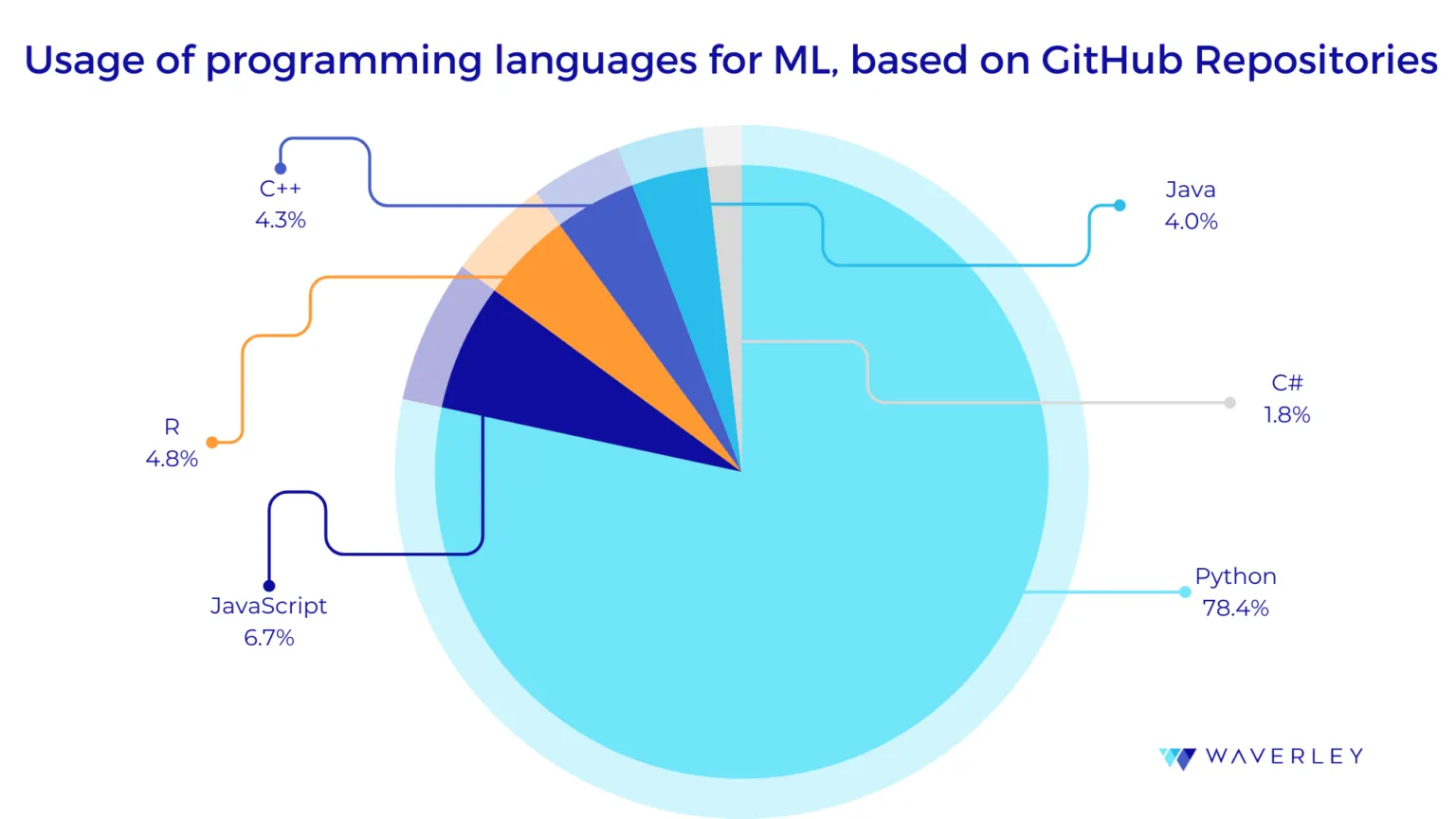
Python continues to be the standard programming language for AI and machine learning development: nearly half of all new AI repositories on GitHub start in Python, per GitHub's Octoverse 2025 report.
You'll need to get comfortable with:
- Variables, functions, loops, and conditionals
- Data structures like lists and dictionaries
- Basic object-oriented programming
- Reading and writing files, and handling errors.
Complete beginners typically need two to three months of consistent, hands-on practice to get through this stage. That's normal; don't rush it to get to the "AI part" faster. It'll cost you more time later.
Pick up SQL
AI runs on data, and most of that data lives in databases. Learning SQL (Structured Query Language) means you can pull, filter, and shape the data you'll eventually feed into a model.
SQL knowledge is also one of the most transferable skills you can pick up: it appears in the vast majority of data analyst job postings, often alongside Excel, so the payoff extends well beyond AI applications.
Step 3: Understand how machine learning actually works (2 to 3 months)
You don't necessarily have to build a large language model (LLM) from scratch (that’s a tall order for even a seasoned dev), but you do need to understand the ideas behind one.
You can start with classical machine learning:
- Regression
- Classification
- Clustering
- Using a library like scikit-learn.
These are the foundational techniques that show up in nearly every real-world AI application, whether it’s fraud detection or recommendation engines.
From there, you can then move into the concepts specific to modern AI:
Step 4: Build a real AI project
Watching tutorials might feel productive, but it won’t be enough to get you hired. For that, you’re going to need to finish something and go through the messy, confusing bits that most tutorials barely tackle.
We recommend starting small and building up as you go:
Put every project on GitHub with a clear README. Employers look at this more closely than most people expect, and a portfolio of three finished, explainable projects will make your application far more compelling.
Step 5: Decide on a learning structure
Steps 1 to 4 map out what you need to learn AI skills. The harder question, however, is how exactly you’ll stay consistent over the next 6 to 12 months. This is often where many self-taught learners fizzle out. Not knowing whether your code is good, not being held accountable to a schedule, and not having a support system — all of that can wear you down over time.
There are two broad ways around this problem:
• Self-directed learning: Going DIY is free and flexible, but it also demands discipline. You’ll need to build the accountability a learning program would give you; that includes:
◦ Fixed weekly goals
◦ Joining relevant communities online (Reddit, Substack) and offline
◦ Finding a study partner
◦ Getting your projects reviewed by experienced developers.
• A structured program: Bootcamps and guided courses mitigate trial-and-error by laying out what to study and providing feedback on every single milestone, ensuring your work meets a professional bar. The best programs are built around completing real, viable projects, with working engineers giving feedback on your code and coaches guiding you through portfolio creation and job searching.
- That structure is often what turns intention into actual career change.
Neither option is inherently better than the other. It all depends on your preferred method of learning and working.
Step 6: Dig deeper into a specialization
Trying to be proficient at everything is how people burn out. Instead, what you want to become is a T-shaped AI professional — someone with deep, specialized expertise in one specific area of AI (that’s the vertical bar of the "T"), combined with a broad, working knowledge across multiple other areas (the horizontal bar).
Your choice of specialties includes:
1. AI and machine learning engineering
This role involves building AI applications, with a focus on API integration, RAG systems, and agent frameworks. LinkedIn's 2026 Jobs on the Rise report also ranked AI engineer as one of the fastest-growing job titles in the US; two other AI-specific roles, AI consultants/strategists and AI/ML researchers, made it to the top of the list.
This is the territory of TripleTen's AI & Machine Learning bootcamp, where you'll master PyTorch and TensorFlow by building industry-standard projects.
2. AI integration and automation
This involves integrating AI into existing business tools and workflows using platforms like Zapier, Make, or n8n, ideal if you want to stay closer to the functional side without deep coding.
Our AI Automation bootcamp is a no-code-first route into this lane, covering prompt engineering, workflow automation, and API integrations across exactly these kinds of tools.
3. AI systems engineering
At the advanced end of the AI field, this specialty focuses on designing and scaling the production systems that AI runs on, from distributed architectures and APIs to LLM gateways and RAG pipelines. This is a level-up path rather than a beginner one, aimed at people who already have solid engineering experience.
If that's where you're headed longer term, our AI Systems Engineering program is built around shipping production-ready systems and defending your architecture to reviewers from major tech companies.
Step 7: Get job-ready
Building your AI skills and credentials is just one half of the equation to getting hired. The other half is about presentation and marketing.
- Build a portfolio site or GitHub profile. Walk people through your projects, the problem each one solved, and what you'd improve if given the opportunity.
- Tailor your resume. Highlight the specific AI tools and outcomes relevant to the role, not a generic list of every technology you've touched.
- Practice explaining your projects out loud. Interviewers care less about jargon and more about whether you can explain, in plain language, what your project does and why you made the choices you did.
- Look into a certificate or bootcamp. A project-based AI and machine learning program like TripleTen can compress months of trial and error into a guided curriculum, particularly useful if you're changing careers and don't have a network in tech yet.

Find out how TripleTen helped Brandon move from the cannabis industry to a software engineering role.
Read his Student Success StoryThe trick to learning how to use AI: baby steps
The people who actually learn AI aren't the ones with the most tabs open. They're the ones who pick a starting point, stick with it for weeks, and build from there. You need to be patient and start with the tools you already have access to, get comfortable, and let your next step follow naturally from what you're curious about.
It's also worth listening to people who've already made the leap. Structured training can go a long way toward turning intention into genuine fluency. Our research shows only 15% of career changers we surveyed used AI regularly before they retrained. But afterward, 83% were using tools like ChatGPT, Claude, or Gemini day-to-day, and nearly two-thirds came out of training even more optimistic about AI's role in their careers than when they started.
If you'd rather skip the trial and error and follow a structured, project-based path with real career support, take a look at TripleTen's AI and Machine Learning and AI Software Engineering bootcamps, both built around the kind of hands-on projects that actually show up on a resume.
Frequently asked questions
How can complete beginners learn AI?
Start by using AI tools directly. Spend a few weeks working with ChatGPT, Claude, or Gemini on real tasks to build intuition for what they're good at and where they fall short.
From there, decide whether you want to stop at the user level or go technical. If you're going technical, we recommend completing a tech program, such as our AI Software Engineering bootcamp.
How do I learn AI from scratch?
Work through it in stages rather than trying to absorb everything at once.
- First, get fluent with AI tools (2 to 4 weeks).
- Then, if you're going technical, build a foundation in the math you'll actually need, Python, and SQL (2 to 3 months).
- Next, move into machine learning fundamentals (another 2 to 3 months)
- Build a real project you can put on GitHub
- Finally, pick an AI specialty and prepare your portfolio to get job-ready.
When you're ready for structure and career support, a paid, project-based program is the more direct route to a job-ready portfolio. TripleTen's AI and Machine Learning program pairs a hands-on curriculum with career support for people changing fields.
Do I need a degree or a math background to learn AI?
No. You don't need a computer science degree to learn artificial intelligence skills. To use AI tools and build no-code automations, you don’t need to be a math specialist at all.
For technical roles, a working grasp of linear algebra, probability and statistics, and basic calculus is enough; you can pick these up as you go rather than needing them up front. Employers increasingly care more about what you can build and demonstrate than which qualifications you hold.
Can I learn AI without coding?
Yes. If you want to learn to use AI rather than build it from the ground up, focus on the functional track: prompt basics, AI-assisted workflows, and no-code automation tools like Zapier, Make, or n8n.
This is a genuine specialization in its own right (AI integration and automation), not a watered-down version of the technical path. You can always add programming later if you decide you want to build rather than just use.
What's the best way to learn AI programming?
Start with Python, since it's the backbone of nearly every AI library and framework.
Once you're comfortable with the basics, move into data manipulation with pandas, then classical machine learning with scikit-learn, before tackling deep learning frameworks like PyTorch or TensorFlow.
Whichever route you take, the fastest way to get good at AI coding is to pair each new concept with a small project rather than working through theory alone.